




- Ronny Mor
- •
- 7 Min Read
- •
- 4 months ago


Key Points
- US President Donald Trump arrives in China for high-level trade discussions with President Xi Jinping, focusing on tariffs, technology, and global supply chains
- Markets are weighing potential easing in US–China tensions against ongoing geopolitical risk linked to the Iran conflict
- Investors remain cautious as energy, currency, and equity markets react to shifting geopolitical signals and demand expectations

The arrival of US President Donald Trump in China for a high-level trade summit with President Xi Jinping comes at a sensitive moment for global markets. Investors are simultaneously assessing the potential for renewed US–China economic engagement while monitoring ongoing uncertainty surrounding geopolitical tensions linked to the Iran conflict. The convergence of trade diplomacy and geopolitical risk continues to shape sentiment across equities, commodities, and currency markets.
US–China Dialogue Returns to the Center of Global Economic Expectations
The summit between Washington and Beijing is being closely watched as a potential turning point for global trade relations. The discussions are expected to cover tariffs, industrial policy, technology restrictions, and supply chain resilience, all of which have been central sources of volatility in recent years.
China remains a critical driver of global industrial demand, particularly for commodities such as crude oil, copper, and industrial metals. Any indication of reduced trade friction could support expectations for stronger manufacturing activity and cross-border investment flows. Conversely, continued policy divergence would likely reinforce fragmentation trends already visible across global supply chains.
For institutional investors, including those with exposure to export-driven sectors in Israel and other open economies, the tone of the talks is viewed as a key determinant for medium-term risk appetite.
Iran Conflict Risk Continues to Shape Energy Market Sentiment
Alongside trade negotiations, geopolitical uncertainty linked to Iran remains a persistent factor influencing global markets. Energy traders are particularly focused on the possibility of escalation that could disrupt shipping routes or energy infrastructure in the Middle East.
Although no direct disruption to oil supply has been reported, markets typically price geopolitical risk in advance of actual supply shocks. This has contributed to a sustained risk premium in crude oil, even as broader macroeconomic indicators point to uneven global growth.
The interaction between diplomacy in Asia and instability in the Middle East creates a dual-layer risk environment. While improved US–China relations could ease demand-side concerns, any escalation in Iran-related tensions would likely reinforce inflationary pressures through higher energy costs.
Markets Balance Demand Optimism Against Geopolitical Volatility
Financial markets are currently positioned between two competing narratives: potential stabilization in global trade relations and continued geopolitical uncertainty. Equity markets have shown selective risk appetite, while commodities remain sensitive to headline-driven volatility.
Currency markets, particularly those tied to commodity-exporting economies, are also reflecting shifting expectations around both demand growth and energy price stability. Bond markets continue to price in moderate inflation risks, driven partly by energy market dynamics and supply chain uncertainty.
For global investors, including those with diversified exposure across equities and fixed income, the current environment is defined less by a single macro trend and more by rapid shifts in geopolitical sentiment.
Outlook: Diplomatic Signals Will Drive Near-Term Volatility
Looking ahead, market direction will depend heavily on signals emerging from the Trump–Xi discussions and developments related to Middle East security conditions. Any progress on trade normalization could improve risk sentiment and support cyclical assets tied to global growth expectations.
However, risks remain elevated. Escalation in the Iran conflict, renewed trade restrictions, or weaker-than-expected global growth could quickly reverse recent stabilizing trends. Investors are likely to remain highly responsive to geopolitical headlines, with volatility concentrated in energy, technology, and currency markets.
Overall, global markets remain positioned at the intersection of diplomacy and conflict risk, with both US–China relations and Middle East tensions acting as key drivers of near-term financial market direction.
Comparison, examination, and analysis between investment houses
Leave your details, and an expert from our team will get back to you as soon as possible
* This article, in whole or in part, does not contain any promise of investment returns, nor does it constitute professional advice to make investments in any particular field.
To read more about the full disclaimer, click here
- Arik Arkadi Sluzki
- •
- 9 Min Read
- •
- ago 9 hours
SKN | Bitcoin and Gold Move Closer Together: Is the Debasement Trade Reshaping Crypto Markets?
Bitcoin is increasingly trading alongside gold rather than behaving primarily like a high-beta technology asset. The 90-day correlation between
- ago 9 hours
- •
- 9 Min Read
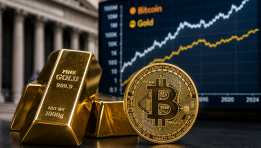
Bitcoin is increasingly trading alongside gold rather than behaving primarily like a high-beta technology asset. The 90-day correlation between

- omer bar
- •
- 8 Min Read
- •
- ago 1 day
SKN | Oil Prices Rise as Renewed U.S.-Iran Fighting Tightens Supply Risks and Diesel Hits Record
Oil prices ended the week sharply higher as renewed military exchanges between the United States and Iran revived concerns
- ago 1 day
- •
- 8 Min Read

Oil prices ended the week sharply higher as renewed military exchanges between the United States and Iran revived concerns

- Lior mor
- •
- 7 Min Read
- •
- ago 1 day
SKN | Could Crude Oil Stay Above $90 as Middle East Tensions Drive a 9% Weekly Surge?
Crude oil has entered September with a powerful rally as the continuing Middle East conflict raises concerns about the security
- ago 1 day
- •
- 7 Min Read
Crude oil has entered September with a powerful rally as the continuing Middle East conflict raises concerns about the security

- Ronny Mor
- •
- 7 Min Read
- •
- ago 2 days
SKN | Can Oil Prices Sustain Their Surge as U.S.-Iran Tensions Disrupt Global Energy Markets?
Oil prices eased on Friday but remained firmly positioned for a strong weekly gain as renewed U.S.-Iran military exchanges revived
- ago 2 days
- •
- 7 Min Read
Oil prices eased on Friday but remained firmly positioned for a strong weekly gain as renewed U.S.-Iran military exchanges revived
