Key Points

  • Regulatory changes may play a larger role than asset sales in shrinking the Fed’s balance sheet.
  • Balancing liquidity and financial stability will be critical to avoiding market disruptions.
  • The interaction between balance sheet policy and interest rates will shape future monetary conditions.
hero

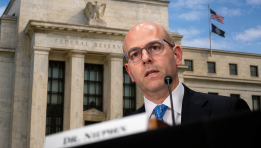
As scrutiny intensifies ahead of a key confirmation hearing, debate is accelerating around how the Federal Reserve might reduce its multi-trillion-dollar balance sheet without destabilizing financial markets. While Kevin Warsh has signaled support for a smaller central bank footprint, the lack of a detailed roadmap has prompted academics and policymakers to advance alternative frameworks. These proposals suggest that the path forward may rely less on aggressive asset sales and more on reshaping the underlying demand for liquidity across the banking system.

Rethinking the Mechanics of Balance Sheet Reduction

Since the Global Financial Crisis, the Federal Reserve has relied heavily on large-scale asset purchases to stabilize markets and support economic growth. This approach significantly expanded its holdings of Treasury securities and mortgage-backed assets, pushing the balance sheet to elevated levels that persist today.

The current debate centers on how to reverse this expansion without triggering volatility in money markets. Traditional balance sheet reduction, often referred to as quantitative tightening, involves allowing bonds to mature without reinvestment or actively selling assets. However, emerging research suggests that this method alone may not be sufficient—or optimal—given the structural changes in financial markets over the past decade.

The Role of Bank Reserves and Regulation

A growing consensus among economists is that the key to a smaller balance sheet lies in reducing the banking system’s demand for reserves. Reserves, which represent deposits held by banks at the Federal Reserve, are critical for maintaining liquidity and ensuring smooth functioning of short-term funding markets.

Proposals from policymakers such as Lorie Logan and Stephen Miran emphasize regulatory adjustments as a primary lever. By easing liquidity requirements and refining stress-testing frameworks, banks may feel less compelled to hold large cash buffers. This, in turn, would allow the Federal Reserve to shrink its balance sheet without creating a shortage of liquidity that could disrupt interest rate control.

However, this approach introduces its own set of risks. Lower reserve levels could make the financial system more vulnerable to shocks, particularly in periods of market stress. Policymakers must therefore carefully calibrate any regulatory changes to avoid unintended consequences.

Interest Rates and Monetary Policy Trade-offs

The relationship between the Fed’s balance sheet and interest rates adds another layer of complexity. A smaller balance sheet is generally associated with tighter financial conditions, as reduced asset holdings can lead to higher long-term interest rates.

Officials such as John Williams have noted that such tightening could necessitate lower short-term rates to maintain overall economic balance. This interplay highlights the need for a coordinated approach, where balance sheet policy and rate decisions are aligned to achieve macroeconomic objectives.

For investors, this dynamic is particularly গুরুত্বপূর্ণ. Changes in the Fed’s balance sheet strategy could influence everything from bond yields to equity valuations, making it a critical factor in portfolio positioning.

A Gradual Path Forward

Despite the growing body of research, there is little expectation that significant changes will occur rapidly. Implementing regulatory adjustments, recalibrating liquidity frameworks, and monitoring market responses will likely take time.

Moreover, few experts believe the Federal Reserve can return to the pre-crisis system of scarce reserves. Instead, the focus is shifting toward maintaining an “ample reserves” regime, but with more efficient liquidity distribution. This hybrid approach could allow the Fed to reduce its market footprint while preserving stability.

What Markets Should Watch Next

As Warsh’s hearing unfolds, attention will center not only on his views but also on the broader policy direction of the Federal Reserve. The evolving framework suggests that balance sheet reduction is no longer just a technical exercise—it is a strategic decision with wide-ranging implications for financial markets and economic conditions.

Investors should closely monitor regulatory developments, reserve levels, and signals from Federal Open Market Committee discussions to gauge the likely trajectory of policy.


Comparison, examination, and analysis between investment houses

Leave your details, and an expert from our team will get back to you as soon as possible

    * This article, in whole or in part, does not contain any promise of investment returns, nor does it constitute professional advice to make investments in any particular field.

    To read more about the full disclaimer, click here
    SKN | Is the Fed Drawing a Line on Bank Capital Rules as Industry Pushback Fades
    • sagi habasov
    • 7 Min Read
    • ago 4 days

    SKN | Is the Fed Drawing a Line on Bank Capital Rules as Industry Pushback Fades SKN | Is the Fed Drawing a Line on Bank Capital Rules as Industry Pushback Fades

    The U.S. Federal Reserve appears to be shifting its tone toward large financial institutions, signaling that the era of aggressive

    • ago 4 days
    • 7 Min Read

    The U.S. Federal Reserve appears to be shifting its tone toward large financial institutions, signaling that the era of aggressive

    SKN | Can Israel’s Economy Rebound Quickly if Peace Holds in the Middle East?
    • sagi habasov
    • 7 Min Read
    • ago 4 days

    SKN | Can Israel’s Economy Rebound Quickly if Peace Holds in the Middle East? SKN | Can Israel’s Economy Rebound Quickly if Peace Holds in the Middle East?

    Israel’s economic outlook has entered a critical phase as policymakers navigate the immediate shock of regional conflict alongside the possibility

    • ago 4 days
    • 7 Min Read

    Israel’s economic outlook has entered a critical phase as policymakers navigate the immediate shock of regional conflict alongside the possibility

    SKN | IMF and World Bank Reopen Engagement With Venezuela as Global Financial Recalibration Gains Pace
    • sagi habasov
    • 8 Min Read
    • ago 4 days

    SKN | IMF and World Bank Reopen Engagement With Venezuela as Global Financial Recalibration Gains Pace SKN | IMF and World Bank Reopen Engagement With Venezuela as Global Financial Recalibration Gains Pace

    The International Monetary Fund and the World Bank have resumed official engagement with Venezuela, marking a significant shift in international

    • ago 4 days
    • 8 Min Read

    The International Monetary Fund and the World Bank have resumed official engagement with Venezuela, marking a significant shift in international

    SKN | Is the Fed Turning More Hawkish or Still Preparing to Cut Rates Despite Sticky Inflation?
    • sagi habasov
    • 7 Min Read
    • ago 5 days

    SKN | Is the Fed Turning More Hawkish or Still Preparing to Cut Rates Despite Sticky Inflation? SKN | Is the Fed Turning More Hawkish or Still Preparing to Cut Rates Despite Sticky Inflation?

    The Federal Reserve’s policy outlook is becoming increasingly complex as conflicting signals from inflation and economic growth reshape expectations. Stephen


    • ago 5 days
    • 7 Min Read

    The Federal Reserve’s policy outlook is becoming increasingly complex as conflicting signals from inflation and economic growth reshape expectations. Stephen