




- Lior mor
- •
- 9 Min Read
- •
- 2 minutes ago


Key Points
- The Goldman Sachs basket tracking credit default swaps on major chipmakers has nearly doubled since August, reaching approximately 160 basis points in November.
- Intel, AMD and Broadcom recorded some of the largest weekly increases in credit protection costs, with their CDS spreads widening by 40, 26.5 and 17.6 basis points, respectively.
- Investors are increasingly pricing in the possibility that semiconductor companies will carry a larger share of AI-related financing in 2027, potentially extending credit concerns beyond major cloud providers.
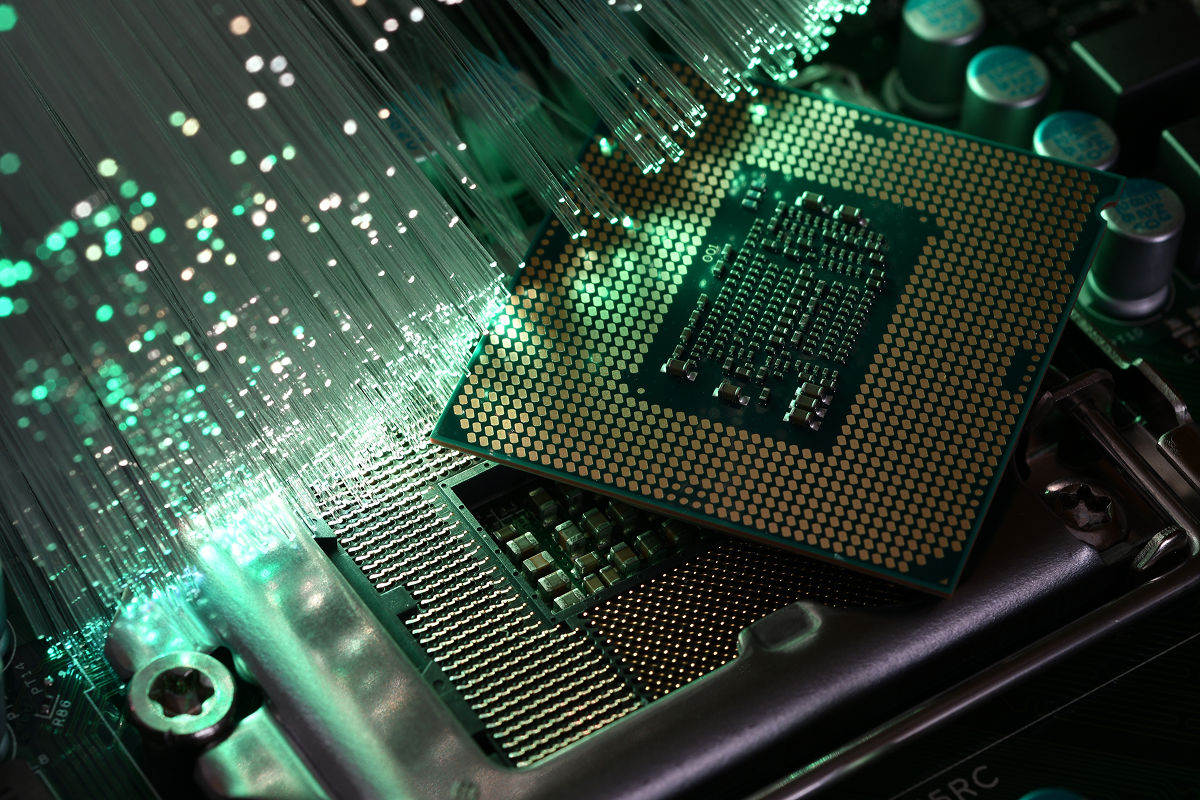
The rapid expansion of artificial intelligence infrastructure is creating a new dimension of financial risk: the growing cost of financing the companies supplying the technology behind the AI buildout. Recent credit-market data from Goldman Sachs indicate that investors are demanding greater compensation for exposure to major semiconductor manufacturers, suggesting that concerns about AI-related borrowing are beginning to extend further down the technology supply chain.
Chipmaker Credit Protection Costs Nearly Double Since August
The Goldman Sachs credit default swap (CDS) basket tracking major chipmakers has risen sharply since August, reaching nearly 160 basis points in November. The measure includes Broadcom, AMD, Nvidia and Intel. Its recent increase has pushed the basket above the corresponding hyperscaler CDS basket for the first time, according to the data presented in the Goldman Sachs chart through November 6, 2026.
A CDS spread represents the cost of purchasing protection against a potential credit event involving a borrower. When spreads widen, investors are generally demanding more compensation to assume that company’s credit risk. The increase does not mean that a company is approaching default, but it does indicate a deterioration in how the market is pricing its credit exposure.
The comparison with hyperscalers is particularly significant. Major cloud and technology platforms have been central to the financing of AI infrastructure through substantial capital expenditure commitments. The latest movement suggests that credit-market concerns are increasingly reaching the semiconductor companies whose products and infrastructure support that investment cycle.
Intel, AMD and Broadcom Lead the Weekly Widening
The repricing became especially visible during the week ending November 5. Intel’s CDS spread widened by 40 basis points, AMD’s increased by 26.5 basis points, and Broadcom’s rose by 17.6 basis points. According to the figures shared in the Goldman Sachs analysis, these were the three largest increases in the broader CDX Investment Grade index during the period.
The scale of the movements indicates that credit investors are reassessing risk across several major semiconductor companies rather than focusing exclusively on one issuer. Intel’s particularly large increase stands out, although CDS movements alone do not establish the underlying cause or indicate an imminent deterioration in its ability to meet financial obligations.
Trading activity has also intensified. AI-related CDS transactions reportedly reached approximately $8 billion to $10 billion per week over the preceding two weeks, marking the most active period outside the September index rollover. This level of activity points to increased institutional attention toward hedging and trading credit exposure associated with the AI sector.
Importantly, CDS trading volume measures activity in credit derivatives, not the amount of new corporate debt issued. Nevertheless, rising transaction volumes alongside wider spreads suggest that investors are becoming more active in managing the risks associated with AI-related corporate financing.
AI Financing Burden Could Shift Further Down the Supply Chain
One of the most important developments highlighted by the data is the expectation that semiconductor companies could account for a larger portion of AI-related debt issuance in 2027. This would represent a potential shift in the financing structure of the AI industry, with more of the capital burden moving from hyperscale cloud operators toward the companies producing the chips and related infrastructure.
The distinction matters because the AI investment cycle depends on an interconnected network of technology providers, infrastructure developers and cloud operators. If semiconductor manufacturers increasingly rely on external financing to support production capacity, research and infrastructure requirements, their borrowing costs could become a more significant factor in the economics of the wider AI ecosystem.
Higher credit spreads could translate into more expensive financing, potentially influencing investment plans and the pace of capacity expansion. However, the available CDS data do not establish how much additional debt individual companies intend to issue or whether their underlying financial positions have materially weakened. The market is pricing credit risk, not confirming a debt crisis.
For global investors, the next phase of the AI investment cycle will require closer attention to both capital expenditure and financing conditions. Corporate borrowing plans, cash-flow generation, debt maturities and the ability of technology companies to convert AI demand into sustainable revenue will be important indicators. If semiconductor CDS spreads continue rising relative to hyperscalers, it could signal a broader reassessment of risk across the AI supply chain. Conversely, stabilizing spreads and stronger cash generation could ease concerns that the industry’s infrastructure expansion is becoming increasingly dependent on debt.
Comparison, examination, and analysis between investment houses
Leave your details, and an expert from our team will get back to you as soon as possible
* This article, in whole or in part, does not contain any promise of investment returns, nor does it constitute professional advice to make investments in any particular field.
To read more about the full disclaimer, click here
- sagi habasov
- •
- 7 Min Read
- •
- ago 19 seconds
SKN | Microsoft Reclaims Second-Place Market Cap as Nvidia Faces AI and Governance Pressure
Microsoft has overtaken Nvidia as the world's second-most valuable company, marking the first time since June 2025 that the
- ago 19 seconds
- •
- 7 Min Read

Microsoft has overtaken Nvidia as the world's second-most valuable company, marking the first time since June 2025 that the

- Ronny Mor
- •
- 7 Min Read
- •
- ago 26 seconds
SKN | OpenAI Expands ChatGPT Into Business Discovery With AI Agents for U.S. E-Commerce
OpenAI is expanding ChatGPT further into commercial discovery by giving businesses tools to manage their presence on the chatbot
- ago 26 seconds
- •
- 7 Min Read

OpenAI is expanding ChatGPT further into commercial discovery by giving businesses tools to manage their presence on the chatbot

- Articles
- •
- 5 Min Read
- •
- ago 23 minutes
SKN | Mercor Raises $750 Million at $20 Billion Valuation as AI Training Demand Expands
Mercor Secures $750 Million in Series D Funding Mercor has raised $750 million in a Series D funding round that
- ago 23 minutes
- •
- 5 Min Read

Mercor Secures $750 Million in Series D Funding Mercor has raised $750 million in a Series D funding round that

- Lior mor
- •
- 7 Min Read
- •
- ago 2 hours
SKN | TSMC Plans Up to $1 Billion Investment in Anthropic and OpenAI
TSMC Expands Exposure to the AI Industry TSMC is planning investments of up to $1 billion across Anthropic and OpenAI,
- ago 2 hours
- •
- 7 Min Read
TSMC Expands Exposure to the AI Industry TSMC is planning investments of up to $1 billion across Anthropic and OpenAI,