





- sagi habasov
- •
- 9 Min Read
- •
- 19 seconds ago


Key Points
- Quarterly Loss and Lower Book Value: AGNC Investment Corp. reported a comprehensive loss of $1.28 per common share for the third quarter of 2026, while tangible net book value declined 16.9% to $7.13 per share.
- Negative Economic Return: The mortgage real estate investment trust recorded a negative 12.7% economic return on tangible common equity, reflecting a $1.45 per-share decline in tangible net book value and $0.36 in declared dividends.
- Portfolio Funding and Capital Position: AGNC ended September with a $94.4 billion investment portfolio, $6.3 billion in unencumbered cash and Agency mortgage-backed securities, and 7.9x tangible net book value at-risk leverage.

AGNC Reports Significant Loss Amid Fixed-Income Market Pressure
AGNC Investment Corp. reported a challenging third quarter as rising interest rates, increased market volatility and weakening mortgage-backed securities weighed on its financial performance.
For the quarter ended September 30, 2026, the mortgage real estate investment trust recorded a comprehensive loss of $1.28 per common share, comprising a net loss of $1.17 and an additional $0.11 loss from other comprehensive income related to investments marked to market through OCI.
Tangible net book value declined to $7.13 per common share from $8.58 at the end of June, representing a decrease of $1.45, or 16.9%. Despite the decline, AGNC declared dividends of $0.36 per common share for the quarter.
The combination of dividends and the reduction in tangible net book value resulted in a negative 12.7% economic return on tangible common equity.
President, Chief Executive Officer and Chief Investment Officer Peter Federico attributed the performance to significant pressure across fixed-income markets, particularly during the final weeks of September. Rising interest rates and increased volatility in the Treasury market contributed to pronounced weakness in Agency mortgage-backed securities (Agency MBS), which Federico said was the worst-performing sector of the Bloomberg U.S. Aggregate Bond Index during the quarter.
Net Interest Spread Narrows as Funding Costs Rise
AGNC generated net spread and dollar roll income of $0.37 per common share, excluding specified catch-up premium amortization effects. This compared with $0.40 per share in the previous quarter.
The company’s annualized net interest spread, including its to-be-announced mortgage securities position and interest rate swaps but excluding catch-up premium amortization, narrowed to 1.86% from 2.00% in the second quarter.
Funding costs increased during the period. AGNC’s combined weighted average cost of funds, including interest rate swaps, rose to 3.09% from 2.89%. The weighted average interest rate on repurchase agreements increased to 3.77% from 3.74%, while the implied financing cost of its to-be-announced position climbed to 3.64% from 3.46%.
The average asset yield on the investment portfolio, excluding the to-be-announced position, increased to 5.21% from 4.87%. However, excluding catch-up premium amortization, the average asset yield was 4.92%, compared with 4.89% in the prior quarter.
These figures indicate that higher asset yields did not prevent the company’s net interest spread from contracting as financing costs increased.
Portfolio Size, Leverage and Liquidity
AGNC reported an investment portfolio of $94.4 billion at September 30. This included $91.4 billion in Agency MBS, $2.4 billion in net forward purchases of Agency MBS through the to-be-announced market, and $0.6 billion in credit risk transfer securities, non-Agency securities and other mortgage credit investments.
The company’s tangible net book value at-risk leverage ratio increased to 7.9x from 7.4x at the end of June. Average at-risk leverage for the quarter was 7.6x.
AGNC held $6.3 billion in unencumbered cash and Agency MBS, excluding unencumbered credit risk transfer and non-Agency securities. This represented 57% of tangible equity at quarter-end.
The company also issued 97.6 million common shares through its at-the-market offering program, generating $992 million in net proceeds. Chief Financial Officer Bernice Bell said the company took advantage of elevated trading volumes following its addition to the S&P MidCap 400 Index to issue shares at a significant premium to tangible net book value per share.
Hedging Strategy Adjusts to Higher Rates
AGNC increased its hedging coverage as fixed-income market conditions deteriorated. Interest rate swaps, U.S. Treasury positions, option-based hedges and other interest rate hedges covered 90% of funding liabilities at quarter-end, compared with 73% at the end of June. Excluding option-based hedges, coverage reached 97%, up from 82%.
The company’s pay-fixed interest rate swap position totaled $74.6 billion in notional value, with an average fixed pay rate of 2.96% and an average floating receive rate of 3.90%. Its net short U.S. Treasury position increased to $11.1 billion, while receiver swaptions totaled $6.3 billion.
Management believes the outlook for Agency MBS could improve once Treasury market volatility subsides. Federico pointed to mortgage spreads approaching the upper end of their multiyear trading range, reduced prepayment risk at current interest rates and balanced supply-demand conditions as factors supporting a more constructive outlook.
What Investors Should Watch Next
Investors will be monitoring Treasury market volatility, mortgage spreads and AGNC’s ability to maintain its net interest spread as financing costs evolve. The performance of Agency MBS will remain central to book value, given the company’s substantial exposure to the asset class and its sensitivity to changes in interest rates.
The company’s elevated leverage and expanded hedging coverage will also be important considerations. While management sees potential for improved Agency MBS performance, the timing and magnitude of any recovery will depend on market stability and the direction of interest rates.
Comparison, examination, and analysis between investment houses
Leave your details, and an expert from our team will get back to you as soon as possible
* This article, in whole or in part, does not contain any promise of investment returns, nor does it constitute professional advice to make investments in any particular field.
To read more about the full disclaimer, click here
- Ronny Mor
- •
- 8 Min Read
- •
- ago 13 hours
SKN | Meta (META) Earnings Preview: AI Infrastructure Spending vs. Ad Revenue Growth
Meta Platforms (NASDAQ: META) is set to release its third-quarter financial results for 2026 after the closing bell on
- ago 13 hours
- •
- 8 Min Read

Meta Platforms (NASDAQ: META) is set to release its third-quarter financial results for 2026 after the closing bell on
- Ronny Mor
- •
- 7 Min Read
- •
- ago 21 hours
SKN | Ampol’s Lytton refining margin surged 125%, while maintenance is expected to reduce fuel output in the fourth quarter.
Australian fuel retailer Ampol reported a sharp increase in refining margins at its Lytton refinery, highlighting how geopolitical disruptions to
- ago 21 hours
- •
- 7 Min Read

Australian fuel retailer Ampol reported a sharp increase in refining margins at its Lytton refinery, highlighting how geopolitical disruptions to

- sagi habasov
- •
- 8 Min Read
- •
- ago 3 days
SKN | ExxonMobil Signals Major Refining Profit Increase as Global Fuel Margins Surge
ExxonMobil has signaled a substantial improvement in refining profitability as geopolitical tensions disrupt energy flows and lift fuel prices.
- ago 3 days
- •
- 8 Min Read
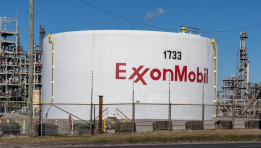
ExxonMobil has signaled a substantial improvement in refining profitability as geopolitical tensions disrupt energy flows and lift fuel prices.

- omer bar
- •
- 6 Min Read
- •
- ago 5 days
SKN | TSMC Faces High Earnings Expectations as AI Stock Volatility Puts Growth Outlook Under Scrutiny
Taiwan Semiconductor Manufacturing Co. (TSMC) enters its third-quarter earnings announcement with strong sales growth but a more demanding market backdrop.
- ago 5 days
- •
- 6 Min Read
Taiwan Semiconductor Manufacturing Co. (TSMC) enters its third-quarter earnings announcement with strong sales growth but a more demanding market backdrop.

