




- Ronny Mor
- •
- 7 Min Read
- •
- 10 months ago


Key Points
- The U.S. dollar posted its sharpest weekly decline since May, pressured by rising policy uncertainty and shifting rate expectations.
- Currency markets reacted to mixed fiscal and monetary signals, raising questions about the dollar’s near-term role as a safe haven.
- Global investors, including in Israel, are reassessing FX exposure amid volatility across bonds, equities, and commodities.

The U.S. dollar recorded its weakest weekly performance since May, reflecting growing unease over what market participants describe as a policy nightmare in Washington. The move comes as investors digest conflicting signals on fiscal discipline, monetary policy timing, and geopolitical positioning, all of which have combined to undermine confidence in the greenback’s near-term outlook.
Dollar Performance Reflects Shifting Rate and Risk Expectations
Major dollar indices fell broadly over the week, with the DXY index declining by roughly 1.5%, marking its steepest weekly drop in months. Losses were most pronounced against the euro, yen, and several commodity-linked currencies, as traders unwound defensive dollar positions accumulated earlier in the quarter. The pullback coincided with renewed expectations that the Federal Reserve may face constraints in maintaining restrictive policy if growth momentum softens.
U.S. Treasury yields moved lower across parts of the curve, reducing the dollar’s yield advantage relative to peers. For currency markets, this combination of falling yields and rising uncertainty tends to weaken demand for the dollar as a carry and safe-haven asset. The result has been a repricing of FX risk rather than a disorderly selloff, but one that signals a meaningful shift in sentiment.
Policy Uncertainty Fuels the “Nightmare” Narrative
The phrase policy nightmare has gained traction as investors confront overlapping concerns around fiscal sustainability, political gridlock, and external policy risks. Uncertainty over the trajectory of U.S. fiscal deficits, combined with debates around trade, sanctions, and global engagement, has complicated the macro picture for currency markets. While none of these issues are new individually, their convergence has amplified investor caution.
For global investors, including those in Israel with exposure to dollar-denominated assets, this environment complicates hedging decisions. The dollar has long served as a stabilizing anchor during periods of stress, but recent price action suggests that role is being reassessed rather than abandoned. Markets appear to be demanding clearer policy signals before re-establishing strong directional bets.
Cross-Asset Impact and Global Market Implications
The dollar’s weakness has had ripple effects across asset classes. Commodities priced in dollars, including oil and precious metals, found support as the currency softened, while emerging market assets saw improved sentiment due to reduced FX pressure. Equity markets responded unevenly, with exporters benefiting from currency moves while rate-sensitive sectors remained cautious.
For Israeli investors, a softer dollar carries mixed implications. On one hand, it can support global risk appetite and improve conditions for international trade. On the other, currency volatility introduces uncertainty for portfolios with significant dollar exposure, particularly in U.S. equities and bonds. As a result, FX considerations are becoming a more prominent component of portfolio strategy rather than a secondary factor.
Looking ahead, market participants will closely monitor upcoming Federal Reserve communication, fiscal negotiations in Washington, and global macro data for clarity on the dollar’s trajectory. A stabilization in policy messaging could help the currency regain footing, while continued ambiguity may extend volatility. In the near term, the dollar’s worst week since May serves as a reminder that even dominant reserve currencies are not immune to confidence shocks when policy credibility comes into question.
Comparison, examination, and analysis between investment houses
Leave your details, and an expert from our team will get back to you as soon as possible
* This article, in whole or in part, does not contain any promise of investment returns, nor does it constitute professional advice to make investments in any particular field.
To read more about the full disclaimer, click here
- sagi habasov
- •
- 6 Min Read
- •
- ago 60 minutes
SKN | U.S. Economic Surprise Index Surges to Its Highest Level Since 2023, Signaling Stronger Economic Momentum
Recent U.S. economic data has increasingly exceeded market expectations, pushing the Economic Surprise Index to approximately 71 points, its
- ago 60 minutes
- •
- 6 Min Read

Recent U.S. economic data has increasingly exceeded market expectations, pushing the Economic Surprise Index to approximately 71 points, its

- orshu
- •
- 7 Min Read
- •
- ago 20 hours
SKN | Tech-Led Global Stock Rout Sends Investors Toward Treasuries and Defensive Assets
Technology stocks led a broad global equity selloff on Friday as investors moved toward government bonds and other defensive
- ago 20 hours
- •
- 7 Min Read

Technology stocks led a broad global equity selloff on Friday as investors moved toward government bonds and other defensive

- Lior mor
- •
- 7 Min Read
- •
- ago 1 day
SKN | Fed’s Cook Calls for More Rate Hikes as Inflation Remains Too High
Federal Reserve Governor Lisa Cook has argued that additional interest-rate increases are needed to bring U.S. inflation under control,
- ago 1 day
- •
- 7 Min Read
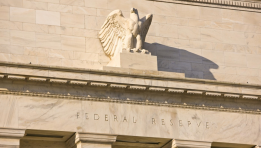
Federal Reserve Governor Lisa Cook has argued that additional interest-rate increases are needed to bring U.S. inflation under control,

- Ronny Mor
- •
- 7 Min Read
- •
- ago 2 days
SKN | Philadelphia Fed’s Anna Paulson Backs Further Rate Hikes, Says Shared Understanding Beats Explicit Guidance
Federal Reserve Bank of Philadelphia President Anna Paulson reiterated on Thursday, November 19, 2026, that the U.S. central bank will
- ago 2 days
- •
- 7 Min Read
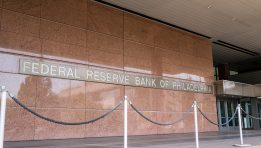
Federal Reserve Bank of Philadelphia President Anna Paulson reiterated on Thursday, November 19, 2026, that the U.S. central bank will
