




- sagi habasov
- •
- 6 Min Read
- •
- 42 seconds ago


Key Points
- The U.S. Dollar Index (DXY) traded steadily near 103.84 in holiday-thinned trading on Friday, November 27, holding just below Monday’s 22-month high of 104.53 and up roughly 5.7% year-to-date.
- Simmering volatility across artificial intelligence equities alongside hotter-than-expected October U.S. core PCE inflation and upward Q3 GDP revisions have cemented market bets on a December 9 Federal Reserve rate hike.
- For international allocators and Israeli institutional desks, broad greenback strength has pushed USD/ILS to roughly 3.31–3.38 in November, testing domestic hedging ratios and TASE liquidity ahead of Black Friday equity trading.
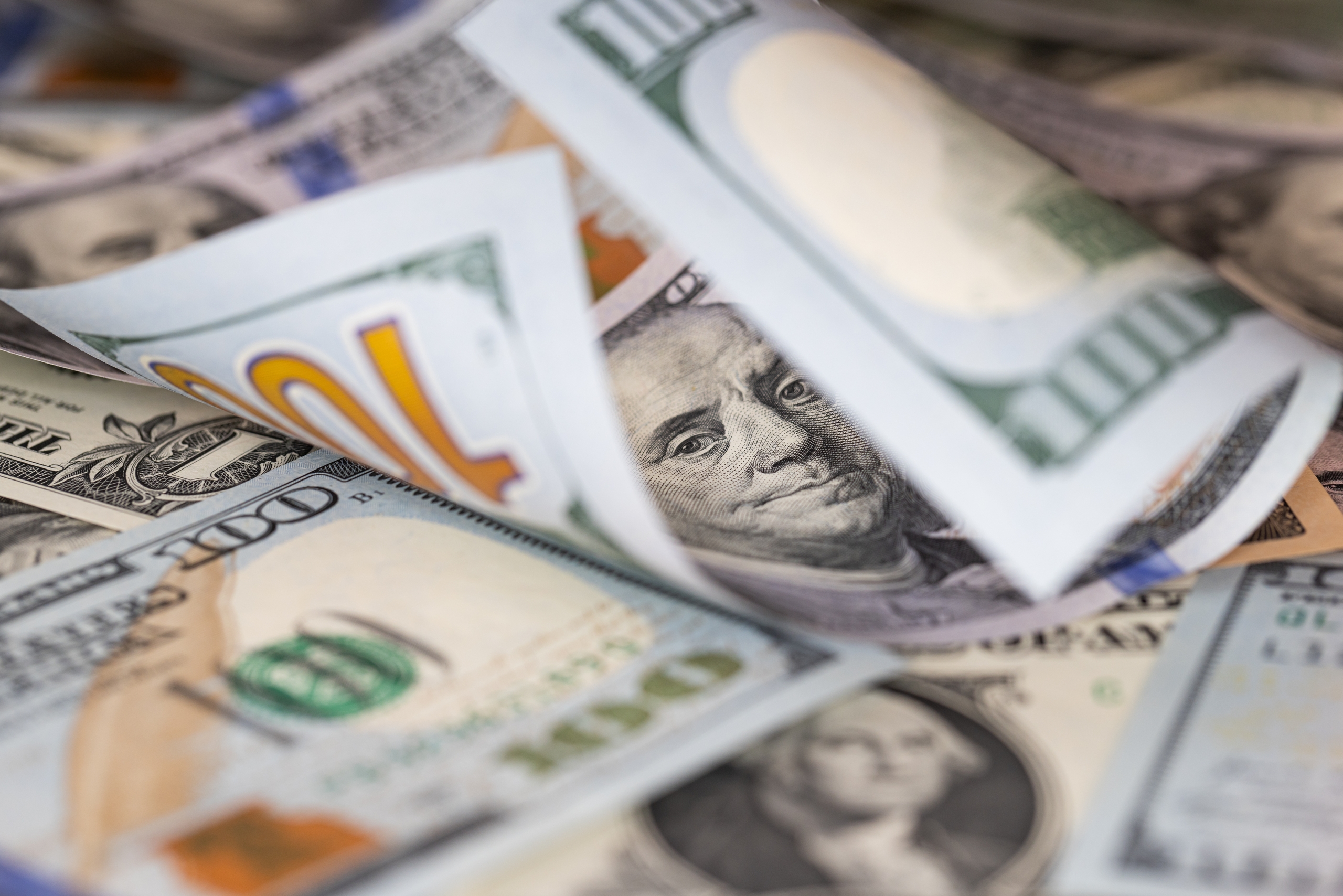
The U.S. dollar hovered just below a 22-month peak in holiday-thinned trading on Friday, November 27, 2026, supported by persistent safe-haven inflows amid artificial intelligence equity turbulence and firm expectations for further Federal Reserve interest-rate tightening. Trading near 103.84 against a basket of six major currencies after reaching 104.53 earlier in the week, the U.S. Dollar Index (DXY) is on pace for a third consecutive monthly advance and has climbed roughly 5.7% year-to-date.
Fed Tightening Trajectory and Risk-Sensitive Currency Pressure
Greenback resilience reflects a dual macro and cross-asset tailwind. On the monetary policy front, Wednesday’s hotter-than-expected October U.S. core Personal Consumption Expenditures (PCE) inflation print, an upward revision to third-quarter gross domestic product, and an upbeat Federal Reserve Beige Book survey have reinforced money-market pricing via CME FedWatch that a quarter-point rate hike on December 9 is a near certainty, with traders increasingly pricing an additional increase by April 2027. National Australia Bank strategists noted in a research report that the dollar appears locked onto a stronger-for-longer trajectory than previously anticipated, though its rapid appreciation may temper near-term upside.
Simultaneously, simmering anxiety over AI capital expenditure returns and governance turbulence—following Nvidia Corp.’s sharp November swings and SoftBank Group’s steep Tokyo drawdown—continues to weigh on risk-sensitive G10 currencies. In early Friday trading, the Australian dollar edged lower to $0.6631 after touching a one-year trough of $0.6559 earlier in the week, while the euro remained pinned near an 18-month low around $1.0907 and the Japanese yen hovered near 159 per dollar. Mizuho analysts observed that whether high-beta currencies such as the Australian dollar and Mexican peso rebound hinges directly on whether AI-related equities stabilize.
Cross-Asset Divergence and Transmission Channels for Israeli Desks
In Tel Aviv, global greenback dominance has translated into pronounced foreign-exchange movement against the New Israeli Shekel (NIS). After opening November near 3.14 per dollar, USD/ILS climbed as high as 3.38 on Wednesday before consolidating near 3.313 on Friday—representing a roughly 5.5% monthly appreciation for the U.S. currency.
For Israeli institutional pension managers and multi-asset desks on the Tel Aviv Stock Exchange (TASE), the simultaneous climb in the dollar and U.S. yields creates complex portfolio dynamics. Domestic institutional funds with substantial unhedged U.S. equity exposure have captured currency translation gains that partially cushion November’s Nasdaq pullback, while corporate importers face higher landed goods costs. Concurrently, local fixed-income allocators continue weighing high-yielding nominal domestic government bonds (Shahar) and inflation-linked notes (Galil) against potential imported currency pass-through into Israel’s consumer price index.
Outlook: Shortened Black Friday U.S. Session, December FOMC, and Equity Clues
With U.S. equity and Treasury markets reopening on Friday, November 27, for a shortened post-Thanksgiving session closing at 1:00 p.m. ET, thinner liquidity could exaggerate intraday foreign-exchange swings. Looking ahead into December, currency strategists will monitor whether Wall Street’s technology sector finds a durable floor, alongside next week’s U.S. payrolls report and the Federal Reserve’s December 8–9 policy decision, to gauge whether the dollar breaks above 104.53 or enters year-end consolidation.
Comparison, examination, and analysis between investment houses
Leave your details, and an expert from our team will get back to you as soon as possible
* This article, in whole or in part, does not contain any promise of investment returns, nor does it constitute professional advice to make investments in any particular field.
To read more about the full disclaimer, click here
- sagi habasov
- •
- 7 Min Read
- •
- ago 4 hours
SKN | Dollar Rally Pauses as Falling Yields Temper Safe-Haven Demand Ahead of Thanksgiving
The dollar's recent rally paused on November 26 as investors reduced their rush toward safer assets ahead of the
- ago 4 hours
- •
- 7 Min Read
The dollar's recent rally paused on November 26 as investors reduced their rush toward safer assets ahead of the

- orshu
- •
- 7 Min Read
- •
- ago 4 hours
SKN | ECB Turns to Crisis Veteran Pablo Hernández de Cos as Inflation and Debt Risks Intensify
The European Central Bank is preparing for a leadership transition at a particularly challenging moment for the euro zone.
- ago 4 hours
- •
- 7 Min Read

The European Central Bank is preparing for a leadership transition at a particularly challenging moment for the euro zone.

- Lior mor
- •
- 6 Min Read
- •
- ago 6 hours
SKN | US Corporate Credit Default Swap Trading Hits Record $9.6 Trillion as Demand for Risk Protection Accelerates
Activity in the US corporate credit derivatives market is accelerating, with trading volumes in credit default swap (CDS) indexes
- ago 6 hours
- •
- 6 Min Read
Activity in the US corporate credit derivatives market is accelerating, with trading volumes in credit default swap (CDS) indexes
- sagi habasov
- •
- 8 Min Read
- •
- ago 11 hours
SKN | Pablo Hernández de Cos Set to Lead ECB as EU Countries Back Spanish Candidate
De Cos Emerges as Preferred ECB Presidential Candidate Spanish economist Pablo Hernández de Cos is set to become the next
- ago 11 hours
- •
- 8 Min Read

De Cos Emerges as Preferred ECB Presidential Candidate Spanish economist Pablo Hernández de Cos is set to become the next
