





- orshu
- •
- 7 Min Read
- •
- 2 minutes ago


Key Points
- Pablo Hernández de Cos, the current head of the Bank for International Settlements, has been selected to succeed Christine Lagarde as European Central Bank president in February.
- The Spanish central banker is viewed as a pragmatic moderate, making a major change in the ECB's monetary-policy direction unlikely.
- His tenure will begin against a difficult backdrop of 4% inflation, rising public debt and potential financial strains in France.

The European Central Bank is preparing for a leadership transition at a particularly challenging moment for the euro zone. Pablo Hernández de Cos, a veteran central banker with experience navigating banking crises, the pandemic and the post-pandemic inflation surge, has been selected to succeed Christine Lagarde, placing a crisis-tested policymaker at the center of Europe’s next monetary-policy chapter.
A Crisis Veteran Takes the ECB’s Top Job
De Cos, 55, currently leads the Bank for International Settlements, the Basel-based forum for the world’s major central banks. Before taking that position, he served as governor of the Bank of Spain and participated in the ECB’s Governing Council, giving him direct experience with the institution he will soon lead.
His career has included some of Europe’s most difficult economic periods. As a policymaker in Spain, he dealt with the aftermath of the country’s banking crisis, years of exceptionally low inflation, the COVID-19 shock and the inflation surge that followed the pandemic and Russia’s invasion of Ukraine. He also chaired the Basel Committee on Banking Supervision, giving him experience with global banking regulation and financial stability.
Policy Continuity Is the Likely Starting Point
De Cos is generally viewed as a moderate rather than a clear dove or hawk. His reputation for pragmatism and flexibility suggests that his appointment is unlikely to produce an abrupt change in the ECB’s policy framework.
That distinction is important because monetary policy is determined collectively by the ECB’s 27-member Governing Council. The president can influence the debate and help build consensus, but cannot unilaterally determine interest rates. De Cos is therefore expected to continue emphasizing a united approach among policymakers while adapting to incoming economic data.
The immediate challenge is inflation. Euro-zone inflation has risen to 4%, twice the ECB’s 2% target, while high energy costs continue to create pressure. Policymakers are widely expected to raise interest rates again in December, with the path beyond that remaining less certain.
France and Public Debt Could Test the New President
The more difficult test could come from financial stability rather than conventional monetary policy. France faces high public debt, spending pressures and political uncertainty, conditions that have pushed government borrowing costs higher and raised concerns about broader market contagion.
The ECB cannot directly shield individual governments from concerns over fiscal policy, but it retains tools to address disorderly market movements, including bond purchases under specific circumstances. A financial crisis involving France, the euro zone’s second-largest economy, would therefore present De Cos with a substantially different challenge from the inflation problem currently dominating policy discussions.
A Narrow Path Between Inflation and Financial Stability
De Cos is expected to take office in February, with his first ECB policy meeting scheduled for March 18, pending the formal confirmation process. His appointment comes as the central bank must balance persistent inflation against the risk that higher borrowing costs could weaken economic activity and expose vulnerabilities in heavily indebted economies.
For Israeli and international investors, the transition will be important for European bond markets, the euro and global capital flows. The key indicators will be inflation, energy prices, government borrowing costs and financial conditions in France. If inflation remains elevated, the ECB may need to continue tightening cautiously; if fiscal stress intensifies, De Cos could instead face pressure to deploy the institution’s financial-stability tools. His record suggests a measured approach, but the economic and political environment will ultimately determine how much room the new president has to shape Europe’s monetary-policy path.
Comparison, examination, and analysis between investment houses
Leave your details, and an expert from our team will get back to you as soon as possible
* This article, in whole or in part, does not contain any promise of investment returns, nor does it constitute professional advice to make investments in any particular field.
To read more about the full disclaimer, click here
- Lior mor
- •
- 6 Min Read
- •
- ago 2 hours
SKN | US Corporate Credit Default Swap Trading Hits Record $9.6 Trillion as Demand for Risk Protection Accelerates
Activity in the US corporate credit derivatives market is accelerating, with trading volumes in credit default swap (CDS) indexes
- ago 2 hours
- •
- 6 Min Read
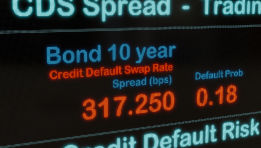
Activity in the US corporate credit derivatives market is accelerating, with trading volumes in credit default swap (CDS) indexes

- Ronny Mor
- •
- 6 Min Read
- •
- ago 2 hours
SKN | US New Home Sales Surge 14.2% in October, Defying Expectations and Rebounding From September’s Decline
The US housing market delivered a surprisingly strong rebound in October, with new home sales rising sharply after a
- ago 2 hours
- •
- 6 Min Read

The US housing market delivered a surprisingly strong rebound in October, with new home sales rising sharply after a

- sagi habasov
- •
- 8 Min Read
- •
- ago 6 hours
SKN | Pablo Hernández de Cos Set to Lead ECB as EU Countries Back Spanish Candidate
De Cos Emerges as Preferred ECB Presidential Candidate Spanish economist Pablo Hernández de Cos is set to become the next
- ago 6 hours
- •
- 8 Min Read

De Cos Emerges as Preferred ECB Presidential Candidate Spanish economist Pablo Hernández de Cos is set to become the next

- Arik Arkadi Sluzki
- •
- 6 Min Read
- •
- ago 1 day
SKN | Gold Falls to More Than One-Year Low as U.S. Inflation Strengthens and Rate-Hike Bets Rise
Gold extended its decline on November 25, approaching levels not seen in more than a year as stronger U.S.
- ago 1 day
- •
- 6 Min Read

Gold extended its decline on November 25, approaching levels not seen in more than a year as stronger U.S.

