




- orshu
- •
- 6 Min Read
- •
- 5 minutes ago


Key Points
- The Dow Jones Industrial Average fell 8.02% over five trading days, closing November 20, 2026, at 48,147.33.
- The index lost 949.77 points in the final session, recording a daily decline of 1.93% as selling pressure intensified.
- Despite remaining above its reported 52-week low of 45,057.28, the sharp weekly retreat highlights growing uncertainty across the U.S. equity market.
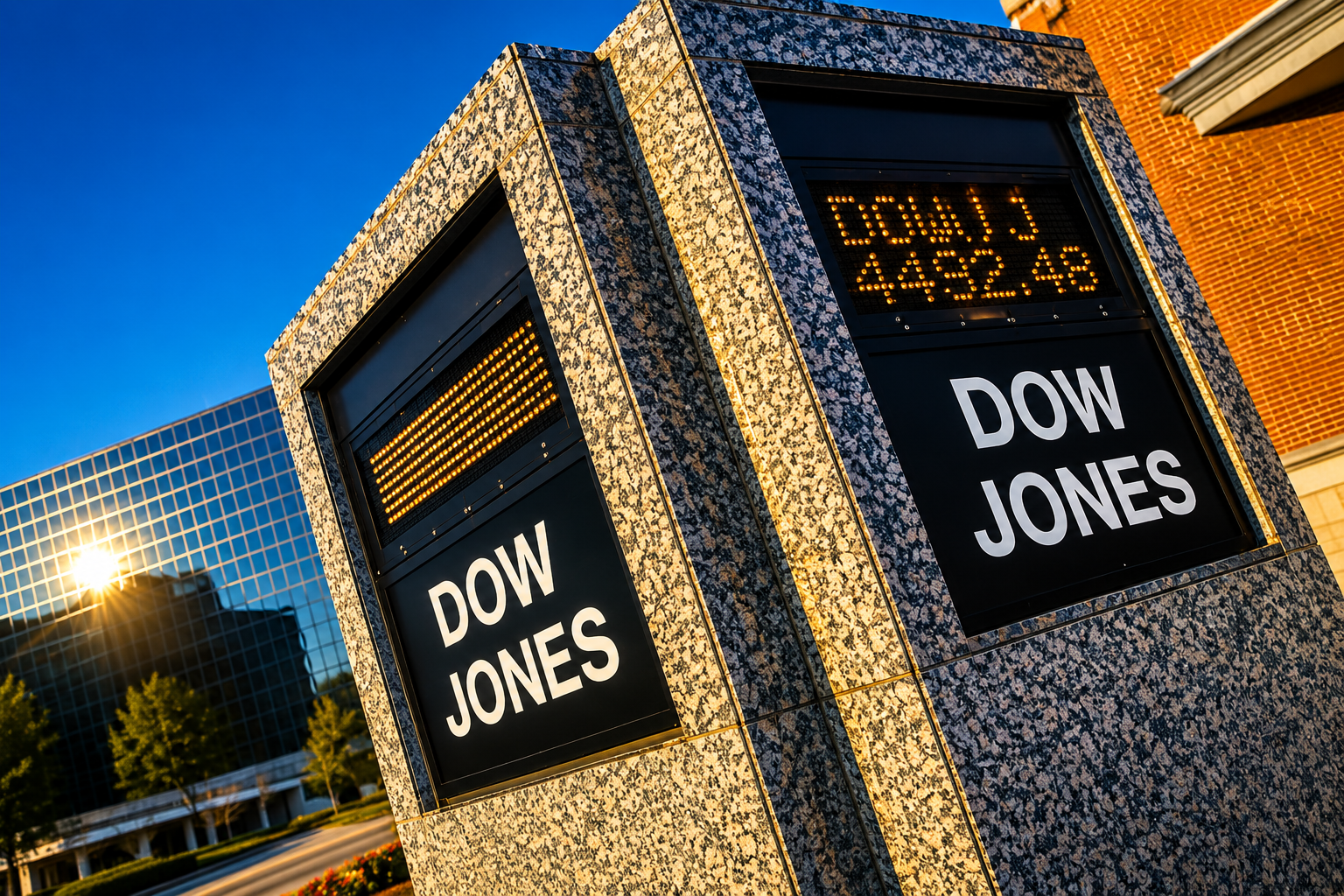
The Dow Jones Industrial Average experienced a substantial weekly decline, falling 8.02% to close at 48,147.33 on Friday, November 20, 2026. The index’s 949.77-point loss in the final session added to an already difficult five-day period, highlighting a deterioration in market sentiment and renewed pressure on established U.S. equities.
Dow Jones Extends Weekly Losses as Selling Pressure Intensifies
The Dow finished Friday at 48,147.33, down 1.93% from the previous close of 49,097.10. The index had opened at 49,071.82 before moving lower during the session. Its reported trading range extended from 47,998.86 to 49,594.90, indicating considerable intraday volatility as investors reassessed equity exposure.
The weekly decline of 8.02% is particularly significant because it represents a much broader retreat than the final session’s loss alone. Such a move can reflect a combination of changing economic expectations, adjustments in institutional positioning and reduced willingness among investors to maintain exposure to equities amid uncertainty. However, the supplied market data does not identify a specific catalyst behind the decline.
Annual Trading Range Highlights the Extent of the Retreat
The Dow’s reported 52-week range stands between 45,057.28 and 54,744.33. At 48,147.33, the index remains above its annual low but has moved considerably away from the upper end of its recent trading range. This positioning places renewed attention on whether the market can stabilize or whether additional selling could bring the annual low into closer focus.
The decline also matters for institutional investors because the Dow represents a broad group of established American companies. Sustained weakness in the index could influence portfolio allocation decisions, risk management strategies and expectations for U.S. equity performance. Nevertheless, a weekly decline does not necessarily establish a longer-term market direction, particularly without confirmation from earnings expectations, economic indicators and other major equity benchmarks.
Investor Sentiment and Economic Conditions Remain in Focus
The scale of the weekly retreat suggests that market participants may be becoming more cautious about the balance between corporate earnings prospects and broader economic risks. Interest rate expectations, inflation developments and the outlook for consumer demand remain important considerations for U.S. equities. Changes in Treasury yields or expectations surrounding Federal Reserve policy could also affect equity valuations and investor appetite for risk.
Looking ahead, the Dow’s ability to stabilize above its 52-week low will be an important measure of market resilience. Investors will be monitoring whether selling pressure moderates, alongside incoming economic data, corporate earnings and developments in monetary policy. Further weakness could increase volatility and reinforce defensive positioning, while a sustained recovery would require stronger evidence that market confidence is improving. For global investors and Israeli asset allocators, the sharp weekly decline underscores the importance of monitoring U.S. equity exposure alongside currency movements and broader international risk conditions.
Comparison, examination, and analysis between investment houses
Leave your details, and an expert from our team will get back to you as soon as possible
* This article, in whole or in part, does not contain any promise of investment returns, nor does it constitute professional advice to make investments in any particular field.
To read more about the full disclaimer, click here
- Ronny Mor
- •
- 6 Min Read
- •
- ago 45 minutes
U.S. Dollar Index Gains 0.28% on the Week to 103.84 as Currency Markets Assess the Dollar’s Direction
The U.S. Dollar Index ended the trading week on November 20, 2026, at 103.84, recording a 0.28% gain over
- ago 45 minutes
- •
- 6 Min Read

The U.S. Dollar Index ended the trading week on November 20, 2026, at 103.84, recording a 0.28% gain over

- omer bar
- •
- 6 Min Read
- •
- ago 1 hour
VIX Surges Nearly 86% in Five Trading Days as Market Volatility Signals Rising Investor Caution
Global financial markets entered the end of the trading week with a significant increase in volatility expectations, as the
- ago 1 hour
- •
- 6 Min Read

Global financial markets entered the end of the trading week with a significant increase in volatility expectations, as the

- sagi habasov
- •
- 7 Min Read
- •
- ago 11 hours
SKN | Oil Prices Rise on Iran War Risks as Traders Weigh Supply Surplus
Oil prices recovered late Friday as renewed concerns over the war involving Iran and the potential for attacks on
- ago 11 hours
- •
- 7 Min Read

Oil prices recovered late Friday as renewed concerns over the war involving Iran and the potential for attacks on
- sagi habasov
- •
- 5 Min Read
- •
- ago 11 hours
SKN | Argentina Approves Incentive Scheme for $50.75 Billion LNG Project
Argentina Approves Incentives for Major LNG Development Argentina has approved the inclusion of its planned liquefied natural gas (LNG) project
- ago 11 hours
- •
- 5 Min Read

Argentina Approves Incentives for Major LNG Development Argentina has approved the inclusion of its planned liquefied natural gas (LNG) project
