




- orshu
- •
- 9 Min Read
- •
- 1 minute ago


Key Points
- South Korea’s KOSPI Composite Index drops 4.70% and Japan’s Nikkei 225 slides 4.66%, leading heavy morning sell-offs across major North Asian benchmarks.
- Hong Kong’s Hang Seng falls 1.95%, Australia’s S&P/ASX 200 declines 1.05%, and mainland China’s SSE Composite Index slips 0.28%, while India’s S&P BSE Sensex gains 1.21%.
- The Australian Dollar Currency Index drops 0.83%, APAC Private Equity retreats 0.37%, and the PHLX Yen edges down 0.22% during early Friday dealings.

Asian equity benchmarks face widespread selling pressure during the morning session on Friday, November 20, as steep contractions in South Korea and Japan pull broader regional sentiment lower. Five of the six reported equity indexes trade in negative territory, with only India’s benchmark advancing against the regional tide. Although the morning figures establish pronounced weakness across major manufacturing and offshore financial hubs, the supplied data does not identify a single overarching macroeconomic catalyst or unified policy announcement driving Friday’s sell-off.
Severe Sell-Off Hits South Korea and Japan in Early Trade
South Korea’s KOSPI Composite Index records the sharpest percentage loss across the Asia-Pacific region during Friday morning dealings, plunging 4.70% to trade at 4,896.42. The steep retreat pushes the Seoul benchmark decisively below the 5,000 psychological threshold, pointing to heavy liquidation across domestic trading floors. However, the available dataset does not confirm whether the selling is concentrated in semiconductor manufacturers, battery producers, automotive exporters, or diversified conglomerates, nor does it include volume totals to quantify institutional participation.
Japan’s Nikkei 225 mirrors this severe downward trajectory, falling 4.66% to stand at 56,673.49. The substantial pullback across Tokyo prime-market listings underscores aggressive risk-off positioning across North Asian industrial centers as the trading week nears its close. The provided figures do not specify sector-level contributions, leaving open whether export-oriented electronics, precision machinery, or domestic cyclicals are pacing the decline.
Market observers are closely watching whether the acute drops in Seoul and Tokyo stabilize before the midday recess or trigger further forced selling into the afternoon session. Investors will require detailed transaction metrics and institutional flow disclosures to evaluate whether these contractions reflect structural portfolio redemptions or sharp technical adjustments.
India Advances Against Broader Declines in Greater China and Australia
In stark contrast to the heavy losses across North Asia, India’s S&P BSE Sensex delivers the sole positive equity performance among reported regional benchmarks, surging 1.21% to reach 83,021.75. The strong advance in Mumbai pushes the index past the 83,000 milestone, demonstrating resilient domestic and foreign capital allocation into Indian large-cap constituents despite regional volatility. The dataset does not specify whether banking majors, information technology providers, or domestic industrial firms are leading the gain.
Elsewhere across the region, equity benchmarks remain firmly in negative territory. Hong Kong’s Hang Seng Index drops 1.95% to trade at 22,841.62, extending downward pressure across offshore Chinese listings and slipping below the 23,000 level. Mainland China’s SSE Composite Index experiences a milder pullback, edging down 0.28% to 3,577.62, showing relative containment on the Shanghai exchange compared to Hong Kong’s steeper decline.
In Oceania, Australia’s S&P/ASX 200 declines 1.05% to 8,638.40. Weakness across Sydney trading floors reflects broad selling pressure across domestic resource, energy, and financial shares, aligning Australia with the defensive tone seen across East Asia.
Currency Indicators and Alternative Assets Reflect Risk-Off Positioning
Outside traditional public equity benchmarks, regional foreign exchange gauges and alternative asset measures move lower across the board during Friday morning. The Australian Dollar Currency Index falls 0.83% to 66.61, tracking closely with the retreat on the Sydney stock exchange and signaling reduced appetite for commodity-linked currency pairs amid broader regional equity stress.
The PHLX Yen index also softens, declining 0.22% to 62.62, indicating mild downward pressure on the Japanese currency alongside the steep equity sell-off in the Nikkei 225. In private markets, the APAC Private Equity index slips 0.37% to 6,671.10, reflecting cautious valuation adjustments across unlisted assets that parallel the broader risk-off sentiment across public bourses. Because currencies, private equity indices, and public stock benchmarks operate under distinct liquidity structures and valuation cycles, their respective retreats should be assessed as independent market adjustments rather than a coordinated cross-asset liquidation.
Outlook: Strategic Variables and Cross-Market Factors to Monitor
As Friday’s session advances toward the afternoon across Asia-Pacific financial centers, global and Israeli institutional investors will closely monitor whether the severe morning losses in the KOSPI and Nikkei trigger spillover pressure into India’s resilient Sensex benchmark. Market desks will also observe whether Hong Kong’s Hang Seng and Australia’s S&P/ASX 200 find technical buying interest or extend their declines as European pre-market preparations get underway. Key variables to track include foreign exchange volatility across the yen and Australian dollar, global sovereign bond yield shifts, and official commentary regarding market liquidity heading into the weekly close. For international portfolio allocators, the central priority remains determining whether Friday’s sharp sell-off in North Asian industrial hubs represents an isolated end-of-week de-grossing event or the onset of wider regional fragility.
Comparison, examination, and analysis between investment houses
Leave your details, and an expert from our team will get back to you as soon as possible
* This article, in whole or in part, does not contain any promise of investment returns, nor does it constitute professional advice to make investments in any particular field.
To read more about the full disclaimer, click here
- Lior mor
- •
- 6 Min Read
- •
- ago 2 hours
SKN | AMD Shares Slide as China Ties Raise Fresh U.S. Regulatory Scrutiny
Advanced semiconductor stocks faced renewed geopolitical pressure on Thursday after a report raised questions about AMD’s relationships with Chinese
- ago 2 hours
- •
- 6 Min Read

Advanced semiconductor stocks faced renewed geopolitical pressure on Thursday after a report raised questions about AMD’s relationships with Chinese

- sagi habasov
- •
- 8 Min Read
- •
- ago 2 hours
SKN | Apple Develops Its Own AI Agent to Control Devices, Browse the Web and Execute Tasks
Apple is advancing its artificial intelligence strategy by developing an autonomous AI agent designed to perform tasks across applications,
- ago 2 hours
- •
- 8 Min Read

Apple is advancing its artificial intelligence strategy by developing an autonomous AI agent designed to perform tasks across applications,
- sagi habasov
- •
- 7 Min Read
- •
- ago 5 hours
SKN | TSMC Halts Advanced Chip Orders for Affected Chinese Customers Under New US Export Rules
The global semiconductor industry is facing another regulatory constraint as Taiwan Semiconductor Manufacturing Company (TSMC) moves to restrict advanced
- ago 5 hours
- •
- 7 Min Read
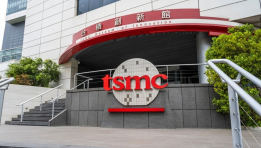
The global semiconductor industry is facing another regulatory constraint as Taiwan Semiconductor Manufacturing Company (TSMC) moves to restrict advanced
- Lior mor
- •
- 7 Min Read
- •
- ago 7 hours
SKN | Sanofi Weighs Insmed Takeover as Pharmaceutical M&A Enters a New Phase
Sanofi is weighing a potential acquisition of U.S. pharmaceutical company Insmed, Bloomberg News reported, putting another major transaction under
- ago 7 hours
- •
- 7 Min Read

Sanofi is weighing a potential acquisition of U.S. pharmaceutical company Insmed, Bloomberg News reported, putting another major transaction under
