




- Articles
- •
- 7 Min Read
- •
- 1 minute ago


Key Points
- Technology positioning: Investor exposure to technology stocks has fallen below levels recorded during the April 2025 Liberation Day selloff, suggesting some of the market's crowded positioning has unwound.
- Options activity: Retail demand for call options on AI stocks dropped sharply last week, while put-call skew returned near the middle of its historical range, leaving the positioning signal mixed.
- Technical outlook: Despite a partial recovery in technology shares, bearish short-term trends and momentum indicators suggest US stocks could remain volatile for another couple of weeks.
Market Stabilization Faces Further Tests
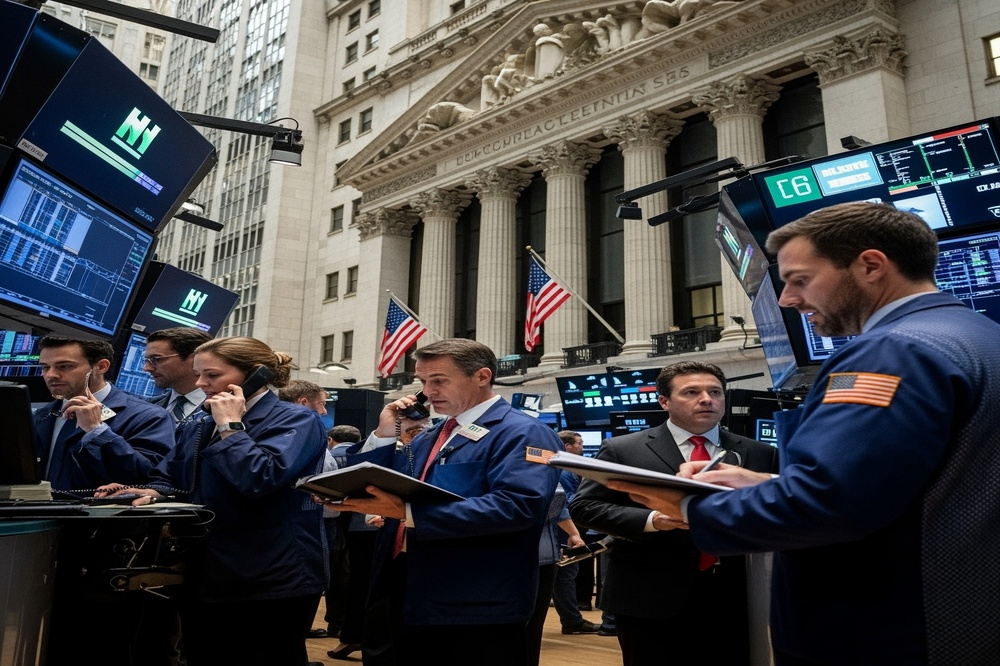
The recent US stock market selloff has prompted investors to assess whether the decline has run its course. Although technology and AI-related shares have shown signs of stabilization, several indicators suggest it is too early to declare a market bottom.
The Nasdaq-100 reached a record high in early October before losing ground over the following weeks. Technology and AI-related stocks are now about 10% below their recent peaks, reflecting concerns over AI infrastructure spending, expected returns and the pace of capital investment among major cloud companies.
The latest pressure followed a strong showing by Democrats in the US midterm elections, which revived economic slowdown concerns and weighed on AI shares. Recent trading sessions have brought some recovery, partially reversing the post-election decline.
Market analysts are monitoring four indicators: technology positioning, stock correlations, options demand and technical trends. Two offer encouraging signals, one presents a mixed picture, while technical indicators remain cautious.
Technology Positioning Shows Signs of Reset
Investor exposure to large-cap growth and technology stocks has declined since late September as market participants reduced positions in these areas and shifted toward other sectors.
Last week’s selloff pushed technology positioning below the levels recorded during the April 2025 Liberation Day market decline, according to Deutsche Bank data. The bank attributed the latest weakness to a forced unwinding of investor positions.
Technology positioning is now just below the bottom of its long-term range, while the sector’s relative performance has also slipped below its long-term trend channel. These levels have previously provided a basis for rebounds, supporting a more constructive view among some strategists.
However, the upcoming initial public offering of Anthropic is expected to test investor confidence in the broader artificial intelligence trade.
Stock Correlations Remain Relatively Contained
Another potentially supportive signal comes from the limited increase in expected stock market correlations. Correlation measures how closely individual stocks move together.
During the AI-driven rally, stock-specific themes contributed to unusually low correlations among major companies. Three-month realized correlation among the S&P 500’s 50 largest stocks reached a record low in late September.
Last week’s selloff raised expectations for future correlations, but the increase remained modest. This suggests investors may view the decline primarily as a sector-specific adjustment rather than a broader economic downturn affecting the entire market.
Options Activity Sends a Mixed Signal
Heavy retail demand for call options on individual stocks was a defining feature of this year’s rally. These positions encouraged market makers to purchase shares as a hedge, helping support stock prices.
That dynamic reversed last week as retail call buying in AI stocks declined sharply. The shift was identified as a major positioning change behind the market’s election-week decline.
The one-month normalized put-call skew has since moved near the middle of its 13-year range. This indicates that short-term crowding in the AI trade has eased, but options positioning has not reached levels that would independently support a strong buying signal.
What Investors Should Watch Next
Technical indicators remain the main source of caution. Although the Nasdaq-100 tracking Invesco QQQ ETF recovered some losses, its rebound stalled just below a downtrend established in late October.
Bearish short-term trends and momentum, combined with the absence of a DeMark exhaustion signal, suggest the market has not yet experienced a decisive washout. Further volatility over the next couple of weeks remains possible.
The decline may eventually create a more attractive entry point, but improving positioning and modest changes in correlation are not sufficient evidence that the market has reached a durable bottom. Investors will be watching whether technology shares can sustain their recovery and whether technical conditions begin to confirm a broader stabilization.
Comparison, examination, and analysis between investment houses
Leave your details, and an expert from our team will get back to you as soon as possible
* This article, in whole or in part, does not contain any promise of investment returns, nor does it constitute professional advice to make investments in any particular field.
To read more about the full disclaimer, click here
- orshu
- •
- 8 Min Read
- •
- ago 25 minutes
Tel Aviv Stocks Pull Back as TA-35 Falls 1.02% While Mid-Caps Extend Gains
Israeli Equities Deliver a Mixed Session The Tel Aviv Stock Exchange retreated on November 11, with losses concentrated in several
- ago 25 minutes
- •
- 8 Min Read

Israeli Equities Deliver a Mixed Session The Tel Aviv Stock Exchange retreated on November 11, with losses concentrated in several

- Lior mor
- •
- 8 Min Read
- •
- ago 2 hours
Global Stocks Rally as CoreWeave Revives Confidence in AI Demand
CoreWeave Revives AI Investment Sentiment Global equity markets advanced on Wednesday as investors returned to technology shares, looking beyond expectations
- ago 2 hours
- •
- 8 Min Read

CoreWeave Revives AI Investment Sentiment Global equity markets advanced on Wednesday as investors returned to technology shares, looking beyond expectations
- orshu
- •
- 7 Min Read
- •
- ago 2 hours
SKN | US Markets Advance as Nasdaq Leads Gains Across Major Equity Benchmarks
US financial markets were trading predominantly higher on November 11, with technology stocks leading gains as the Nasdaq outperformed
- ago 2 hours
- •
- 7 Min Read

US financial markets were trading predominantly higher on November 11, with technology stocks leading gains as the Nasdaq outperformed
- orshu
- •
- 6 Min Read
- •
- ago 7 hours
Asian Markets Advance on November 11, 2026 as KOSPI Gains 2.60% and Nikkei Rises 1.31%
Asian Markets Extend Their Recovery Asian markets recorded a broadly positive performance on November 11, 2026, as South Korea and
- ago 7 hours
- •
- 6 Min Read

Asian Markets Extend Their Recovery Asian markets recorded a broadly positive performance on November 11, 2026, as South Korea and
