




- Articles
- •
- 6 Min Read
- •
- 10 minutes ago


Key Points
- OpenAI has secured $11 billion in new funding as the initial portion of a larger financing round.
- The financing values OpenAI at approximately $1.25 trillion, below the $1.5 trillion valuation the company initially sought.
- The capital raised so far represents only part of an earlier fundraising target of up to $30 billion, highlighting the scale of funding required for advanced AI development.

OpenAI has secured $11 billion in new funding at a valuation of approximately $1.25 trillion, according to a source familiar with the matter, underscoring the extraordinary capital requirements surrounding the development and expansion of artificial intelligence. The financing comes as leading AI companies compete for increasingly large pools of institutional capital while investors assess whether the sector’s rapid infrastructure spending can generate sustainable long-term returns.
OpenAI Raises Initial Portion of Larger Round
The $11 billion raised by OpenAI represents the initial portion of a broader financing round, according to the source cited by Reuters. The company had previously targeted as much as $30 billion in fundraising, meaning the latest capital represents only part of the amount it had originally sought.
The scale of the financing illustrates the financial demands associated with OpenAI’s expansion. Developing and deploying advanced AI systems requires substantial expenditure on computing capacity, data-center infrastructure and specialized hardware, creating a funding environment in which even multibillion-dollar private rounds can represent only one stage of a much larger capital program.
Valuation Falls From Earlier $1.5 Trillion Target
OpenAI’s latest valuation of $1.25 trillion also represents a step down from the $1.5 trillion level the company had initially sought, according to two investors cited in the report. The difference suggests that investors are placing greater emphasis on valuation discipline even as demand for AI technology continues to attract substantial private-market capital.
A lower valuation does not necessarily signal weakening confidence in OpenAI’s business. Instead, it may reflect the increasingly complex assessment investors must make around the company’s future capital requirements, competitive position and ability to convert rapid technological growth into durable financial performance.
AI Capital Requirements Continue to Expand
The financing highlights a broader transformation in the technology investment landscape. AI companies are operating at a scale that increasingly resembles major infrastructure businesses, with significant capital required to support computing resources and the expansion of AI services.
For investors, the central question is increasingly shifting from the size of AI funding rounds to the economic efficiency of the capital being deployed. Large financing packages can strengthen a company’s ability to expand capacity, but they also raise expectations for revenue growth, technological progress and eventual financial sustainability.
What Investors Will Watch Next
The next stage of OpenAI’s fundraising will therefore be closely monitored. The company still has room to raise additional capital relative to its original $30 billion target, while the difference between its initial $1.5 trillion valuation objective and the reported $1.25 trillion financing valuation provides an important signal about investor expectations.
Going forward, attention will focus on whether OpenAI can secure additional funding on competitive terms and how effectively the company converts that capital into AI infrastructure, products and revenue. The outcome will also provide a broader indication of how private-market investors are pricing the long-term economics of artificial intelligence as the sector enters a more capital-intensive phase.
Comparison, examination, and analysis between investment houses
Leave your details, and an expert from our team will get back to you as soon as possible
* This article, in whole or in part, does not contain any promise of investment returns, nor does it constitute professional advice to make investments in any particular field.
To read more about the full disclaimer, click here
- sagi habasov
- •
- 7 Min Read
- •
- ago 17 hours
SKN | Wall Street Suffers Its Sharpest Sell-Off Since 2025 as AI Stocks Face a Major Repricing
Wall Street experienced a significant reversal on Thursday, November 5, as investors rapidly reduced exposure to technology and artificial
- ago 17 hours
- •
- 7 Min Read

Wall Street experienced a significant reversal on Thursday, November 5, as investors rapidly reduced exposure to technology and artificial

- Arik Arkadi Sluzki
- •
- 7 Min Read
- •
- ago 17 hours
SKN | AI Financial Commitments Reach a Record $4.1 Trillion: What Are the Hidden Obligations Behind Big Tech’s Expansion?
The global artificial intelligence investment cycle is creating financial obligations that extend well beyond the capital expenditure figures reported
- ago 17 hours
- •
- 7 Min Read

The global artificial intelligence investment cycle is creating financial obligations that extend well beyond the capital expenditure figures reported

- Lior mor
- •
- 7 Min Read
- •
- ago 21 hours
SKN | TSMC Rejects Reports of 3D DRAM Plans, Reaffirming Its Focus on Logic Chip Manufacturing
The rapid expansion of artificial intelligence infrastructure is increasing demand for advanced processors, high-bandwidth memory and more sophisticated semiconductor
- ago 21 hours
- •
- 7 Min Read
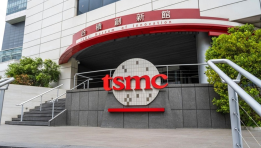
The rapid expansion of artificial intelligence infrastructure is increasing demand for advanced processors, high-bandwidth memory and more sophisticated semiconductor

- Ronny Mor
- •
- 7 Min Read
- •
- ago 22 hours
SKN | Tesla to Wind Down Cybertruck Production as Weak Sales Shift Focus to Cybercab
Tesla is preparing to wind down production of the Cybertruck at its Texas gigafactory around mid-2027, marking a significant
- ago 22 hours
- •
- 7 Min Read
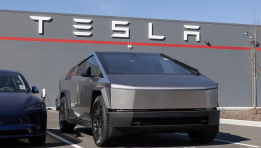
Tesla is preparing to wind down production of the Cybertruck at its Texas gigafactory around mid-2027, marking a significant
