




- sagi habasov
- •
- 7 Min Read
- •
- 7 minutes ago


Key Points
- The technology selloff is testing the resilience of global financial markets as confidence in the AI trade weakens.
- The Nasdaq 100 rebounded nearly 2% on Friday after falling more than 6% on Thursday, while volatility, credit stress and safe-haven demand increased.
- Bond and funding markets have remained orderly so far, with key stress indicators flashing caution rather than signaling a broader financial crisis.

A sharp reversal in technology stocks is putting global financial markets through a significant stress test as investors reassess the durability of the artificial intelligence investment cycle. Although the Nasdaq 100 recovered nearly 2% on Friday after plunging more than 6% in the previous session, the rapid swings have raised concerns about whether weakness in AI-related assets could spread into broader financial markets.
The episode is particularly important because AI has become a major driver of equity valuations and corporate investment expectations across the United States and Asia. Policymakers and regulators have previously warned that an abrupt reversal in the AI boom could create wider financial vulnerabilities.
Technology Selloff Tests Market Resilience
The Nasdaq 100’s rebound provided some relief after Thursday’s severe decline, but the scale of the previous selloff has kept traders cautious. The technology-heavy index remains at the center of the market debate because of the concentration of investor capital and expectations surrounding AI-related companies.
A sustained decline in technology shares could have consequences beyond equity markets. High valuations, significant corporate investment and growing dependence on financing for AI infrastructure mean that a prolonged repricing could affect credit conditions, corporate spending and investor risk appetite.
For global markets, the key issue is whether the technology correction remains contained within equities or begins affecting other asset classes. The distinction is critical because financial instability tends to become more serious when losses spread through funding and credit markets.
Volatility and Safe-Haven Demand Increase
Several market indicators have begun flashing warning signals as traders respond to the technology rout. Volatility has increased, credit stress has risen and demand for safe-haven assets has strengthened, reflecting a more defensive approach among investors.
These movements indicate that market participants are becoming more sensitive to the possibility of additional losses. However, the available signals remain below levels that would indicate severe systemic stress. The current environment is therefore better characterized as heightened caution rather than a confirmed financial-market disruption.
The speed of the adjustment remains an important consideration. When highly valued sectors experience rapid declines, investors can reassess portfolios simultaneously, potentially increasing short-term volatility across otherwise unrelated markets.
Bond and Funding Markets Remain Orderly
One of the more important stabilizing factors is that bond and funding markets remain orderly. This suggests that the stress generated by the technology selloff has not yet translated into widespread disruption in the mechanisms that support financial-market liquidity.
That distinction matters for policymakers and institutional investors. Equity-market volatility can remain elevated without becoming a broader financial crisis if credit markets continue functioning normally and funding remains available. The resilience of these markets will therefore be closely monitored as the AI-related repricing develops.
What Comes Next for the AI Trade?
The next stage will depend largely on whether investors regain confidence in the earnings and growth assumptions underpinning AI valuations or continue reducing exposure to the sector. A sustained rebound in technology stocks could contain the broader impact, while another sharp selloff could place greater pressure on credit and funding conditions.
Markets will therefore watch volatility indicators, credit spreads, funding conditions, safe-haven demand and technology valuations for evidence of whether current stress is stabilizing or spreading. For investors in Israel and globally, the central question is no longer simply how far AI-related shares can fall, but whether the repricing remains an equity-market correction or develops into a broader test of global financial resilience.
Comparison, examination, and analysis between investment houses
Leave your details, and an expert from our team will get back to you as soon as possible
* This article, in whole or in part, does not contain any promise of investment returns, nor does it constitute professional advice to make investments in any particular field.
To read more about the full disclaimer, click here
- Ronny Mor
- •
- 7 Min Read
- •
- ago 7 minutes
SKN | OpenAI Secures $11 Billion at $1.25 Trillion Valuation in Latest Funding Round
OpenAI has secured $11 billion in new funding as the initial portion of a financing round that values the
- ago 7 minutes
- •
- 7 Min Read

OpenAI has secured $11 billion in new funding as the initial portion of a financing round that values the

- orshu
- •
- 8 Min Read
- •
- ago 56 minutes
SKN | Americas Market Overview: IBOVESPA Gains 1.39% as Nasdaq Leads U.S. Stock Recovery
Nasdaq Leads Recovery Across U.S. Equities U.S. equity markets recorded gains across three of the four major benchmarks, led by
- ago 56 minutes
- •
- 8 Min Read
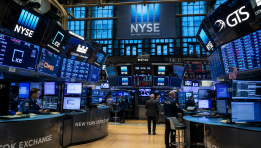
Nasdaq Leads Recovery Across U.S. Equities U.S. equity markets recorded gains across three of the four major benchmarks, led by

- Lior mor
- •
- 8 Min Read
- •
- ago 2 hours
SKN | TeraWulf Q3 2026 Earnings: $19 Billion Anthropic Lease and 1 GW Power Pipeline Strengthen AI Infrastructure Strategy
TeraWulf (NASDAQ: WULF) is accelerating its transition toward large-scale artificial intelligence and high-performance computing infrastructure, with its latest quarterly
- ago 2 hours
- •
- 8 Min Read
TeraWulf (NASDAQ: WULF) is accelerating its transition toward large-scale artificial intelligence and high-performance computing infrastructure, with its latest quarterly
- Ronny Mor
- •
- 7 Min Read
- •
- ago 2 hours
SKN | SpaceX Revenue Projection Signals Major Growth Acceleration as Elon Musk Targets $500 Billion Annualized Revenue
SpaceX is projecting a significant acceleration in revenue as demand for satellite connectivity, launch services and space-related infrastructure continues
- ago 2 hours
- •
- 7 Min Read
SpaceX is projecting a significant acceleration in revenue as demand for satellite connectivity, launch services and space-related infrastructure continues
