




- orshu
- •
- 8 Min Read
- •
- 2 minutes ago


Key Points
- Israeli equities recorded broad losses on November 4, with the Tel Aviv-35 falling 1.96% to 3,969.53 and the Tel Aviv-125 declining 1.86% to 3,849.08.
- The Tel Aviv-90 dropped 1.90% to 3,484.82, while the Tel Aviv-20 recorded the steepest decline among the listed benchmarks, losing 1.99% to 3,760.50.
- Stock turnover reached approximately NIS 5.39 billion, while bond turnover totaled approximately NIS 5.64 billion. Doral Energy gained 9.50%, while RP Optical fell 7.97%.
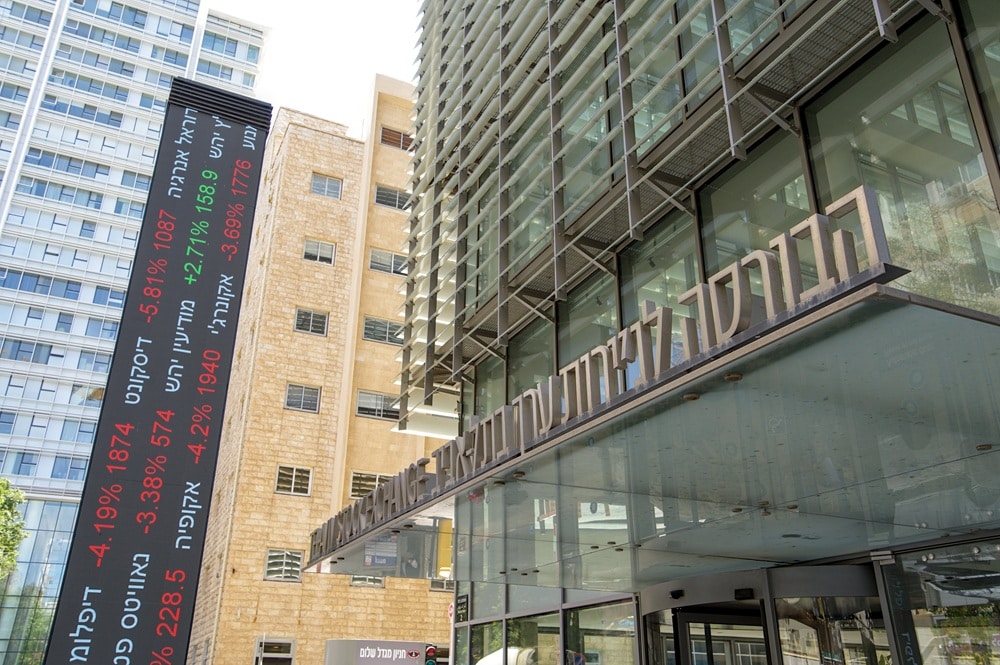
Israeli Equities Extend Their Decline
The Tel Aviv Stock Exchange closed sharply lower on November 4, with all eight listed benchmarks recording losses. The Tel Aviv-35 declined 1.96% to 3,969.53, falling below the 4,000 threshold. The Tel Aviv-125 lost 1.86% to 3,849.08, while the Tel Aviv-90 dropped 1.90% to 3,484.82.
The declines extended the weakness seen in the previous session, when the Tel Aviv-125 was nearly unchanged and the Tel Aviv-90 underperformed. The latest performance indicates that selling pressure broadened, affecting large-cap companies as well as mid-cap and smaller-market segments.
The Tel Aviv-20 fell 1.99% to 3,760.50, the largest percentage decline among the listed indices. The Tel Aviv-200 lost 1.87% to 3,671.08, while the Tel Aviv-SME60 declined 1.45% to 1,167.97. The Tel Aviv-90 and Banks index dropped 1.64% to 3,735.93, and the Tel Aviv Sector-Balance index fell 1.64% to 4,384.26.
The synchronized declines point to broad market weakness, although the supplied figures do not identify the specific catalysts behind the session.
Market Breadth Confirms Widespread Selling
Advance-decline figures show that declining securities substantially outnumbered advancing securities across every listed benchmark.
The Tel Aviv-35 recorded six advancing securities against 30 declining securities. Within the Tel Aviv-125, 19 securities advanced while 106 declined. The Tel Aviv-90 registered 13 advances compared with 76 declines.
The broader indices showed a similar pattern. The Tel Aviv-200 recorded 32 advances and 164 declines, while the Tel Aviv-SME60 had 11 advancing securities against 48 declining securities. The Tel Aviv Sector-Balance index reported 14 advances and 85 declines. The Tel Aviv-20 recorded just two advances compared with 18 declines.
This distribution indicates that the session’s losses were not confined to a limited group of large companies. Instead, negative performance was widespread across market segments, reinforcing the scale of the decline.
Trading Activity Remains Elevated
Stock turnover reached approximately NIS 5.39 billion, based on reported trading of NIS 5.392 billion. Bond turnover totaled approximately NIS 5.64 billion, exceeding equity turnover by around NIS 250 million.
The relatively close trading volumes indicate substantial activity in both equity and fixed-income markets during the declining session. However, turnover figures alone do not establish whether the activity reflected portfolio adjustments, institutional transactions, changes in risk exposure, or other trading strategies.
The supplied index table does not include individual index turnover figures, limiting comparisons of activity between specific equity benchmarks.
Individual Stocks Show Diverging Performance
Despite the broad market decline, Doral Energy advanced 9.50% to 5,969, making it the strongest reported gainer among the notable Tel Aviv-125 movements. RP Optical moved in the opposite direction, declining 7.97% to 3,117.
Nature recorded approximately NIS 357.63 million in turnover, making it a notable individual trading figure during the session.
The contrasting stock movements illustrate that individual securities continued to show substantial differences in performance despite the broadly negative market environment. The supplied data does not establish the company-specific reasons behind these movements.
What Investors Should Watch Next
The next sessions will be important in determining whether the Tel Aviv-35 can recover the 4,000 level and whether the Tel Aviv-125 can stabilize above 3,850. The Tel Aviv-90’s position below 3,500 will also remain relevant when assessing the performance of mid-cap shares.
Market breadth will be a particularly important indicator. A reduction in the number of declining securities, combined with stabilization in the major indices, could signal that selling pressure is easing. Continued negative breadth would suggest that the weakness remains widespread.
Investors may also monitor whether bond turnover remains elevated relative to equity activity and whether individual sectors begin to diverge from the broader market.
Closing Insights
The November 4 session marked another broad decline for Israeli equities, with all eight listed benchmarks losing ground and declining securities significantly outnumbering advancing ones. The Tel Aviv-35 moved below 4,000, while stock and bond turnover both exceeded NIS 5 billion. The next sessions will help establish whether the market can stabilize or whether the current selling pressure will continue across the major indices.
Comparison, examination, and analysis between investment houses
Leave your details, and an expert from our team will get back to you as soon as possible
* This article, in whole or in part, does not contain any promise of investment returns, nor does it constitute professional advice to make investments in any particular field.
To read more about the full disclaimer, click here
- orshu
- •
- 5 Min Read
- •
- ago 2 hours
SKN | U.S. Markets Rise Broadly as Dow, S&P 500 and Nasdaq Advance in November Trading
U.S. financial markets were trading higher on November 4, with gains extending across major equity benchmarks and selected international
- ago 2 hours
- •
- 5 Min Read
U.S. financial markets were trading higher on November 4, with gains extending across major equity benchmarks and selected international
- orshu
- •
- 6 Min Read
- •
- ago 7 hours
SKN | Asian Markets Rebound on November 4, 2026 as Shanghai Gains 2.16% and Hang Seng Advances 1.67%
Asian Markets Recover as China and Hong Kong Lead Gains Asian markets delivered a mixed performance on November 4, 2026,
- ago 7 hours
- •
- 6 Min Read

Asian Markets Recover as China and Hong Kong Lead Gains Asian markets delivered a mixed performance on November 4, 2026,
- orshu
- •
- 4 Min Read
- •
- ago 8 hours
SKN | European Markets Mixed as MSCI Europe Leads Gains
European markets delivered a mixed performance on November 4, with the MSCI Europe advancing while several major regional benchmarks declined
- ago 8 hours
- •
- 4 Min Read
European markets delivered a mixed performance on November 4, with the MSCI Europe advancing while several major regional benchmarks declined
- orshu
- •
- 8 Min Read
- •
- ago 19 hours
SKN | Americas Market Overview: Nasdaq Gains 0.83% as Canadian and Brazilian Stocks Decline
Nasdaq Leads Gains Across U.S. Equities U.S. equity markets delivered a mixed performance, with the Nasdaq recording the strongest advance
- ago 19 hours
- •
- 8 Min Read
Nasdaq Leads Gains Across U.S. Equities U.S. equity markets delivered a mixed performance, with the Nasdaq recording the strongest advance
