




- Ronny Mor
- •
- 6 Min Read
- •
- 1 minute ago


Key Points
- IMF Managing Director Kristalina Georgieva said strong AI infrastructure investment is helping keep global growth around 3%, with particularly significant benefits for Asia.
- AI investment could lift growth in advanced Asian economies by 0.5 to 1 percentage point and emerging Asian economies by 0.2 to 0.8 percentage point.
- The IMF warned that AI could become a “slow-moving tsunami”, affecting about 40% of jobs and creating major challenges for labor markets, taxation and education.
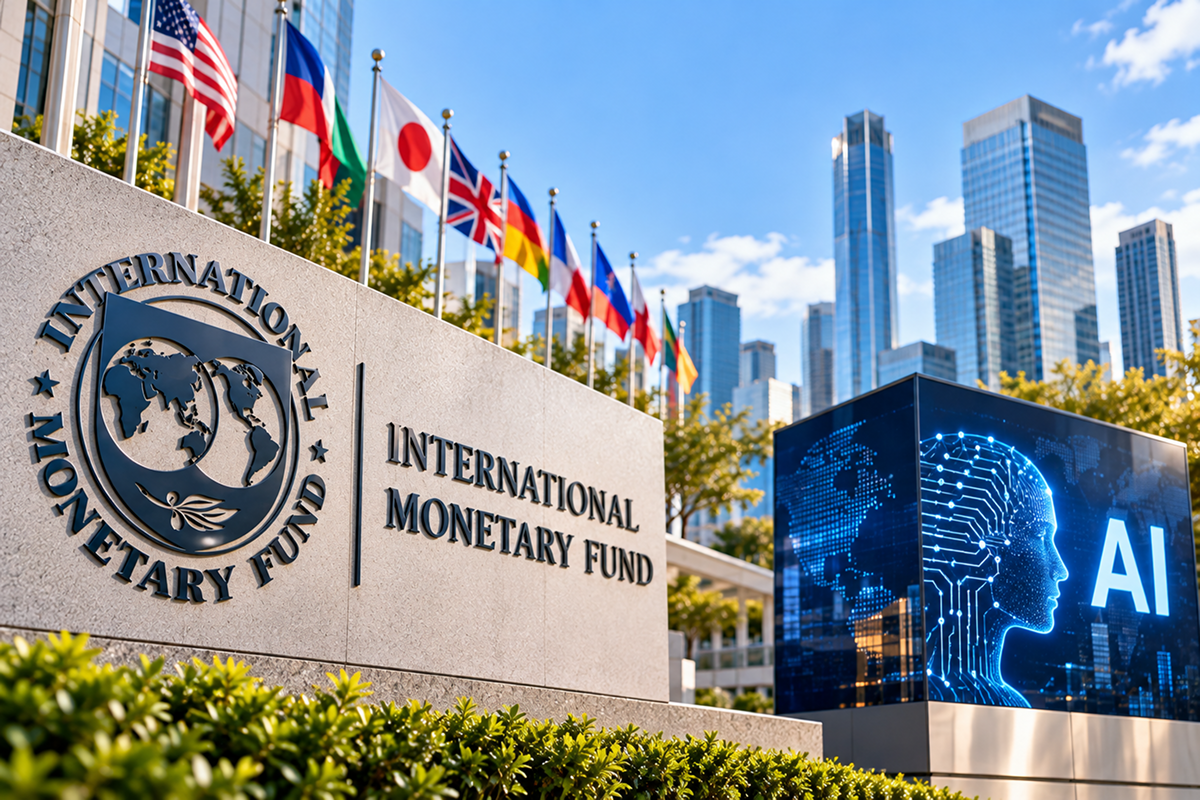
Strong investment in artificial intelligence infrastructure is helping sustain global economic growth at around 3%, while simultaneously creating the prospect of significant disruption across labor markets, taxation and education, International Monetary Fund Managing Director Kristalina Georgieva said on October 12. The assessment highlights the increasingly complex economic impact of the AI investment cycle, particularly across Asia, where the technology boom is generating both growth opportunities and structural risks.
AI Investment Becomes a Growth Driver
Georgieva described the AI investment boom as both a demand shock and an investment shock, reflecting the scale of spending flowing into infrastructure required to develop and deploy artificial intelligence. According to the IMF chief, this investment is helping keep global growth at approximately 3%, while producing particularly strong effects across Asian economies.
Advanced Asian economies could see growth strengthened by between 0.5 and 1 percentage point, while emerging Asian economies could receive a boost of between 0.2 and 0.8 percentage point. The figures underline the importance of AI-related capital expenditure to the region’s economic outlook and suggest that economies positioned to participate in the technology supply chain could capture a meaningful share of the investment cycle.
Labor Markets Face a Slow-Moving Transformation
The economic benefits, however, come alongside substantial structural challenges. Georgieva warned that AI could represent a “slow-moving tsunami” capable of affecting approximately 40% of jobs. The potential impact extends beyond individual occupations, with governments likely to face pressure to reconsider how education systems prepare workers and how taxation frameworks respond to changing patterns of employment and productivity.
The scale of the potential disruption means the economic consequences could develop gradually rather than through a single shock. Businesses may increasingly reorganize tasks around AI capabilities, while workers and policymakers adapt to changes in the demand for different skills. This creates a policy challenge because productivity gains and job displacement could occur simultaneously, producing uneven effects across sectors and economies.
Asia Could Benefit, but the Digital Divide Remains
The regional outlook is not uniformly positive. Singapore’s president warned that AI could widen the divide between advanced and developing economies, raising concerns about unequal access to technology, investment and skilled labor. Countries with stronger digital infrastructure and greater capacity to attract AI investment may be better positioned to capture productivity gains, while less-developed economies could struggle to participate in the transition.
The World Bank chief has focused on what was described as “small AI” and said he was not convinced that entry-level jobs would necessarily face the level of disruption some forecasts anticipate. That view illustrates the uncertainty surrounding the speed and scale of AI’s effect on employment, particularly as different technologies may affect occupations in different ways.
Investors and policymakers will increasingly need to monitor whether AI investment continues supporting global growth and how quickly its labor-market effects emerge. The balance between productivity gains, capital spending and employment disruption could become an increasingly important determinant of economic policy, corporate strategy and competitiveness across both advanced and emerging markets.
Comparison, examination, and analysis between investment houses
Leave your details, and an expert from our team will get back to you as soon as possible
* This article, in whole or in part, does not contain any promise of investment returns, nor does it constitute professional advice to make investments in any particular field.
To read more about the full disclaimer, click here
- omer bar
- •
- 6 Min Read
- •
- ago 1 minute
SKN | Nasdaq Falls as Oil Surges Ahead of Earnings and Key Economic Data
U.S. stocks ended mixed on Monday as technology shares came under pressure while oil prices rallied following attacks on
- ago 1 minute
- •
- 6 Min Read

U.S. stocks ended mixed on Monday as technology shares came under pressure while oil prices rallied following attacks on

- sagi habasov
- •
- 6 Min Read
- •
- ago 1 minute
SKN | Meta Unveils Muse Wonder AI Models as Competition With OpenAI and Anthropic Intensifies
Meta Platforms launched two new artificial intelligence models on October 12 as the social media company seeks to strengthen
- ago 1 minute
- •
- 6 Min Read

Meta Platforms launched two new artificial intelligence models on October 12 as the social media company seeks to strengthen

- Lior mor
- •
- 6 Min Read
- •
- ago 2 hours
SKN | Microsoft’s Maia AI Chips Could Reduce Nvidia Dependence as Data Center Demand Surges
Microsoft Deepens Its Strategy to Control AI Infrastructure Microsoft is accelerating its effort to develop proprietary artificial intelligence chips as
- ago 2 hours
- •
- 6 Min Read

Microsoft Deepens Its Strategy to Control AI Infrastructure Microsoft is accelerating its effort to develop proprietary artificial intelligence chips as
- Lior mor
- •
- 5 Min Read
- •
- ago 7 hours
SKN | An “Emergency Brake” for AI: Microsoft CEO Demands Human Control Over Advanced Models
Microsoft Chairman and CEO Satya Nadella is drawing new boundaries for the artificial intelligence industry. In a post on the
- ago 7 hours
- •
- 5 Min Read

Microsoft Chairman and CEO Satya Nadella is drawing new boundaries for the artificial intelligence industry. In a post on the
