





- Lior mor
- •
- 7 Min Read
- •
- 1 minute ago


Key Points
- Production Guidance Lowered: The Norwegian energy giant adjusts its 2026 targets downward due to localized operational bottlenecks.
- Price Premiums vs. Hedging Mechanisms: Crude sales capture a healthy premium over Brent, while gas realizations face discounts from forward contracts.
- Temporary Cash Flow Pressures: Heavy tax obligations and strategic acquisitions impacted liquidity in the third quarter.

Operational shifts across the European energy sector continue to challenge production companies, with Norway’s Vår Energi (OL:VAR) leading a transparent recalibration of market expectations. The downward revision of its full-year 2026 production target highlights the engineering complexities inherent in North Sea offshore extraction, centering financial discussions on how transient technical disruptions affect the intrinsic valuation of core energy assets. For capital market participants, this development signals no underlying depletion of physical reserves; rather, it illustrates the delicate equilibrium between managing operational risk and realizing crude price premiums within a volatile global commodity environment.
Operational Challenges in Core Fields and Rapid Recovery
The reduction in full-year production guidance to approximately 390,000 barrels of oil equivalent per day (boepd)—down from the previously projected range of 390,000 to 410,000 boepd—stems from a series of localized technical issues during July. Unplanned downtime affected the Johan Castberg field and the Jotun Floating Production Storage and Offloading (FPSO) vessel, alongside temporary output irregularities across the Åsgard area. Crucially from a strategic standpoint, operational capacity at both Johan Castberg and Jotun returned to expected levels by early August. Management reaffirmed that none of the production losses were linked to reservoir performance or volume degradation, isolating the issue entirely to surface infrastructure and equipment reliability.
Financial Performance: Crude Premiums and Gas Pricing Dynamics
During the third quarter, Vår Energi delivered an average production rate of 369,000 boepd, representing a modest 2% sequential decline from the second quarter while remaining flat compared to the same period last year. The production mix comprised 68% crude oil and natural gas liquids (NGLs) and 32% natural gas, yielding total quarterly production of 34 million boepd. Actual sales volumes reached 34.8 million boepd, exceeding net production due to optimized crude cargo loading schedules.
On the realization front, the company achieved a solid average price of $103 per barrel of oil equivalent. Crude oil realized an average price of $103 per barrel, representing a $6 premium over the Brent benchmark. The expansion of Brent premiums observed since early September is expected to fully manifest in fourth-quarter earnings, reflecting the structural lag of cargo pricing weeks prior to physical delivery. Conversely, natural gas sales realized an average of $108 per boe, roughly $18 below spot market benchmarks. This variance reflects the company’s risk management strategy: 29% of quarterly gas volumes were sold via fixed-price forward contracts averaging $87 per boe, while an additional 25% was priced one month forward during a rising market—a structural mechanism designed to provide downside cash flow protection during market contractions.
Cash Flow Pressures and the Road Ahead
Vår Energi’s third-quarter free cash flow absorbed substantial non-operational cash outlays, driven primarily by corporate tax payments totaling approximately 10.8 billion Norwegian kroner. Supplemental cash outflows included roughly $100 million associated with closing the Pandion acquisition and the DNO swap, alongside a $350 million second-quarter dividend distribution executed in September. This temporary cash flow compression reflects a transitional financial phase combining one-off capital allocations with an aggressive capital return program to shareholders.
Vår Energi’s prompt resolution of its core field disruptions demonstrates underlying operational resilience, yet the 2026 guidance adjustment underscores the sensitivity of offshore operators to engineering timelines. Moving forward, institutional investors will closely monitor the company’s ability to sustain uninterrupted flow rates across its upgraded facilities while capitalizing on favorable crude differentials, balancing near-term tax liabilities against long-term dividend sustainability and free cash flow expansion.
Comparison, examination, and analysis between investment houses
Leave your details, and an expert from our team will get back to you as soon as possible
* This article, in whole or in part, does not contain any promise of investment returns, nor does it constitute professional advice to make investments in any particular field.
To read more about the full disclaimer, click here
- Ronny Mor
- •
- 7 Min Read
- •
- ago 4 days
SKN | Could New U.S. Sanctions on 17 Iranian-Linked Tankers Further Disrupt Global Oil Flows?
The U.S. Treasury Department has expanded economic pressure on Iran by designating 17 additional vessels that it says are connected
- ago 4 days
- •
- 7 Min Read

The U.S. Treasury Department has expanded economic pressure on Iran by designating 17 additional vessels that it says are connected

- sagi habasov
- •
- 6 Min Read
- •
- ago 6 days
SKN | Could Cheaper Diesel and Deferred Taxes Ease Pressure From Record U.S. Fuel Costs?
White House Moves to Reduce Diesel Costs The administration has introduced temporary measures aimed at reducing the financial pressure created
- ago 6 days
- •
- 6 Min Read
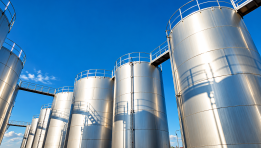
White House Moves to Reduce Diesel Costs The administration has introduced temporary measures aimed at reducing the financial pressure created

- Lior mor
- •
- 11 Min Read
- •
- ago 2 weeks
SKN | Which Energy Stocks Could Benefit If the Iran War Keeps Oil Markets Disrupted?
The Iran conflict is increasingly creating a more complicated environment for energy investors as the disruption extends beyond the assumptions
- ago 2 weeks
- •
- 11 Min Read

The Iran conflict is increasingly creating a more complicated environment for energy investors as the disruption extends beyond the assumptions
- Lior mor
- •
- 6 Min Read
- •
- ago 3 weeks
SKN | Oil Prices Rebound as Saudi Attack Revives Global Supply Concerns
Global oil markets experienced renewed volatility as geopolitical risks in the Middle East pushed prices higher, reversing part of
- ago 3 weeks
- •
- 6 Min Read

Global oil markets experienced renewed volatility as geopolitical risks in the Middle East pushed prices higher, reversing part of

