




- Lior mor
- •
- 11 Min Read
- •
- 6 hours ago


Key Points
- JPMorgan no longer has a clear baseline for how the oil market exits the Iran conflict, with roughly 10 million barrels per day of supply disrupted and Brent trading around $106 versus the bank’s September fair value near $90.
- The impact differs significantly across energy companies, with some benefiting from higher crude prices while others face direct exposure to disrupted Middle Eastern production or gain from tighter LNG and refined-fuel markets.
- Chevron, ConocoPhillips, Cheniere Energy, Shell and Marathon Petroleum are among the companies to watch as investors assess the potential financial effects of a prolonged energy-market disruption.
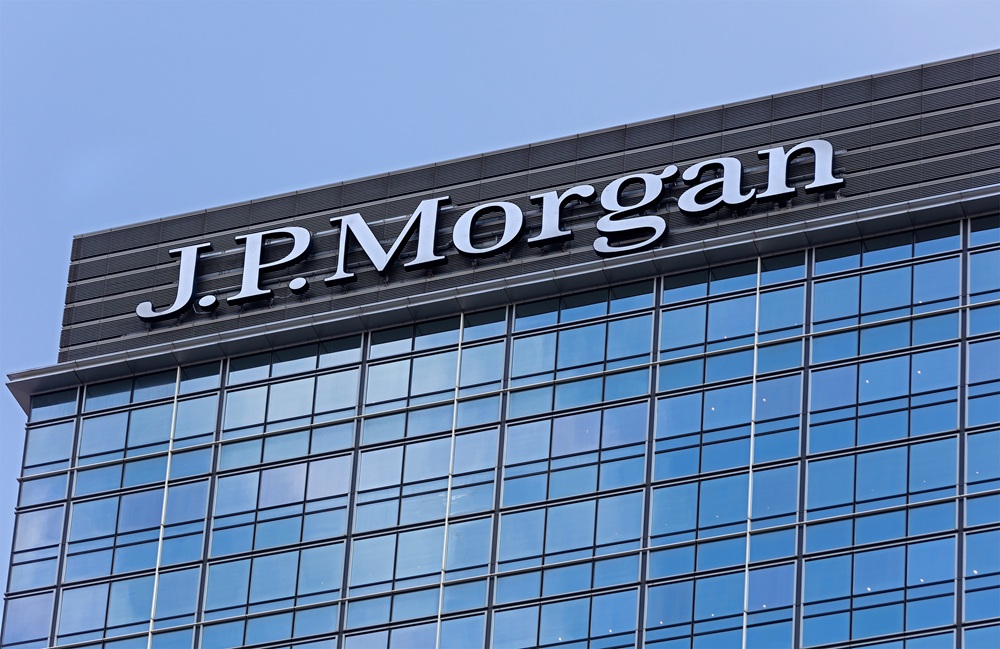
The Iran conflict is increasingly creating a more complicated environment for energy investors as the disruption extends beyond the assumptions that initially shaped the oil-market outlook.
JPMorgan now says it lacks a clear baseline for how the market ultimately exits the conflict. The bank had previously expected higher oil prices and the resulting economic pressure to eventually constrain the duration of the disruption.
Six months into the conflict, however, those anticipated limits have not produced a clear resolution. Approximately 10 million barrels per day of oil supply has been disrupted, while Brent crude has traded around $106 a barrel, significantly above JPMorgan’s September fair-value estimate of roughly $90.
For energy companies, the resulting impact depends heavily on where their production, LNG operations and refining assets are located.
Geography Is Becoming a Major Investor Variable
Higher oil prices do not automatically benefit every producer equally. Companies with substantial production in the Middle East can lose output even as benchmark prices rise.
The LNG market provides another example. Iranian attacks have reportedly disrupted 17% of Qatar’s LNG capacity, with repairs to two damaged LNG trains potentially taking as long as three years.
QatarEnergy is consequently seeking 2 million to 3 million tonnes of LNG annually from outside suppliers through 2031, including potential U.S. supply. That creates an opportunity for LNG exporters outside the region while simultaneously increasing the value of available global cargoes.
Refiners are benefiting from a different part of the disruption. U.S. diesel refining margins reached a record $118.62 per barrel on September 14, while U.S. distillate inventories fell to 107.9 million barrels, the lowest level for this point in the year since 1982.
Chevron Offers Oil Exposure With Limited Middle East Disruption
Chevron stands out because its production exposure to the conflict is comparatively limited while its broader upstream business remains highly sensitive to higher crude prices.
The company said Middle East disruptions affected its operations in the Partitioned Zone between Saudi Arabia and Kuwait, but the lost production represented only about 1% of its total second-quarter output.
Chevron reported adjusted earnings of $12 billion in the second quarter, its highest quarterly profit in at least six years. Upstream earnings reached $8.2 billion, while worldwide production climbed 20% year over year to 4.07 million barrels of oil equivalent per day.
Its downstream operations also benefited from stronger refining margins, generating $4.9 billion in earnings. Chevron returned $6.5 billion to shareholders during the quarter through dividends and buybacks while reducing debt by $8.4 billion.
ConocoPhillips Provides More Direct Crude Exposure
ConocoPhillips offers investors greater direct exposure to oil prices because of its upstream-focused business.
The company produced 2.248 million barrels of oil equivalent per day during the second quarter, including 1.479 million boe/d from the Lower 48.
However, Qatar represents a direct point of exposure. ConocoPhillips’ Qatar production averaged approximately 82,000 boe/d in 2025, or about 3.5% of total company production.
Despite the disruption, its average realized price increased 36% year over year to $62.33 per boe, while quarterly earnings rose to $3.9 billion from $2 billion. Operating cash flow reached $7.2 billion, with the company returning capital through $2 billion of buybacks and $1 billion of dividends.
Cheniere Could Benefit From Qatar’s LNG Shortfall
Cheniere Energy has a different potential advantage: increased demand for U.S. LNG as Qatar works to replace disrupted production.
QatarEnergy is negotiating multi-year supply arrangements with international LNG producers, potentially creating additional contracted demand through 2031.
Cheniere completed Corpus Christi Stage 3 on August 28, increasing production capacity across Corpus Christi and Sabine Pass by more than 20% to approximately 56 million tonnes per year.
The company also raised its 2026 adjusted EBITDA guidance to $7.9 billion-$8.4 billion and distributable cash-flow guidance to $5.3 billion-$5.8 billion.
No new Cheniere contract with QatarEnergy has been announced in the source, but the negotiations create a potential demand opportunity as the company brings additional capacity online.
Shell Balances Gulf Exposure With LNG and Refining Strength
Shell has significant direct exposure to the Middle East but also operates businesses that can benefit from tighter global energy markets.
The company generated $9.8 billion in adjusted earnings during the second quarter and $21.4 billion in operating cash flow. Approximately 20% of its prewar oil and gas production was exposed to the Middle East, with about 10% linked to Qatar.
Its Integrated Gas division generated $2.7 billion despite lower production, supported by higher realized prices and LNG trading. Shell’s refining and chemicals business produced $2.9 billion, compared with $118 million a year earlier.
The company’s global LNG trading position could become increasingly valuable if regional supply remains constrained.
Marathon Petroleum Targets the Refining Opportunity
Marathon Petroleum provides perhaps the clearest exposure to the refining side of the disruption.
The company operates 13 U.S. refineries with approximately 3 million barrels per day of crude-processing capacity. Its second-quarter refining and marketing margin more than doubled to $36.33 per barrel, while adjusted EBITDA from the segment jumped to $6.7 billion.
Marathon processed 2.9 million barrels per day during the quarter at 94% utilization. Its Gulf Coast facilities operated at 100% utilization, while global refinery outages climbed significantly above historical levels.
With U.S. distillate inventories remaining below seasonal norms and global fuel supplies constrained, refining margins could remain an important earnings driver if the disruption persists.
What Investors May Watch Next
A prolonged conflict could create winners and losers across the energy sector depending on commodity exposure, geographic concentration and the ability to capture higher prices without losing production.
Chevron combines substantial production growth with relatively limited direct Middle East disruption, while ConocoPhillips offers more direct crude exposure but also has Qatar-related production at risk. Cheniere could benefit from additional LNG demand, Shell combines global LNG trading and refining exposure with significant Middle East operations, and Marathon is positioned around the tightening refined-fuel market.
The central risk is that the conflict evolves faster than companies can adjust their operations. Investors will therefore need to watch not only oil prices but also production disruptions, LNG contracts, refining margins, inventories and tanker costs.
If the disruption persists into 2027, the energy market could remain fragmented, with profitability increasingly determined by where companies operate and which part of the supply chain they control.
Comparison, examination, and analysis between investment houses
Leave your details, and an expert from our team will get back to you as soon as possible
* This article, in whole or in part, does not contain any promise of investment returns, nor does it constitute professional advice to make investments in any particular field.
To read more about the full disclaimer, click here
- Lior mor
- •
- 6 Min Read
- •
- ago 13 hours
SKN | Oil Prices Rebound as Saudi Attack Revives Global Supply Concerns
Global oil markets experienced renewed volatility as geopolitical risks in the Middle East pushed prices higher, reversing part of
- ago 13 hours
- •
- 6 Min Read
Global oil markets experienced renewed volatility as geopolitical risks in the Middle East pushed prices higher, reversing part of

- Ronny Mor
- •
- 6 Min Read
- •
- ago 19 hours
SKN | Could Middle East Escalation Push Crude Oil Higher as Hormuz Risks Grow?
Crude Oil Extends Its Rally Crude oil prices continued higher Thursday as escalating tensions across the Middle East increased concerns
- ago 19 hours
- •
- 6 Min Read
Crude Oil Extends Its Rally Crude oil prices continued higher Thursday as escalating tensions across the Middle East increased concerns
- Ronny Mor
- •
- 6 Min Read
- •
- ago 1 day
SKN | Could Rising Asian Oil Imports Put a Floor Under Falling Crude Prices?
Asian Crude Demand Reaches Highest Level Since February Oil prices came under pressure Thursday as traders assessed data showing that
- ago 1 day
- •
- 6 Min Read

Asian Crude Demand Reaches Highest Level Since February Oil prices came under pressure Thursday as traders assessed data showing that

- omer bar
- •
- 7 Min Read
- •
- ago 2 days
SKN | Could Renewed U.S.-Iran Diplomacy Put a Floor Under Falling Oil Prices?
Oil Rebounds After Five Sessions of Declines Crude oil prices moved higher Wednesday, interrupting a five-session losing streak as traders
- ago 2 days
- •
- 7 Min Read
Oil Rebounds After Five Sessions of Declines Crude oil prices moved higher Wednesday, interrupting a five-session losing streak as traders
