





- sagi habasov
- •
- 6 Min Read
- •
- 27 seconds ago


Key Points
- The TA-RealEstate Index rose 1.71% on Friday to 1,268.88, offering a late-week recovery after sustained selling pressure.
- The index declined 4.69% over the week, extending losses to 10.02% over one month and 13.14% over three months.
- The rebound may indicate renewed buying interest, but the broader trend remains weak as investors assess financing costs, property demand and the outlook for interest rates.
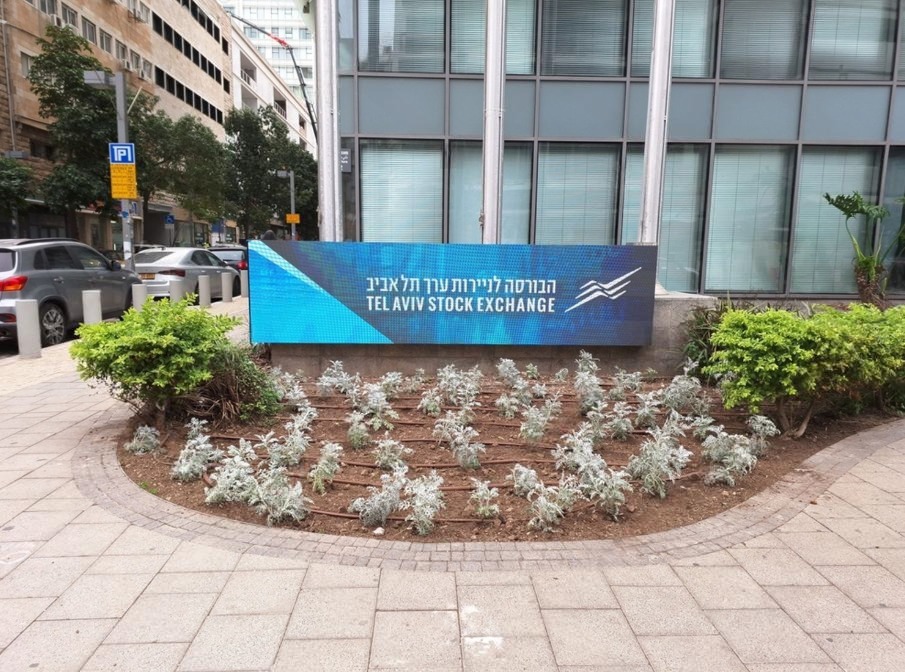
The TA-RealEstate Index ended Friday at 1,268.88, gaining 21.29 points, or 1.71%, in a session that provided some relief after a difficult week for Israeli property stocks. Despite the advance, the index remained down 4.69% over the five-trading-day period, highlighting the gap between a one-day recovery and a more durable improvement in market sentiment.
A Late-Week Recovery Fails to Reverse the Weekly Decline
The index’s Friday performance followed a sharp decline earlier in the week, with the chart showing a sustained move lower before a partial recovery toward the end of the period. The session’s range, from 1,248.89 to 1,276.82, indicates that prices remained volatile even as buyers returned. Trading volume reached approximately 11.20 million shares or units, slightly below the three-month average of 11.95 million, according to the supplied data.
The recovery is constructive in the narrow sense that the index moved away from its weekly lows. However, the broader figures suggest that investors have not yet established a convincing upward trend. The index remains 10.02% lower over one month and 13.14% lower over three months, making Friday’s advance a potential stabilisation signal rather than confirmation that selling pressure has ended.
Interest Rates and Financing Conditions Remain Central
Israeli real estate companies are particularly sensitive to the cost and availability of credit. Developers rely on financing to acquire land, build projects and manage cash flow, while property valuations can be affected by changes in discount rates and expected rental income. Higher borrowing costs, tighter credit conditions or uncertainty about the timing of interest-rate reductions can therefore weigh on the sector even when individual companies continue to report operating activity.
For Israeli investors, the index also reflects broader macroeconomic considerations, including household purchasing power, mortgage affordability, construction costs and confidence in future demand. Global bond yields and international risk sentiment may influence financing conditions and capital allocation, although the supplied chart alone does not establish that any single factor caused this week’s decline. Currency volatility and geopolitical uncertainty could add further pressure if they affect inflation expectations, business confidence or funding costs.
The Longer-Term Picture Remains Mixed
The index’s longer-term performance provides some balance to the recent weakness. It is down 15.36% over one year but up 22.05% over five years and 276.71% over its full displayed history. The contrast illustrates how a strong longer-term advance can coexist with a significant cyclical correction. Its 52-week range of 1,241.14 to 1,762.38 also shows that the index is trading close to the lower end of its annual range.
Outlook: Can the Rebound Develop into a Sustained Recovery?
In the coming week, investors will likely watch whether the index can hold above its recent lows and build on Friday’s gain. Further stabilisation would be more persuasive if accompanied by stronger participation and improving performance across property shares. Conversely, a renewed decline could indicate that financing concerns and weaker risk appetite continue to dominate. Interest-rate expectations, credit availability, property demand and geopolitical developments remain important risks. Friday’s advance offers a tentative positive signal, but a sustained recovery will depend on whether market conditions and investor confidence improve beyond a single session.
Comparison, examination, and analysis between investment houses
Leave your details, and an expert from our team will get back to you as soon as possible
* This article, in whole or in part, does not contain any promise of investment returns, nor does it constitute professional advice to make investments in any particular field.
To read more about the full disclaimer, click here
- orshu
- •
- 6 Min Read
- •
- ago 1 hour
SKN | TA Banks 5 Falls 5.05% in a Week as Israeli Bank Stocks Face Renewed Pressure
The TA Banks 5 index came under notable pressure during the trading week shown in the chart, ending at
- ago 1 hour
- •
- 6 Min Read

The TA Banks 5 index came under notable pressure during the trading week shown in the chart, ending at

- Ronny Mor
- •
- 6 Min Read
- •
- ago 1 hour
SKN | TA-SME60 Rebounds 0.68% on Friday, but Small-Cap Stocks Remain Under Pressure After a 5.98% Weekly Decline
The Tel Aviv Stock Exchange’s TA-SME60 index ended Friday, October 9, at 1,218.87, gaining 8.28 points, or 0.68%,
- ago 1 hour
- •
- 6 Min Read

The Tel Aviv Stock Exchange’s TA-SME60 index ended Friday, October 9, at 1,218.87, gaining 8.28 points, or 0.68%,

- omer bar
- •
- 6 Min Read
- •
- ago 2 hours
SKN | Japanese Yen Currency Index (^XDN) Softens 0.28% Daily to 63.17 as 0.28% Weekly Pullback Holds Above 60.98 Support
The Japanese Yen Currency Index (^XDN) finished the trading session on October 9, 2026, lower, dropping 0.28% (0.18 points)
- ago 2 hours
- •
- 6 Min Read

The Japanese Yen Currency Index (^XDN) finished the trading session on October 9, 2026, lower, dropping 0.28% (0.18 points)

- Lior mor
- •
- 7 Min Read
- •
- ago 3 hours
SKN | KOSPI Composite Index (^KS11) Softens 2.62% Daily to 6,625.93 as 4.95% Weekly Pullback Holds Above 3,522 Support
The KOSPI Composite Index (^KS11) finished the trading session on October 8, 2026, lower, dropping 2.62% (177.97 points) to
- ago 3 hours
- •
- 7 Min Read

The KOSPI Composite Index (^KS11) finished the trading session on October 8, 2026, lower, dropping 2.62% (177.97 points) to

