




- sagi habasov
- •
- 7 Min Read
- •
- 19 seconds ago


Key Points
- Toyota and Honda could face disproportionate exposure to proposed U.S. tariffs of up to 50% on Canadian vehicles and auto parts from January 1, 2027.
- The two Japanese automakers accounted for more than 75% of vehicles manufactured in Canada in 2025, making them particularly sensitive to changes in cross-border trade policy.
- The tariff threat could accelerate production adjustments, raise costs and complicate investment decisions across the highly integrated North American automotive supply chain.
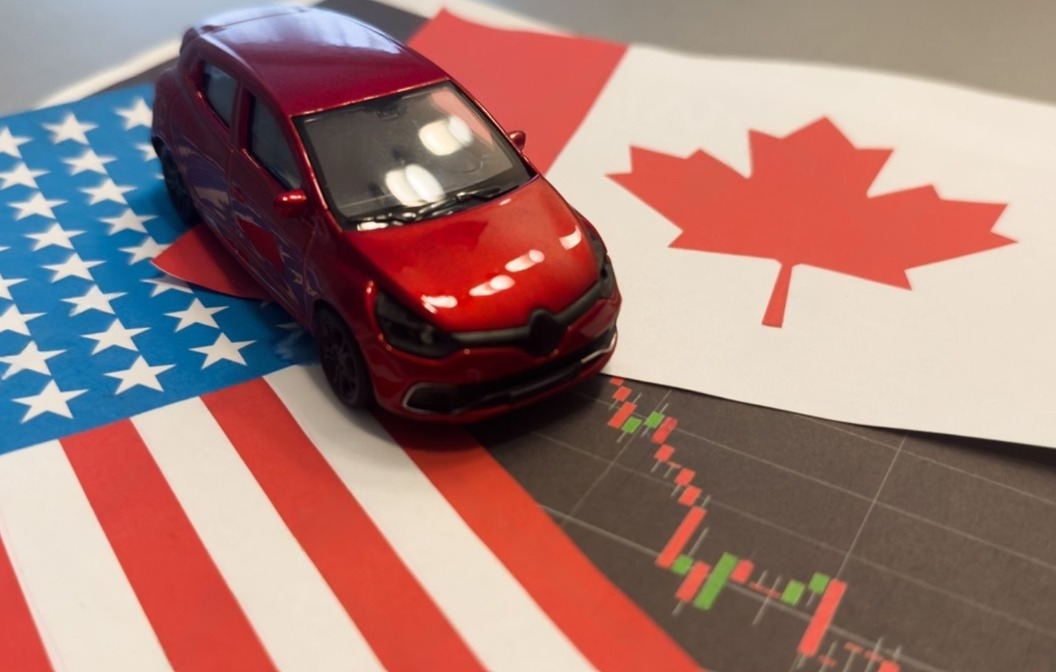
Toyota and Honda are emerging as the automakers potentially most exposed to the latest escalation in U.S.-Canada trade tensions. President Donald Trump has threatened to impose a 50% tariff on Canadian automobiles and automotive parts from January 1, 2027, raising the prospect of significant disruption for manufacturers that rely heavily on Canadian production to supply the U.S. market.
The issue extends beyond the two Japanese companies. The North American automotive industry operates through deeply integrated production networks spanning the United States, Canada and Mexico, meaning substantial tariff increases could affect manufacturers, suppliers, workers and ultimately vehicle prices across the region.
Toyota and Honda Carry Outsized Canadian Production Exposure
Toyota and Honda have a particularly large footprint in Canada’s automotive manufacturing sector. Their Canadian operations accounted for more than 75% of vehicles assembled in the country in 2025, according to the Pacific Manufacturing Association of Canada, which the two companies established in April. Honda’s Alliston facility has annual production capacity of approximately 390,000 vehicles, while Toyota operates three production lines in Ontario producing models including the Corolla, RAV4 and Lexus vehicles.
That concentration makes the companies more exposed than automakers with smaller Canadian manufacturing operations. Reuters reported that Canadian-built vehicles represented approximately 17% of Toyota’s U.S. sales and nearly one-quarter of Honda’s U.S. sales in the previous year. A 50% tariff could therefore create a difficult combination of higher landed costs, production reallocations and potential pressure on vehicle pricing.
Tariffs Could Reshape North American Production Decisions
The potential tariffs arrive as Toyota and Honda have made substantial long-term investments in Canadian manufacturing. Toyota has invested more than $12 billion in Canada and began production of the latest-generation RAV4 at its Woodstock facility earlier this year. Honda, meanwhile, has maintained Canadian manufacturing for decades as part of its strategy of producing vehicles close to their principal markets.
Moving production to U.S. facilities could reduce tariff exposure over time, but such adjustments would require significant capital expenditure, supplier restructuring and additional manufacturing capacity. The process is therefore unlikely to provide an immediate solution if tariffs take effect as currently proposed.
Trade Uncertainty Raises Broader Industry Risks
The tariff dispute also introduces uncertainty for suppliers and other manufacturers operating within the North American production ecosystem. Canada has indicated that retaliatory measures could follow, while negotiations over the future of the USMCA remain a central factor for corporate planning.
For Israeli investors, the developments are relevant because Toyota and Honda are major global companies with extensive international supply chains and exposure to North American consumer demand. Currency movements, trade policy, vehicle pricing and global risk appetite could all influence the companies’ earnings outlook and valuation dynamics.
Outlook: The key variable for the automotive sector will be whether Washington and Ottawa reach an agreement before the proposed January 2027 tariff deadline. A negotiated reduction in tariffs could preserve existing production structures and limit cost pressures, while prolonged uncertainty could encourage manufacturers to accelerate investment in U.S. facilities and diversify supply chains. For Toyota and Honda, the challenge will be balancing the efficiency of their established Canadian operations against the rising strategic value of producing closer to U.S. consumers. Until greater clarity emerges, trade-policy uncertainty, potential retaliation, production costs and currency volatility are likely to remain important downside risks for the sector.
Comparison, examination, and analysis between investment houses
Leave your details, and an expert from our team will get back to you as soon as possible
* This article, in whole or in part, does not contain any promise of investment returns, nor does it constitute professional advice to make investments in any particular field.
To read more about the full disclaimer, click here
- orshu
- •
- 7 Min Read
- •
- ago 54 minutes
SKN | Russia Cuts 2026 Oil Production Forecast to 17-Year Low as Ukraine War Disrupts Energy Infrastructure
Russia has sharply lowered its forecast for 2026 oil production, with a draft government projection pointing to 494.2 million
- ago 54 minutes
- •
- 7 Min Read
Russia has sharply lowered its forecast for 2026 oil production, with a draft government projection pointing to 494.2 million

- Ronny Mor
- •
- 7 Min Read
- •
- ago 1 hour
SKN | U.S. Markets Enter September Under Pressure as Rising Yields and Oil Reshape Fed Expectations
U.S. equity futures entered September under pressure as rising Treasury yields and higher crude oil prices prompted investors to
- ago 1 hour
- •
- 7 Min Read

U.S. equity futures entered September under pressure as rising Treasury yields and higher crude oil prices prompted investors to
- orshu
- •
- 10 Min Read
- •
- ago 4 hours
SKN | Tel Aviv Stocks Trade Mixed as TA-90 Gains 0.74% While TA-35 Holds Near Flat
Tel Aviv financial markets are trading with a moderately constructive tone, although performance remains mixed across the major benchmarks. The
- ago 4 hours
- •
- 10 Min Read

Tel Aviv financial markets are trading with a moderately constructive tone, although performance remains mixed across the major benchmarks. The

- omer bar
- •
- 6 Min Read
- •
- ago 7 hours
SKN | Medtronic Recalls Bravo Reflux Testing System After 184 Serious Injuries
Medtronic has initiated a global voluntary recall covering certain lots of its Bravo calibration-free, or CF, reflux testing system after
- ago 7 hours
- •
- 6 Min Read

Medtronic has initiated a global voluntary recall covering certain lots of its Bravo calibration-free, or CF, reflux testing system after
