




- orshu
- •
- 7 Min Read
- •
- 22 seconds ago


Key Points
- Russia expects 2026 oil production of 494.2 million metric tons, equivalent to roughly 9.88 million barrels per day, the lowest annual level since 2009.
- Ukrainian drone attacks, refinery disruptions, export bottlenecks, sanctions, and domestic fuel shortages are increasing pressure on Russia's energy sector.
- The outlook for global oil prices will depend on the duration of Russian supply disruptions, Middle Eastern geopolitical risks, and the ability of other producers to offset lost volumes.
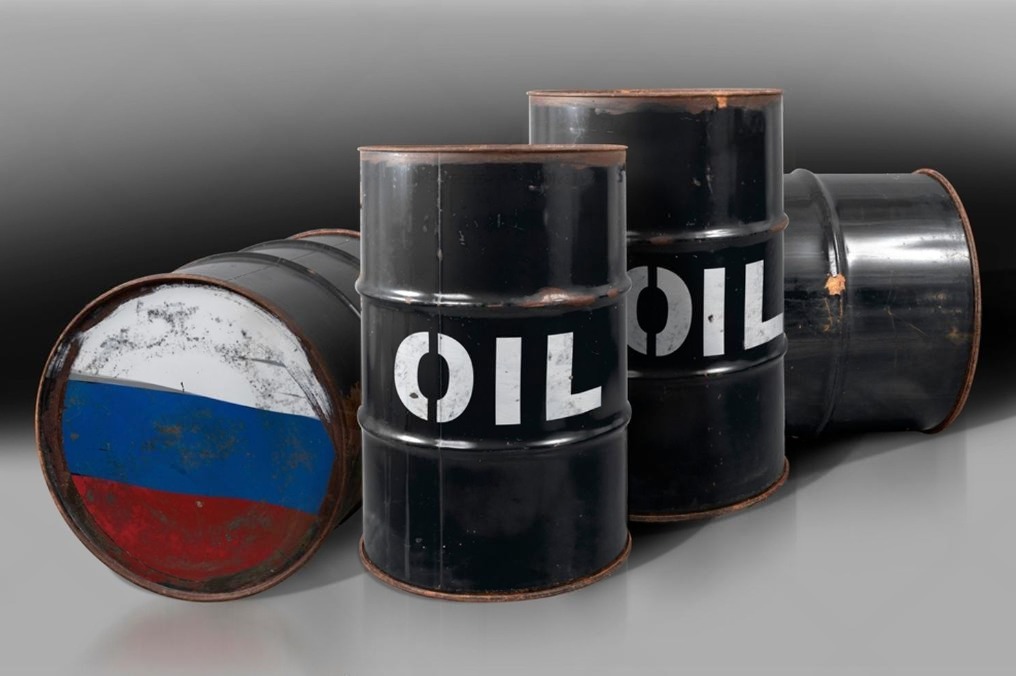
Russia has sharply lowered its forecast for 2026 oil production, with a draft government projection pointing to 494.2 million metric tons, or approximately 9.88 million barrels per day. If realized, the figure would represent Russia’s lowest annual oil output since 2009, highlighting the growing economic impact of the war in Ukraine on one of the world’s most important energy producers.
The revision comes as repeated Ukrainian drone attacks on Russian refineries and energy infrastructure, combined with export constraints and international sanctions, increasingly affect the country’s ability to process and move crude and refined products. The development adds another layer of supply uncertainty to an already volatile global oil market.
Russian Energy Production Faces Increasing Constraints
Russia’s revised forecast represents a reduction of approximately 16 million to 20 million metric tons from previous projections for the coming years. The government now expects crude production to recover to around 500 million tons in 2027, although that would still remain below earlier expectations. The forecast is expected to form part of Russia’s broader budget planning and is due to be finalized later in September.
The pressure is increasingly concentrated across the country’s refining and export infrastructure. Ukrainian strikes have damaged or disrupted several refineries, while Russia has extended restrictions on diesel exports in an effort to stabilize domestic fuel supplies. Reuters reported that gasoline production had fallen to roughly 70% of domestic demand by late August following additional refinery disruptions.
Oil Markets Face a More Complex Supply Picture
The decline in Russian production does not necessarily translate into an equivalent reduction in global crude availability. Lower refinery utilization can encourage Russia to redirect more crude toward export markets, particularly China and India, while reducing shipments of refined petroleum products. The revised forecast therefore represents both a production constraint and a potential shift in the composition of Russian energy exports.
For global oil markets, the key issue is whether alternative producers can compensate for disruptions without creating additional price pressure. The situation is particularly significant given continuing geopolitical risks elsewhere in the energy market. Recent assessments have also pointed to weaker Russian supply expectations following attacks on refineries, storage facilities, and transport infrastructure.
Implications for Investors and the Global Economy
For Israeli and international investors, the Russian supply revision reinforces the importance of monitoring energy prices, inflation expectations, transportation costs, and currency markets. Higher or more volatile crude prices could increase inflationary pressure for energy-importing economies, while sustained disruptions could benefit some producers and energy-related companies.
At the same time, downside risks remain significant. A weaker global demand environment, successful rerouting of Russian exports, or an easing of geopolitical tensions could limit the price impact of lower Russian production. Conversely, additional attacks on energy infrastructure or simultaneous disruptions elsewhere could tighten global supply conditions more materially.
Outlook: The near-term outlook for the global oil market remains highly dependent on the durability of Russia’s production constraints and the broader geopolitical environment. Investors will likely monitor September’s final Russian government forecast, refinery operating rates, crude and fuel export volumes, and developments in Ukraine. A gradual recovery in Russian output could reduce some supply concerns, while further infrastructure damage could deepen the disruption. For asset allocators, the evolving balance between geopolitical supply risks, global demand, and production capacity elsewhere will remain central to the direction of oil prices and the wider inflation outlook.
Comparison, examination, and analysis between investment houses
Leave your details, and an expert from our team will get back to you as soon as possible
* This article, in whole or in part, does not contain any promise of investment returns, nor does it constitute professional advice to make investments in any particular field.
To read more about the full disclaimer, click here
- Ronny Mor
- •
- 7 Min Read
- •
- ago 17 minutes
SKN | U.S. Markets Enter September Under Pressure as Rising Yields and Oil Reshape Fed Expectations
U.S. equity futures entered September under pressure as rising Treasury yields and higher crude oil prices prompted investors to
- ago 17 minutes
- •
- 7 Min Read

U.S. equity futures entered September under pressure as rising Treasury yields and higher crude oil prices prompted investors to

- orshu
- •
- 10 Min Read
- •
- ago 3 hours
SKN | Tel Aviv Stocks Trade Mixed as TA-90 Gains 0.74% While TA-35 Holds Near Flat
Tel Aviv financial markets are trading with a moderately constructive tone, although performance remains mixed across the major benchmarks. The
- ago 3 hours
- •
- 10 Min Read

Tel Aviv financial markets are trading with a moderately constructive tone, although performance remains mixed across the major benchmarks. The

- omer bar
- •
- 6 Min Read
- •
- ago 6 hours
SKN | Medtronic Recalls Bravo Reflux Testing System After 184 Serious Injuries
Medtronic has initiated a global voluntary recall covering certain lots of its Bravo calibration-free, or CF, reflux testing system after
- ago 6 hours
- •
- 6 Min Read

Medtronic has initiated a global voluntary recall covering certain lots of its Bravo calibration-free, or CF, reflux testing system after
- orshu
- •
- 9 Min Read
- •
- ago 7 hours
SKN | Global Markets Wrap: August 31, 2026 Stocks Slip in the U.S., Europe and Tel Aviv as China Gains – Outlook Ahead of September 1 Trading
Global markets closed August 31, 2026, with broad weakness across U.S. equities, European markets, and Tel Aviv, while Asian performance
- ago 7 hours
- •
- 9 Min Read

Global markets closed August 31, 2026, with broad weakness across U.S. equities, European markets, and Tel Aviv, while Asian performance
