




- orshu
- •
- 8 Min Read
- •
- 25 seconds ago


Key Points
- Major U.S. equity indexes opened lower on August 31, with the Russell 2000 posting the sharpest decline among the major benchmarks.
- The Nasdaq, S&P 500 and Dow Jones Industrial Average also moved lower, pointing to broad weakness across large-cap U.S. equities.
- Brazil's IBOVESPA moved higher while the U.S. Dollar Index weakened, highlighting diverging performance across the Americas.
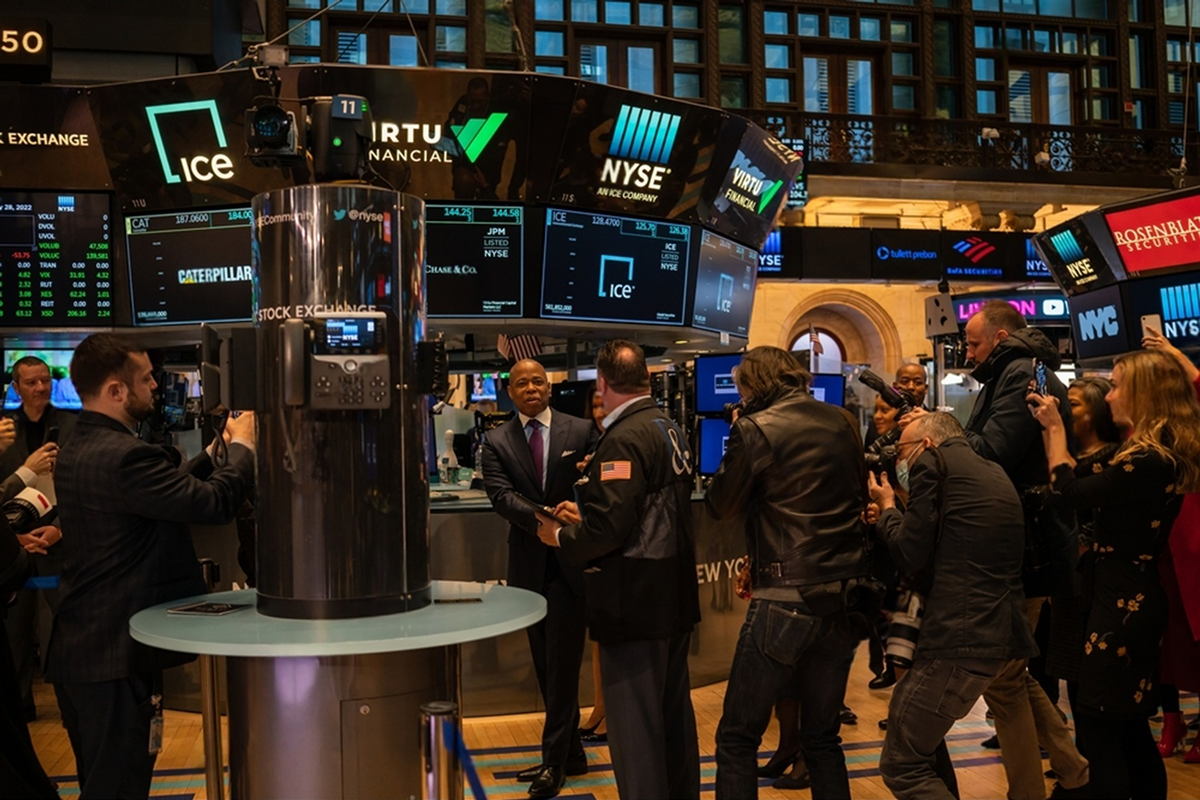
Markets across the Americas opened August 31 with a broadly cautious tone, as major U.S. equity indexes moved lower while Brazil’s benchmark stock market advanced. The session reflected a divergence between regional markets, with U.S. equities facing broad selling pressure and the weaker dollar providing an additional signal of shifting conditions across global financial markets.
The Russell 2000 led the declines, while the Dow Jones Industrial Average, S&P 500 and Nasdaq also traded lower. Meanwhile, Brazil’s IBOVESPA stood out with a solid gain, underscoring the uneven market performance developing across the Western Hemisphere.
U.S. Equity Markets Open Under Broad Pressure
The Dow Jones Industrial Average fell by 0.54% to 53,271.67, while the S&P 500 declined by 0.38% to 7,682.71. The Nasdaq Composite also moved lower, falling by 0.36% to 26,306.09.
The relatively similar declines across the major large-cap benchmarks suggest that weakness was not confined to one specific segment of the market. The movement in the S&P 500, Dow and Nasdaq indicates a cautious opening across both technology-oriented and more traditional sectors of the U.S. economy.
For investors, broad declines across the leading indexes can be more significant than isolated weakness in a single sector. When major benchmarks move in the same direction, attention typically shifts toward broader factors influencing risk appetite, including interest-rate expectations, economic data and changes in global capital flows.
Small-Cap Stocks Record the Sharpest Decline
The most pronounced move came from the Russell 2000, which fell by 1.39% to 2,972.37. The sharper decline in small-cap stocks suggests that investors were showing greater caution toward companies that can be more sensitive to domestic economic conditions and changes in financing costs.
Small-cap companies generally have less diversified revenue bases and can face greater pressure when borrowing conditions tighten or economic uncertainty increases. As a result, the Russell 2000’s performance can offer an important indication of investor confidence beyond the largest U.S. corporations.
The gap between the Russell 2000 and the major large-cap indexes was notable at the market open. While the Nasdaq and S&P 500 recorded relatively moderate declines, the significantly larger fall in small caps pointed to a more defensive positioning among investors.
Brazil Advances as Currency Markets Add Another Signal
In contrast to the U.S. market, Brazil’s IBOVESPA rose by 1.31% to 177,971.23, making it the strongest major benchmark in the Americas snapshot. The advance demonstrated that regional equity performance remained far from uniform despite the weakness in U.S. markets.
Currency markets also showed movement, with the U.S. Dollar Index falling by 0.18% to 99.53. A weaker dollar can influence global asset prices, commodity markets and international capital flows, particularly in emerging economies where dollar conditions remain an important component of financial stability.
Canada’s S&P/TSX Composite Index also moved lower, falling by 0.29% to 36,448.40. Its decline added to the cautious tone across North American markets, although the losses remained considerably smaller than those recorded by the Russell 2000.
Market Leadership Remains Uneven Across the Americas
The opening session highlighted a market environment in which regional divergence remains an important theme. Brazil’s gains contrasted sharply with declines across the United States and Canada, while the weaker dollar added another variable for investors assessing global market conditions.
For sophisticated investors, the key question is whether the weakness in U.S. equities develops into a broader risk-off move or remains a temporary adjustment. The performance of small-cap stocks will be particularly important, as continued underperformance could signal increasing concerns about domestic growth and financial conditions.
Looking ahead, markets will be watching whether the major U.S. indexes can stabilize during the remainder of the trading session, whether the Russell 2000 recovers from its sharper decline, and whether the weaker dollar continues to support international assets. The interaction between equity market volatility, currency movements and regional performance will remain central to assessing investor sentiment as trading progresses.
Comparison, examination, and analysis between investment houses
Leave your details, and an expert from our team will get back to you as soon as possible
* This article, in whole or in part, does not contain any promise of investment returns, nor does it constitute professional advice to make investments in any particular field.
To read more about the full disclaimer, click here
- omer bar
- •
- 6 Min Read
- •
- ago 3 hours
SKN | Are Rising Oil Prices and Bond Yields Signaling a New Threat for Global Stocks?
Global equities entered the final trading session of August cautiously as renewed fighting between the U.S. and Iran added another
- ago 3 hours
- •
- 6 Min Read

Global equities entered the final trading session of August cautiously as renewed fighting between the U.S. and Iran added another

- orshu
- •
- 6 Min Read
- •
- ago 4 hours
SKN | Asian Markets Mixed on August 31, 2026 as China and South Korea Lead Gains
Asian markets closed mixed on August 31, 2026, as investors began the final session of August with renewed buying interest
- ago 4 hours
- •
- 6 Min Read

Asian markets closed mixed on August 31, 2026, as investors began the final session of August with renewed buying interest

- Ronny Mor
- •
- 7 Min Read
- •
- ago 2 days
SKN | Allianz Weighs $6.77 Billion AA Takeover as Competition Builds for British Roadside Rescue Giant
German financial services giant Allianz is reportedly exploring a £5 billion takeover of AA, the British roadside recovery group,
- ago 2 days
- •
- 7 Min Read

German financial services giant Allianz is reportedly exploring a £5 billion takeover of AA, the British roadside recovery group,

- Lior mor
- •
- 7 Min Read
- •
- ago 3 days
SKN | Wall Street Ends Lower as Warsh Reinforces Inflation Fight and Rate Cut Expectations Shift
Wall Street finished lower on August 28, 2026, as investors reassessed monetary policy expectations following Federal Reserve Chair Kevin
- ago 3 days
- •
- 7 Min Read
Wall Street finished lower on August 28, 2026, as investors reassessed monetary policy expectations following Federal Reserve Chair Kevin
