




- omer bar
- •
- 6 Min Read
- •
- 26 seconds ago


Key Points
- Renewed U.S.-Iran fighting pushed oil prices higher and revived concerns that persistent inflation could force major central banks to keep rates higher for longer.
- Japanese and German two-year government bond yields reached multi-year highs, while markets raised the implied probability of a September Fed rate hike to 57%.
- Upcoming U.S. payrolls and inflation data will be critical for determining whether the recent shift toward tighter monetary policy gains further momentum.

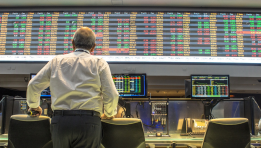
Global equities entered the final trading session of August cautiously as renewed fighting between the U.S. and Iran added another layer of uncertainty to an already complicated inflation and interest-rate environment. Brent crude climbed above $90 a barrel after U.S. forces struck Iranian launchers, while Iran retaliated against U.S. forces in Jordan and reported an attack on a tanker in the Strait of Hormuz.
The immediate market concern is not simply the military escalation but its potential economic transmission. Higher energy prices can raise transportation and production costs, complicating efforts by central banks to bring inflation sustainably toward target. That risk became more significant after Federal Reserve Chairman Kevin Warsh delivered a hawkish message at Jackson Hole, prompting investors to reassess the likelihood of additional monetary tightening.
Bond Yields Signal Growing Rate Concerns
The bond market provided some of the clearest evidence of the changing policy outlook. Japan’s two-year government bond yield reached a 31-year high, while Germany’s two-year yield climbed to its highest level since July 2024. U.S. short-term Treasury yields also moved sharply higher, with the two-year yield holding around 4.34% after gaining almost 12 basis points on Friday.
Markets now assign a 57% probability to a September Federal Reserve rate increase, although JPMorgan economist Michael Feroli expects the next hike to come in December. Barclays has adopted a more aggressive view, forecasting 25-basis-point increases in both September and December.
The shift illustrates how quickly expectations can change when geopolitical developments, energy prices and central-bank communication reinforce one another. For investors, higher yields also increase the opportunity cost of holding equities, particularly companies whose valuations depend heavily on future earnings growth.
Stocks Remain Caught Between Growth and Inflation
Equity markets showed limited conviction. The STOXX 600 edged lower in Europe, Japan’s Nikkei slipped 0.1%, and MSCI’s global stock index was marginally weaker. Chinese blue chips recovered from earlier losses after official manufacturing PMI improved to 49.8 in August from 49.2 in July, although the reading remained below the 50 threshold separating expansion from contraction.
Currency markets also reflected monetary-policy uncertainty. The yen remained above 160 per dollar before trading near 159.56, while the euro stood around $1.1596. Meanwhile, gold declined 0.3% to $4,437 an ounce after a 3.2% Friday drop as bond yields surged, although the metal remained up roughly 10% for August.
What Investors Should Watch Next
The next major catalysts will be U.S. employment data and the September 11 consumer inflation report. Economists expect payrolls to rise by 58,000 following July’s 23,000 decline, with unemployment forecast at 4.1%. A materially weaker labor-market result could challenge the case for an immediate rate hike, while persistent inflation or stronger employment could reinforce expectations for tighter policy.
With oil, bonds and currencies all responding to the latest geopolitical developments, September could become a critical test of whether markets can absorb higher energy costs without a broader repricing of growth and interest-rate expectations.
Comparison, examination, and analysis between investment houses
Leave your details, and an expert from our team will get back to you as soon as possible
* This article, in whole or in part, does not contain any promise of investment returns, nor does it constitute professional advice to make investments in any particular field.
To read more about the full disclaimer, click here
- orshu
- •
- 6 Min Read
- •
- ago 27 minutes
SKN | Asian Markets Mixed on August 31, 2026 as China and South Korea Lead Gains
Asian markets closed mixed on August 31, 2026, as investors began the final session of August with renewed buying interest
- ago 27 minutes
- •
- 6 Min Read
Asian markets closed mixed on August 31, 2026, as investors began the final session of August with renewed buying interest

- Lior mor
- •
- 7 Min Read
- •
- ago 2 days
SKN | Wall Street Ends Lower as Warsh Reinforces Inflation Fight and Rate Cut Expectations Shift
Wall Street finished lower on August 28, 2026, as investors reassessed monetary policy expectations following Federal Reserve Chair Kevin
- ago 2 days
- •
- 7 Min Read

Wall Street finished lower on August 28, 2026, as investors reassessed monetary policy expectations following Federal Reserve Chair Kevin
- orshu
- •
- 6 Min Read
- •
- ago 3 days
SKN | Americas Markets Close Mixed as Nasdaq Falls 0.52% and Russell 2000 Drops 1.39%
US and broader Americas markets closed with a mixed-to-negative tone, as most major equity benchmarks recorded declines while the US
- ago 3 days
- •
- 6 Min Read
US and broader Americas markets closed with a mixed-to-negative tone, as most major equity benchmarks recorded declines while the US
- orshu
- •
- 6 Min Read
- •
- ago 3 days
SKN | Tel Aviv Market Ends Mixed as TA-35 Retreats While Technology and Mid-Cap Shares Show Resilience
The Tel Aviv Stock Exchange ended the latest reported session with a mixed performance across major equity benchmarks, highlighting a
- ago 3 days
- •
- 6 Min Read
The Tel Aviv Stock Exchange ended the latest reported session with a mixed performance across major equity benchmarks, highlighting a
