




- omer bar
- •
- 9 Min Read
- •
- 26 seconds ago


Key Points
- SAP leads Bank of America's top picks for 2026, with an upgraded price target driven by robust cloud revenue optimism.
- Institutional investors are now prioritizing companies with complex systems and structural defenses, showcasing high resilience against AI platform disruptions.
- European valuations continue to offer an attractive alternative to US markets, presenting potential for stable returns and double-digit organic growth through the end of the decade.

In a year where artificial intelligence continues to rewrite the rules of the game on Wall Street and across global markets, many investors are searching for anchors of stability that can navigate rapid innovation without being eroded. Within the European landscape, the software sector presents an intriguing blend of favorable pricing relative to American counterparts, coupled with consistent and proven growth potential. An in-depth analysis recently published by Bank of America (BofA) reveals its preferred software stock picks for 2026, offering a glimpse into a clear institutional strategy: favoring companies that exhibit a natural immunity to rapid technological disruptions alongside the ability to penetrate deeply into significant overseas target markets.
Software Giants Confidently Lead the Front
At the core of Bank of America’s investment preferences stands the German software giant SAP, which has been marked as the top choice in the large-cap category for 2026 and is prominently featured in the firm’s prestigious “Top 25 Stocks for 2026” list. Analysts have reiterated their buy recommendation and raised the price target to €223, based on the expansion of the target cloud multiple to 20x EBITDA for 2027 (up from 18x). From a psychological and strategic perspective, the capital market is currently pricing the company’s stability quite attractively. SAP is trading at an EV/EBITDA multiple of 16.7x for 2026, presenting an impressive compound annual growth rate (CAGR) of 18% in earnings per share through 2028. These figures imply an EV/EBITDA-to-growth ratio of just 1.1x, significantly lower than the European peer average of 1.5x.
Concurrently, the Swiss firm Temenos is earning renewed institutional confidence. Despite a hesitant market reaction following a slight revenue miss in the second quarter, the firm identifies the potential for the company to beat mid-term operating profit (EBIT) forecasts by one to three percent. The company trades fairly relative to its peers at 12.5x EV/EBITDA for 2027, and its strategic investments in new products and penetration into the US market provide a substantial structural shield against the uncertainty generated by the AI revolution in the banking and financial sectors.
Dynamic Growth Players and Economic Moat Niches
Beyond the mega-cap names, Bank of America shines a spotlight on companies built on unique business models and market niches that generate sustainable competitive advantages. The British company Sage received a 40 basis point upgrade to its organic top-line revenue growth forecast, reaching 10.1% for fiscal year 2026, following strong third-quarter data. This growth is expected to produce a sustained increase in operating profit and support an approximately 18% rise in EPS by 2028, aligning its valuation with the European industry average (13.1x EBITDA for 2027). Alongside it, the French company Planisware received a price target hike to €31 following excellent quarterly results. The secret to its charm lies in the complex integration of the workflows it provides, creating remarkably high switching costs for its clients. This complexity offers robust defense against rapid AI substitutes, allowing it to project revenue and EBITDA growth forecasts roughly 6 percentage points above the sector average.
In the targeted solutions space, TeamViewer maintains a €9.7 price target and a buy recommendation. Company management showed confidence by defending an adjusted operating margin target of 43% alongside stable revenues, but investors are drawing encouragement primarily from the strategic partnership forged with ServiceNow. This partnership reflects a calculated defensive move designed to prevent displacement by broader platform players. Finally, the Architecture, Engineering, and Construction (AEC) software sector was highlighted as an island of stability. Nemetschek received an upgraded target of €93 following the successful integration of its HCSS acquisition. This industry is relatively insulated from traditional AI disruption, and the firm anticipates that the company will leverage the new technology as a growth engine by smartly transitioning to consumption-based pricing models.
The comprehensive analysis of the European software sector indicates a certain maturation in institutional investors’ risk perception. The central question on Wall Street and European bourses is no longer which company generates the biggest technological buzz, but rather which possesses true pricing power and business resilience in the face of a disruptive environment. Bank of America’s selections illustrate that smart capital now prefers rigid business models capable of integrating new technologies as internal profitability levers. In the near term, portfolio managers’ eyes will turn critically to upcoming earnings reports, seeking concrete evidence that these companies continue to translate their structural advantages into tangible cash flow, within a market environment where underpricing technological risks carries a heavier price tag than ever before.
Comparison, examination, and analysis between investment houses
Leave your details, and an expert from our team will get back to you as soon as possible
* This article, in whole or in part, does not contain any promise of investment returns, nor does it constitute professional advice to make investments in any particular field.
To read more about the full disclaimer, click here
- Ronny Mor
- •
- 6 Min Read
- •
- ago 4 hours
SKN | OpenAI’s Massive Mac Purchase Signals a New AI Infrastructure Trend as Anthropic Turns to AWS
OpenAI and Anthropic are reportedly taking different approaches to using Apple hardware for artificial-intelligence workloads, highlighting how AI infrastructure is
- ago 4 hours
- •
- 6 Min Read

OpenAI and Anthropic are reportedly taking different approaches to using Apple hardware for artificial-intelligence workloads, highlighting how AI infrastructure is

- sagi habasov
- •
- 7 Min Read
- •
- ago 4 hours
SKN | SK hynix Eyes Japan Memory Fab JV as AI Demand Drives Global Capacity Expansion
SK hynix is studying the feasibility of a joint venture to manufacture memory chips in Japan as the global artificial-intelligence
- ago 4 hours
- •
- 7 Min Read
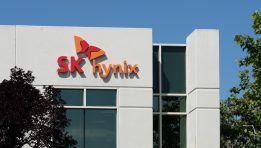
SK hynix is studying the feasibility of a joint venture to manufacture memory chips in Japan as the global artificial-intelligence

- omer bar
- •
- 7 Min Read
- •
- ago 4 hours
SKN | Tesla Ends Solar Roof After Years of Scaling Challenges — What Does It Mean for TSLA Stock?
Tesla has ended sales of its premium Solar Roof tiles after years of challenges in scaling production and installations, marking
- ago 4 hours
- •
- 7 Min Read
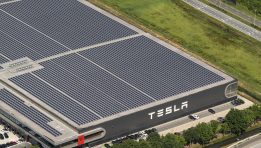
Tesla has ended sales of its premium Solar Roof tiles after years of challenges in scaling production and installations, marking
- omer bar
- •
- 6 Min Read
- •
- ago 7 hours
SKN | Uber Exhausted Its 2026 AI Budget in Four Months — How the Company Is Bringing Costs Under Control
Uber’s rapid adoption of artificial intelligence exposed a challenge increasingly facing large technology companies: AI usage can scale much faster
- ago 7 hours
- •
- 6 Min Read

Uber’s rapid adoption of artificial intelligence exposed a challenge increasingly facing large technology companies: AI usage can scale much faster
