




- omer bar
- •
- 7 Min Read
- •
- 30 minutes ago


Key Points
- Tesla has stopped selling its Solar Roof tiles nearly a decade after their launch, shifting its residential solar strategy toward conventional solar panels.
- The Solar Roof struggled to achieve Tesla’s original scale ambitions, with industry estimates putting installations far below the company’s early target of 1,000 systems per week.
- The discontinuation is unlikely to materially change Tesla’s near-term financial results, but it raises broader questions about execution, capital allocation and the company’s energy strategy.
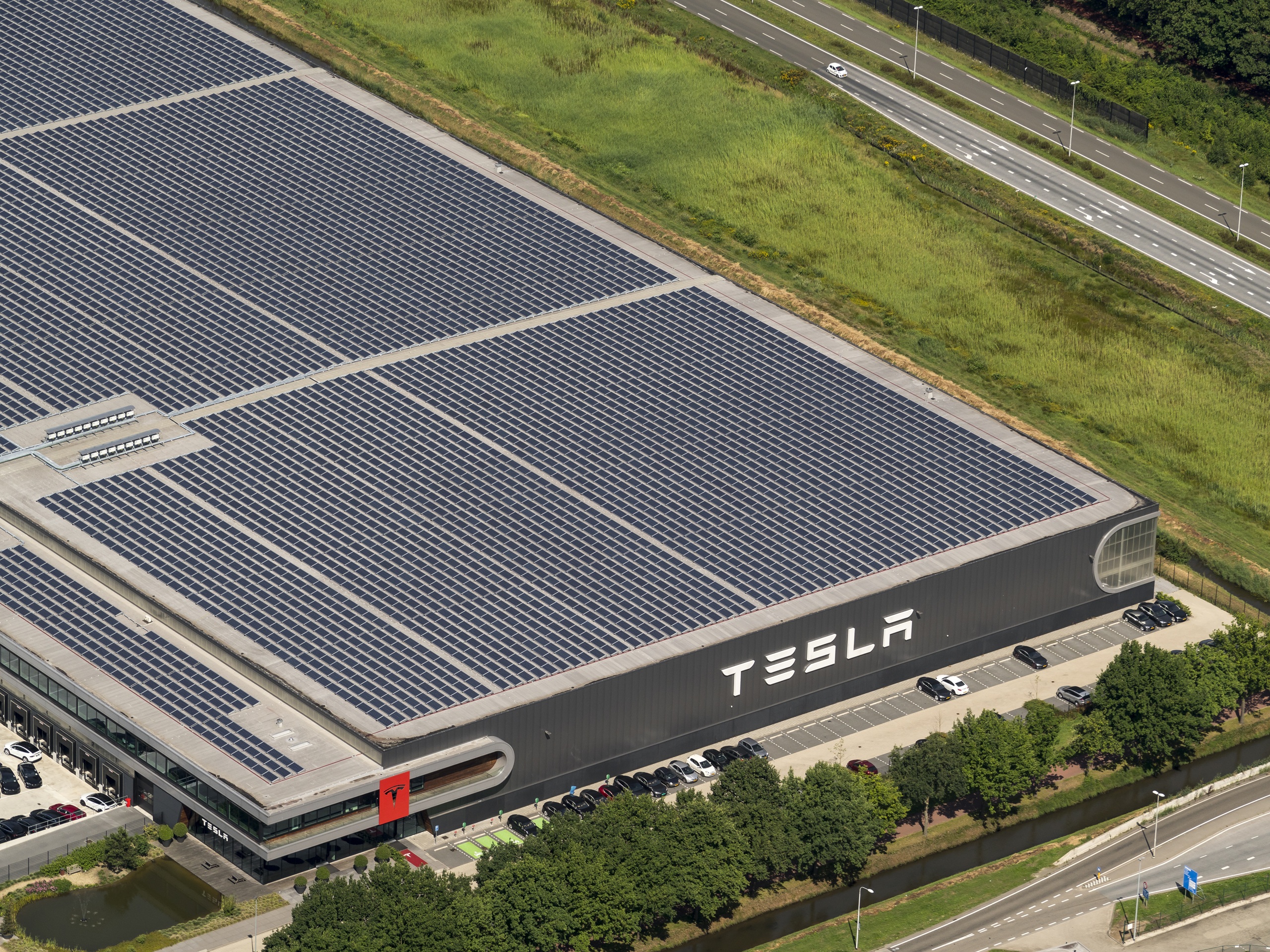
Tesla has ended sales of its premium Solar Roof tiles after years of challenges in scaling production and installations, marking a significant retreat from one of the company’s most ambitious residential-energy products. The decision comes as Tesla increasingly focuses its energy strategy on conventional solar panels and battery storage, while investors continue to assess whether the company can convert its broader technology ambitions into commercially scalable businesses.
Tesla’s Solar Roof Falls Short of Its Original Ambitions
Elon Musk unveiled the Solar Roof in 2016 as an alternative to conventional rooftop solar panels, combining electricity generation with roofing materials designed to resemble traditional shingles or tiles. Tesla initially promoted the product as a potentially cost-competitive solution and set an ambitious target of 1,000 installations per week.
That scale never materialized. Industry estimates indicated that Tesla was installing only a few dozen Solar Roof systems per week at its peak, far below the original target. Wood Mackenzie estimated that roughly 3,000 Solar Roof systems had been installed in the United States through early 2023, although Tesla disputed the estimate.
The economics also proved difficult. Manufacturing specialized solar tiles was more complex than producing standardized solar panels, while installation required additional labor and technical coordination. Tesla also faced customer complaints and significant price increases, further limiting the product’s ability to compete with conventional solar systems.
Tesla Is Shifting Its Energy Strategy Toward Conventional Solar
The end of the Solar Roof does not mean Tesla is abandoning residential solar. Instead, the company is moving toward conventional solar panels, which can benefit from a more standardized manufacturing process and established installation infrastructure. Tesla has also continued to develop its Powerwall battery-storage business, giving the energy division another avenue for growth.
The shift reflects a broader principle in the clean-energy industry: products that can be manufactured at scale and installed efficiently generally have a stronger path toward improving economics. Conventional solar panels have benefited from years of global manufacturing expansion and falling production costs, while solar shingles remain a more specialized product.
For Tesla, focusing resources on products with clearer scaling potential could improve capital efficiency. The company has also maintained larger ambitions in solar manufacturing, including plans for a major solar-cell factory in Texas, suggesting that the strategic retreat is specific to the Solar Roof rather than solar energy as a whole.
What Does the Solar Roof Decision Mean for TSLA Stock?
The immediate financial impact on TSLA stock is likely to be limited because the Solar Roof represented only a small portion of Tesla’s overall business. However, the decision carries strategic significance because investors closely monitor Tesla’s ability to execute on projects beyond its core electric-vehicle operations.
The discontinuation could reinforce concerns about the company’s history of announcing ambitious products before achieving commercial scale. At the same time, eliminating a difficult-to-scale product could allow Tesla to concentrate capital and engineering resources on higher-potential areas such as energy storage, conventional solar generation, autonomous driving and artificial intelligence.
Going forward, investors will focus on Tesla’s energy-generation and storage growth, conventional solar deployments, Powerwall demand and the economics of its broader energy business. The key question for TSLA stock is whether the Solar Roof’s failure to scale becomes a broader warning about execution or instead represents a disciplined decision to eliminate an inefficient product and redirect resources toward businesses with stronger commercial potential.
Comparison, examination, and analysis between investment houses
Leave your details, and an expert from our team will get back to you as soon as possible
* This article, in whole or in part, does not contain any promise of investment returns, nor does it constitute professional advice to make investments in any particular field.
To read more about the full disclaimer, click here
- Ronny Mor
- •
- 6 Min Read
- •
- ago 11 minutes
SKN | OpenAI’s Massive Mac Purchase Signals a New AI Infrastructure Trend as Anthropic Turns to AWS
OpenAI and Anthropic are reportedly taking different approaches to using Apple hardware for artificial-intelligence workloads, highlighting how AI infrastructure is
- ago 11 minutes
- •
- 6 Min Read

OpenAI and Anthropic are reportedly taking different approaches to using Apple hardware for artificial-intelligence workloads, highlighting how AI infrastructure is

- sagi habasov
- •
- 7 Min Read
- •
- ago 17 minutes
SKN | SK hynix Eyes Japan Memory Fab JV as AI Demand Drives Global Capacity Expansion
SK hynix is studying the feasibility of a joint venture to manufacture memory chips in Japan as the global artificial-intelligence
- ago 17 minutes
- •
- 7 Min Read
SK hynix is studying the feasibility of a joint venture to manufacture memory chips in Japan as the global artificial-intelligence

- omer bar
- •
- 6 Min Read
- •
- ago 3 hours
SKN | Uber Exhausted Its 2026 AI Budget in Four Months — How the Company Is Bringing Costs Under Control
Uber’s rapid adoption of artificial intelligence exposed a challenge increasingly facing large technology companies: AI usage can scale much faster
- ago 3 hours
- •
- 6 Min Read

Uber’s rapid adoption of artificial intelligence exposed a challenge increasingly facing large technology companies: AI usage can scale much faster

- Lior mor
- •
- 8 Min Read
- •
- ago 1 day
SKN | Nvidia vs. AMD: How the AI Boom Created a $96.2 Billion Revenue Divide
When ChatGPT emerged in late 2022, Nvidia and AMD were generating quarterly revenue at broadly similar levels, according to
- ago 1 day
- •
- 8 Min Read

When ChatGPT emerged in late 2022, Nvidia and AMD were generating quarterly revenue at broadly similar levels, according to
