





- Ronny Mor
- •
- 9 Min Read
- •
- 4 hours ago
Key Points
- A new report by investment bank UBS indicates that volatility in the technology sector has surged to levels not seen since the early 2000s.
- The world's five largest hyperscalers are expected to face an operational funding gap of approximately $227 billion over the coming year.
- A sharp 40% contraction in the equity multiples of traditional software and services stocks has been recorded amid mounting investor concerns over competitive disruption.
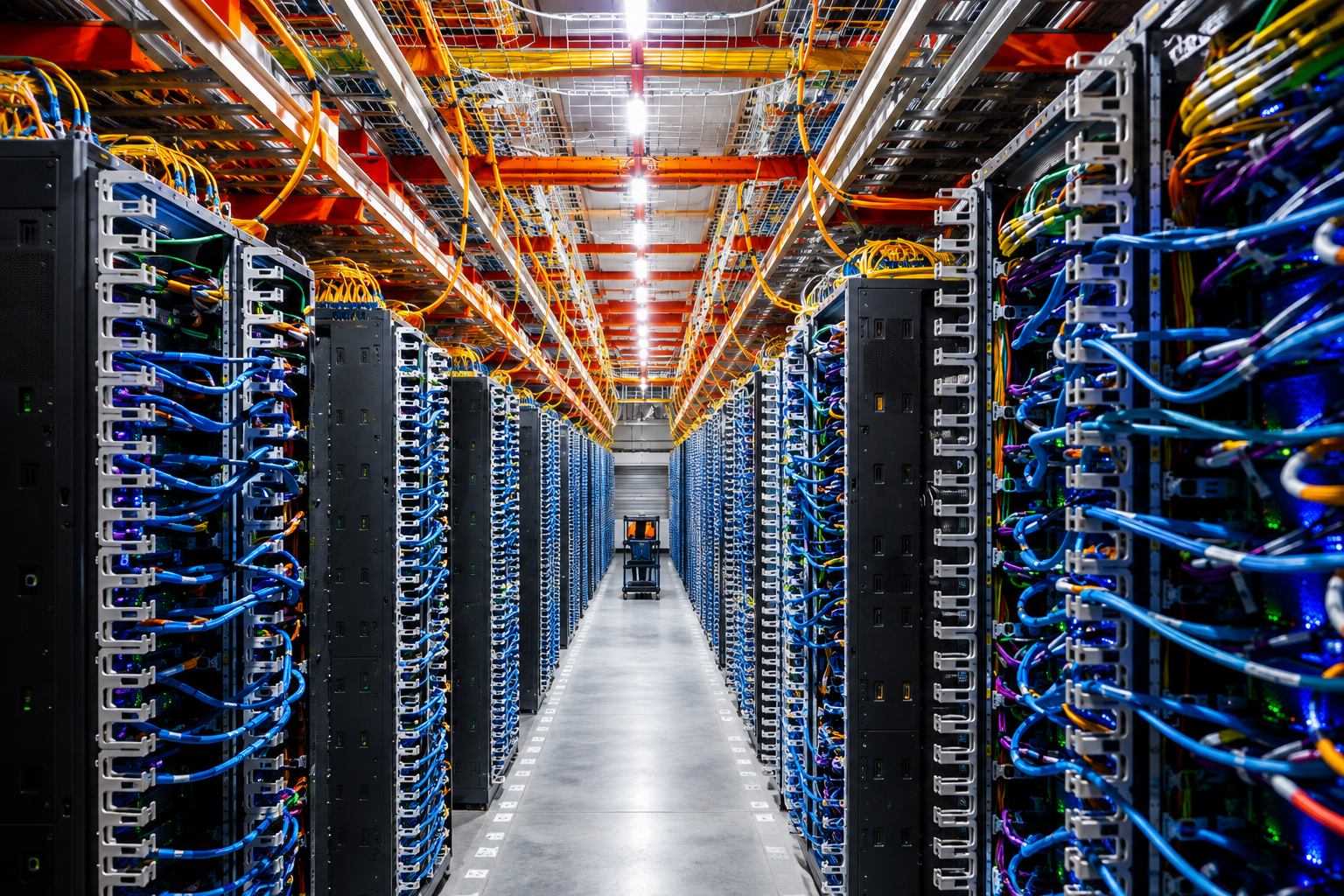
The investor enthusiasm surrounding artificial intelligence technologies has driven an unprecedented flow of capital into the tech sector in recent years, but the market now appears to be reassessing the risk-reward equation. Recent data indicates that global sector volatility has climbed to levels unseen since the dot-com era, as macro players on Wall Street question whether the current pace of cash returns can justify the massive investments in infrastructure and semiconductors. This development reflects a profound psychological shift among institutional investors, who are transitioning from a singular focus on the perpetual growth narrative to a growing demand for operational efficiency and tangible financial results, all while weighing the risks inherent in intensifying global competition and burdensome capital expenditures.
Cloud Giants and the Mounting Pressure on Asset Efficiency
An in-depth report by the HOLT research unit at the Swiss investment bank UBS sheds light on the true financial cost of the technological arms race. The comprehensive analysis points to mounting pressure stemming from massive spending on AI infrastructure and data centers. These heavy capital investments are gradually eroding the asset efficiency of the leading hyperscale companies. Although the profit margins of these tech giants continue to demonstrate relative resilience, the Cash Flow Return on Investment (CFROI) is projected to enter a downward trajectory approaching 2028. According to the bank’s economists, the world’s five largest tech companies—Microsoft, Meta, Alphabet, Amazon, and Oracle—are collectively expected to face a massive stabilization gap of $227 billion over the next year, a shortfall created between their ongoing operational and financing obligations and their actual cash flow. These figures gain further validity when examining historical data: a review of approximately 650 major capex cycles since 1998 reveals that in 60% of cases, a permanent and structural decline in financial returns followed periods of aggressive investment, particularly for companies that initially boasted strong opening metrics.
The semiconductor market, which serves as the critical foundational environment for AI development, presents a different yet equally challenging risk dynamic. Returns in this sector have experienced tremendous growth, tripling to roughly 30%—a rare achievement historically reserved for less than one percent of companies since 1990. The underlying issue lies in current market pricing, which assumes these exceptional profitability rates will be sustained for at least the next five years. This optimistic model directly clashes with the reality of traditional competitive dynamics, especially from the Asian market. The rise of prominent Chinese model developers, such as DeepSeek and Moonshot, illustrates that the economic moats of Western chip and software giants are not permanently immune. Chinese players, often benefiting from systemic backing, tend to prioritize aggressive market share acquisition over maintaining short-term profit margins, a tendency that could undermine the monopolistic pricing power of the leading companies.
Pricing Adjustments in the Software Sector and the Search for a Safe Haven
The ripple effects of the AI revolution and the fear of business disruption are already leaving a deep mark on traditional software and data services stocks. Over the past 18 months, the sector has undergone a significant reset, with aggregate equity multiples contracting sharply by about 40%. According to a historical analysis presented by UBS, the vast majority of stocks—roughly 80%—that previously suffered a similar magnitude of value decline failed to reclaim their peak levels even a full decade later. Against the backdrop of this turbulent environment, many institutional investors are attempting to steer their portfolios toward safe havens, focusing on Value stocks and assets characterized by low volatility. While these strategies have historically proven to deliver outperformance during moments of crisis, the bank’s economists slightly dampen the enthusiasm by highlighting current limitations. The traditional correlation between Value stocks and the economic cycle has been weakening since 2023, and low-volatility companies are now required to present a much stronger fundamental base to justify capital allocations in a challenging interest rate environment.
Looking ahead, the current crossroads of the technology sector requires capital market participants to adopt stricter investment discipline than ever before. Crossing the historical volatility threshold does not necessarily signal the violent bursting of a bubble, but rather a necessary maturation and sobering process for the AI industry—a phase where theoretical promises are required to prove long-term economic viability. For the institutional investor, the upcoming period emerges as a critical test where the ability to distinguish between companies capable of converting massive investments into sustainable free cash flow and those relying solely on marketing momentum will dictate future portfolio returns. The market is in the midst of a recalibration process, and only those players who manage to balance the potential inherent in innovation with the rigid constraints of the financial balance sheet will successfully navigate the complex transition to the next generation of the digital economy.
Comparison, examination, and analysis between investment houses
Leave your details, and an expert from our team will get back to you as soon as possible
* This article, in whole or in part, does not contain any promise of investment returns, nor does it constitute professional advice to make investments in any particular field.
To read more about the full disclaimer, click here
- omer bar
- •
- 8 Min Read
- •
- ago 5 hours
SKN | Intel Plans $15 Billion Stock Offering as AI Demand Accelerates
Intel (NASDAQ: INTC) announced a $15 billion common stock offering on Monday as the chipmaker moves to strengthen its financial
- ago 5 hours
- •
- 8 Min Read

Intel (NASDAQ: INTC) announced a $15 billion common stock offering on Monday as the chipmaker moves to strengthen its financial

- Lior mor
- •
- 8 Min Read
- •
- ago 13 hours
SKN | CEVA Heads Into Q2 Earnings With Investors Watching for a 2027 Royalty Inflection
CEVA Inc. is preparing to report its second-quarter results before the market opens Monday, with investors focused less on near-term
- ago 13 hours
- •
- 8 Min Read

CEVA Inc. is preparing to report its second-quarter results before the market opens Monday, with investors focused less on near-term
- Lior mor
- •
- 7 Min Read
- •
- ago 18 hours
SKN | Can Appian’s AI Strategy Sustain Cloud Growth and Expand Profitability in Q2 2026?
Appian Corp. (NASDAQ: APPN) enters its second-quarter 2026 earnings period at a pivotal point for the enterprise software industry, as
- ago 18 hours
- •
- 7 Min Read

Appian Corp. (NASDAQ: APPN) enters its second-quarter 2026 earnings period at a pivotal point for the enterprise software industry, as

- Ronny Mor
- •
- 5 Min Read
- •
- ago 1 day
SKN | mRecord-Breaking Quarterly Report: Applied Optoelectronics (AAOI) Posts 86% Revenue Surge Amid Capacity Challenges
Applied Optoelectronics' Q2 2026 financial results highlight its pivotal role as a key "pick and shovel" supplier in the AI
- ago 1 day
- •
- 5 Min Read

Applied Optoelectronics' Q2 2026 financial results highlight its pivotal role as a key "pick and shovel" supplier in the AI


