





- sagi habasov
- •
- 6 Min Read
- •
- 3 months ago


Key Points
- Recent S&P 500 price action continues to closely follow the historical U.S. presidential cycle pattern despite a few short-lived deviations.
- Market turning points have occurred slightly earlier than the long-term average, but the broader cyclical trend has largely remained intact.
- Investors are assessing whether seasonal market tendencies can continue to complement macroeconomic analysis in the second half of the year.

Seasonal market patterns have long been a topic of debate among investors, but recent performance of the S&P 500 is once again drawing attention to one of Wall Street’s most closely watched historical indicators—the presidential cycle. Market data suggests that after experiencing two brief anomalies earlier in the year, the index has largely resumed tracking its historical seasonal pattern since mid-May. While recent turning points have arrived several days ahead of their long-term averages, the overall trajectory remains remarkably consistent with previous presidential cycle behavior, reinforcing the idea that investor psychology and recurring market dynamics continue to influence price action.
Historical Cycles Continue to Capture Investor Attention
The presidential cycle theory argues that U.S. equity markets tend to exhibit recurring patterns during the four-year presidential term, influenced by fiscal policy, government spending, political priorities, and investor expectations. Although no seasonal model guarantees future performance, many institutional investors use historical cycles as one component of broader market analysis alongside earnings, economic data, and monetary policy.
The latest comparison indicates that the S&P 500 has closely mirrored the historical pattern since mid-May, despite experiencing two temporary deviations earlier in the year. Rather than invalidating the model, these short-lived anomalies demonstrate that seasonal trends rarely unfold perfectly but can still provide valuable context when viewed over longer periods.
Seasonality Complements—But Does Not Replace—Fundamental Analysis
One notable feature of the current cycle is that recent market turns have occurred slightly earlier than historical averages. This timing difference highlights an important reality of financial markets: while historical tendencies often repeat, they rarely do so with exact precision. Investor positioning, advances in algorithmic trading, faster information flows, and evolving macroeconomic conditions can all influence the timing of cyclical movements.
Professional investors generally avoid relying exclusively on seasonal indicators. Instead, they integrate historical patterns with corporate earnings, valuation metrics, inflation trends, Federal Reserve policy, and geopolitical developments. This broader framework helps distinguish between temporary market noise and more durable shifts in underlying fundamentals.
Macro Conditions Will Ultimately Shape the Next Market Move
Although the presidential cycle remains constructive, the sustainability of the current rally will depend primarily on economic and corporate developments. Inflation trends, interest-rate expectations, labor market resilience, and second-half earnings growth will likely have a greater influence on long-term market performance than seasonality alone. Strong corporate profitability could reinforce the historical pattern, while unexpected macroeconomic shocks could easily interrupt it.
Looking ahead, investors should view the presidential cycle as a useful analytical framework rather than a forecasting tool. Historical market behavior can offer valuable insights into investor sentiment and recurring seasonal tendencies, but successful investment decisions require balancing those observations with evolving economic data and company fundamentals. As the second half of the year unfolds, the interaction between seasonal trends and macroeconomic conditions will remain a key area of focus for both institutional and retail investors.
Comparison, examination, and analysis between investment houses
Leave your details, and an expert from our team will get back to you as soon as possible
* This article, in whole or in part, does not contain any promise of investment returns, nor does it constitute professional advice to make investments in any particular field.
To read more about the full disclaimer, click here
- omer bar
- •
- 7 Min Read
- •
- ago 15 hours
SKN | U.S. Stocks Retreat as OpenAI Revenue Concerns Renew Questions Over the AI Investment Boom
U.S. stocks closed lower Thursday as renewed concerns over the economics of artificial intelligence triggered a broad selloff across technology
- ago 15 hours
- •
- 7 Min Read

U.S. stocks closed lower Thursday as renewed concerns over the economics of artificial intelligence triggered a broad selloff across technology

- orshu
- •
- 7 Min Read
- •
- ago 16 hours
SKN | Americas Market Overview: Nasdaq Falls 1.25% as U.S. Stocks Finish Mixed
U.S. Stocks Deliver a Mixed Performance U.S. equity markets finished with a clear divergence between the major benchmarks. The Dow
- ago 16 hours
- •
- 7 Min Read

U.S. Stocks Deliver a Mixed Performance U.S. equity markets finished with a clear divergence between the major benchmarks. The Dow
- orshu
- •
- 6 Min Read
- •
- ago 21 hours
SKN | Tel Aviv Stocks Stabilize as TA-90 Gains 0.56% After Sharp Selloff
Tel Aviv Market Finds Some Stability The Tel Aviv Stock Exchange closed October 8 with a mixed session, as the
- ago 21 hours
- •
- 6 Min Read

Tel Aviv Market Finds Some Stability The Tel Aviv Stock Exchange closed October 8 with a mixed session, as the
- orshu
- •
- 6 Min Read
- •
- ago 21 hours
SKN | European Markets Close Lower as Broad Equity Weakness Intensifies
European markets closed October 8 lower, extending the region's recent weakness as major equity benchmarks ended the session in
- ago 21 hours
- •
- 6 Min Read
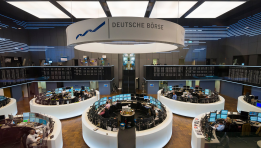
European markets closed October 8 lower, extending the region's recent weakness as major equity benchmarks ended the session in

