





- sagi habasov
- •
- 7 Min Read
- •
- 3 months ago


Key Points
- Alphabet’s aggressive AI infrastructure investment pushed capital expenditure expectations higher, creating concerns among investors about near-term profitability.
- The company raised its 2026 capital expenditure outlook to between $195 billion and $205 billion, highlighting the scale of its artificial intelligence expansion plans.
- Alphabet shares moved below key technical indicators, increasing market focus on valuation, spending efficiency, and future AI monetization.

Alphabet (NASDAQ: GOOG, GOOGL) entered its second-quarter earnings report as one of the strongest-performing members of the “Magnificent Seven” technology group, supported by investor confidence in its artificial intelligence strategy. However, increased concerns over rising infrastructure spending have shifted attention toward whether the company’s AI investments can generate sufficient long-term returns.
The market reaction reflects a broader debate across the technology sector: whether unprecedented AI-related capital expenditure represents a necessary investment cycle or creates pressure on profitability and shareholder returns in the near term.
Higher AI Investment Changes the Market Narrative Around Alphabet
Alphabet reported second-quarter capital expenditures of $44.9 billion, slightly above Wall Street expectations of $44.7 billion. The company also increased its full-year capital expenditure forecast to between $195 billion and $205 billion, up from the previous range of $180 billion to $190 billion.
The increase reflects Alphabet’s commitment to expanding data center capacity, artificial intelligence infrastructure, and advanced computing capabilities. Similar spending trends have been seen across major technology companies as firms compete to develop and deploy AI models, cloud services, and related applications.
However, investors have increasingly focused on the timing of returns from these investments. Large-scale infrastructure spending can pressure free cash flow and operating margins before new revenue streams fully develop, making execution and monetization key factors for market confidence.
Technical Indicators Signal Increased Investor Caution
Following the earnings report, Alphabet shares fell below the 100-day moving average for the first time since April, according to Yahoo Finance AlphaSpace data. The stock also declined nearly 5% in premarket trading after investors reacted negatively to the company’s elevated spending plans.
The technical weakness has increased attention on the possibility of further price testing, including the company’s 200-day moving average near $323. While technical indicators do not determine long-term business performance, they often influence short-term investor positioning and market sentiment.
The decline highlights how investor expectations have shifted. Alphabet had benefited from optimism that its AI initiatives were progressing faster than competitors in terms of commercialization, but higher spending levels have introduced new questions regarding capital efficiency.
AI Monetization Remains the Key Strategic Challenge
Alphabet’s long-term strategy remains closely linked to its ability to convert AI investments into sustainable revenue growth. The company operates across several AI-related areas, including cloud computing, search enhancements, advertising technology, and enterprise solutions.
The broader technology sector is currently undergoing a major investment cycle, with companies increasing spending to secure computing capacity and develop competitive AI platforms. For Alphabet, maintaining leadership requires balancing innovation with financial discipline.
For investors monitoring global technology markets, including from Israel’s technology-focused investment ecosystem, Alphabet’s strategy represents a broader question facing the AI industry: how quickly large infrastructure investments can translate into measurable earnings growth.
Looking ahead, markets will continue watching Alphabet’s ability to demonstrate returns on its expanding AI investments, manage capital expenditure growth, and maintain profitability. Key factors to monitor include future guidance, cloud revenue growth, AI product adoption, and whether increased infrastructure spending begins contributing meaningfully to revenue expansion. The company’s next earnings updates will likely provide further insight into whether the current investment cycle is strengthening its competitive position or creating additional valuation pressure.
Comparison, examination, and analysis between investment houses
Leave your details, and an expert from our team will get back to you as soon as possible
* This article, in whole or in part, does not contain any promise of investment returns, nor does it constitute professional advice to make investments in any particular field.
To read more about the full disclaimer, click here
- Lior mor
- •
- 7 Min Read
- •
- ago 1 hour
SKN | Amazon Reportedly Eyes $7 Billion Decart AI Deal as Trainium Challenges Nvidia GPUs
Amazon is reportedly considering a roughly $7 billion acquisition of Decart, an AI startup developing real-time video generation technology and
- ago 1 hour
- •
- 7 Min Read

Amazon is reportedly considering a roughly $7 billion acquisition of Decart, an AI startup developing real-time video generation technology and

- sagi habasov
- •
- 7 Min Read
- •
- ago 2 hours
SKN | Microsoft Expands AI Beyond Data Centers as Surface Plays a Smaller Role in Its Strategy
Microsoft is pushing artificial intelligence beyond large data centers and into personal computers, seeking to make AI tools more powerful,
- ago 2 hours
- •
- 7 Min Read

Microsoft is pushing artificial intelligence beyond large data centers and into personal computers, seeking to make AI tools more powerful,

- Ronny Mor
- •
- 9 Min Read
- •
- ago 11 hours
SKN | Oracle and Broadcom Credit Risk Hits Record Levels as AI Infrastructure Debt Raises Investor Concerns
Credit markets are sending a more cautious signal about the cost of financing the artificial intelligence boom, with Oracle
- ago 11 hours
- •
- 9 Min Read
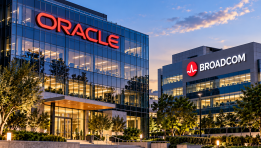
Credit markets are sending a more cautious signal about the cost of financing the artificial intelligence boom, with Oracle
- sagi habasov
- •
- 8 Min Read
- •
- ago 16 hours
SKN | S&P 500 Market Breadth Weakens: 85% of Stocks Fall at Least 10% From Their Highs Despite Index Gains
The U.S. stock market is showing a sharp divergence between the performance of its headline indexes and the experience
- ago 16 hours
- •
- 8 Min Read

The U.S. stock market is showing a sharp divergence between the performance of its headline indexes and the experience

