





- Lior mor
- •
- 9 Min Read
- •
- 10 hours ago
Key Points
- Oil prices fell for a fourth consecutive session, marking the longest losing streak of the year as expectations grow for a reopening of the Strait of Hormuz and a recovery in global supply.
- Major Wall Street banks, including Goldman Sachs and Morgan Stanley, lowered their oil price forecasts after the U.S.-Iran agreement accelerated expectations for Persian Gulf export normalization.
- Despite improving sentiment, traders and energy companies remain cautious as key details surrounding shipping operations, security measures, and implementation of the agreement remain unresolved.

Crude oil continued its sharp retreat on Tuesday as markets increasingly priced in a recovery of Persian Gulf energy exports following the U.S.-Iran peace agreement.
Brent crude fell below $83 per barrel while West Texas Intermediate traded near $80, extending losses for a fourth consecutive trading session. The move represents the longest losing streak for oil this year and has pushed prices to their lowest levels since early March.
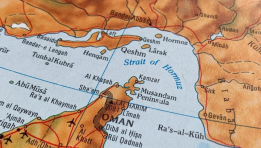
The selloff follows confirmation that the United States and Iran are preparing to formally sign an interim agreement designed to reopen the Strait of Hormuz, one of the world’s most important energy shipping corridors.
Wall Street Cuts Oil Forecasts
The improving outlook for global energy supplies has prompted major financial institutions to revise their price expectations lower.
Goldman Sachs reduced its forecast for Brent crude, now expecting average prices around $80 per barrel during the fourth quarter, roughly $10 below its previous estimate.
Morgan Stanley also lowered its outlook, forecasting Brent crude to average approximately $90 per barrel between July and September, down from its earlier expectation of $100. The bank reduced its fourth-quarter forecast by $15 to approximately $80 per barrel.
Analysts cited expectations that oil exports from the Persian Gulf could recover more quickly than previously anticipated as geopolitical tensions continue to ease.
Strait of Hormuz Reopening Drives Market Sentiment
The Strait of Hormuz remains the key focus for energy markets.
Before the conflict began, the strategic waterway handled roughly one-fifth of global oil supplies. The disruption of shipping through the route triggered significant supply concerns, inventory drawdowns, and a sharp increase in energy prices earlier this year.
President Donald Trump stated during the Group of Seven summit that the passage would remain open and toll-free, reinforcing investor expectations that normal shipping operations could resume in the coming weeks.
The prospect of increased exports from the region has significantly reduced fears of a prolonged supply shortage.
Inflation Pressures Continue to Ease
The decline in oil prices is providing relief to policymakers and financial markets concerned about inflation.
Higher energy costs were one of the primary factors driving inflation higher during the conflict. As crude prices retreat, investors increasingly believe that inflationary pressures could moderate, reducing the likelihood of additional monetary tightening.
The timing is particularly significant as Federal Reserve officials prepare to evaluate economic conditions and interest rate policy during upcoming meetings.
Lower energy prices may help ease concerns about rising transportation, manufacturing, and consumer costs across the global economy.
Market Remains Cautious
Despite the improving outlook, many participants remain cautious about declaring a full resolution.
Energy buyers, shipping companies, and commodity traders continue seeking greater clarity regarding operational procedures, security arrangements, and the implementation timeline for the agreement.
Officials across the Persian Gulf report receiving substantial inquiries from customers attempting to determine when normal export volumes can safely resume.
Some market participants remain concerned that unforeseen complications could slow the recovery process or create new disruptions.
Signs of a Loosening Oil Market
Several market indicators suggest supply concerns are beginning to ease.
One closely watched measure is Brent crude’s prompt spread, which reflects the difference between near-term futures contracts.
Although the market remains in backwardation—a structure typically associated with tighter supply conditions—the spread has narrowed significantly. The premium has fallen to approximately 83 cents per barrel compared with more than $4 a month ago.
This shift suggests traders are becoming increasingly confident that supply availability will improve in the months ahead.
Different Views on Recovery Speed
While most analysts expect exports to recover, opinions vary regarding how quickly that process will occur.
Morgan Stanley projects that approximately half of lost production could return by September, with as much as 80% restored by the end of the year.
Others are more cautious. Analysts at RBC Capital Markets believe returning to pre-conflict export levels could take significantly longer, arguing that peak Strait of Hormuz flows may not be restored immediately even after the agreement takes effect.
These differing forecasts highlight the uncertainty that still surrounds the implementation phase of the agreement.
Outlook
Oil markets have shifted dramatically from supply shock concerns toward expectations of normalization.
The U.S.-Iran agreement has fundamentally changed market sentiment, prompting investors to reassess the likelihood of prolonged disruptions and reduce risk premiums that had built into crude prices during the conflict.
While questions remain regarding execution and logistics, the overall direction of the market suggests traders increasingly believe global oil supplies will improve during the second half of 2026.
Investors will now focus on the formal signing of the agreement, shipping activity through the Strait of Hormuz, and upcoming forecasts from major energy agencies to determine whether the recent decline in oil prices can continue.
Comparison, examination, and analysis between investment houses
Leave your details, and an expert from our team will get back to you as soon as possible
* This article, in whole or in part, does not contain any promise of investment returns, nor does it constitute professional advice to make investments in any particular field.
To read more about the full disclaimer, click here
- orshu
- •
- 6 Min Read
- •
- ago 9 hours
SKN | Oil Prices Hit Three-Month Low, but Hormuz Shipping Risks Keep Energy Markets on Edge
Global oil markets entered the week under pressure as benchmark crude prices declined to their lowest levels in approximately
- ago 9 hours
- •
- 6 Min Read
Global oil markets entered the week under pressure as benchmark crude prices declined to their lowest levels in approximately

- Lior mor
- •
- 6 Min Read
- •
- ago 1 week
SKN | Strait of Hormuz Risks Return to Center Stage as Trump Warns of Prolonged Disruption
Global markets entered the week facing renewed geopolitical uncertainty after former U.S. President Donald Trump warned that a breakdown
- ago 1 week
- •
- 6 Min Read

Global markets entered the week facing renewed geopolitical uncertainty after former U.S. President Donald Trump warned that a breakdown

- fidji
- •
- 6 Min Read
- •
- ago 2 weeks
SKN | Oil Prices Fall 3% as Trump Signals Reluctance to Restart Iran Conflict
Oil Retreats on Signs of De-Escalation Crude oil prices declined sharply on Thursday as investors reacted to reports suggesting the
- ago 2 weeks
- •
- 6 Min Read
Oil Retreats on Signs of De-Escalation Crude oil prices declined sharply on Thursday as investors reacted to reports suggesting the
- article@skn.co.il
- •
- 6 Min Read
- •
- ago 2 weeks
SKN | Venezuelan Heavy Crude Influx Reconfigures Atlantic Basin Refining Margins
Reconfiguring Supply in the Dense, High-Sulfur Crude Segment The sustained expansion of heavy-density crude exports from Venezuela represents a significant
- ago 2 weeks
- •
- 6 Min Read
Reconfiguring Supply in the Dense, High-Sulfur Crude Segment The sustained expansion of heavy-density crude exports from Venezuela represents a significant


