


- article@skn.co.il
- •
- 6 Min Read
- •
- 20 hours ago
Key Points
- Marginal increases in weekly jobless claims validate historically resilient corporate labor retention structures.
- Stable employment environments shift household behavior away from precautionary savings toward consistent demand.
- Controlled unemployment levels decrease near-term economic recession exposure, limiting immediate interest rate reductions.

Low Turnover Regimes Anchor Household Balance Sheets
The United States labor market continues to operate within a low-turnover regime, anchoring core inflationary pressures and preserving household balance sheets. The U.S. Department of Labor reported that initial claims for state unemployment benefits rose by 5,000 to a seasonally adjusted 215,000 for the week ending May 23, marginally above the consensus Wall Street estimate of 211,000. The aggregate labor market demonstrates significant structural resilience against macroeconomic headwinds, including supply chain frictions stemming from international trade tariffs and global geopolitical tensions.
Suppressed Layoff Rates Offset Moderate Headcount Expansion
The contemporary domestic employment framework reflects a macroeconomic duality defined by analysts as a “low-layoff, low-hiring” equilibrium. While weekly initial filings remain well-contained within historical standard deviations, corporate appetite for expanding total headcount shows structural moderation. Continuing claims—the metric tracking individuals receiving unemployment benefits after an initial week of aid—edged up slightly to 1.821 million. This operational KPI indicates that while immediate job loss risks remain low for active workers, the average duration required for displaced individuals to secure re-employment within the private sector is expanding due to cautious corporate capacity planning.
Resilient Employment Data Stabilizes Treasury Yield Curves
Labor market stability exerts a direct, quantifiable influence on sovereign debt yields and broader equity valuations. The resilience of the employment data, juxtaposed with the downward revision of first-quarter gross domestic product (GDP) growth to an annualized rate of 1.6%, signals a controlled economic deceleration rather than an imminent recession. Fixed-income markets reacted with stabilization across the 10-year Treasury yield curve, as steady employment prevents an acceleration of wage-push inflation. Concurrently, benchmark equity indices like the S&P 500 process these metrics as confirmation that corporate profit margins face low systemic default risks in the medium term.
Stagnant Net Hiring Tightens Commercial Liquidity Spreads
This structural employment stability directly affects the banking sector through key operational indicators, such as corporate loan-to-deposit ratios and household debt-service capacity. While a low-layoff environment prevents a sudden surge in non-performing loans (NPLs), the stagnation in net hiring slows the growth of new consumer deposits. As a result, commercial banks are observing tighter liquidity spreads, forcing a more conservative stance on credit extension to small and medium enterprises. This secondary transmission channel restrains broader economic overheating, serving as a silent cooling mechanism for the domestic economy without requiring deeper intervention from monetary authorities.
From Policy to Balance Sheet Reality
Analysts must monitor the exhaustion rates of standard 26-week state benefits to detect hidden displacement in interest-rate-sensitive sectors. Structural stress is poised to surface in subprime auto loan delinquencies and credit card utilization rates as long hiring durations drain secondary household reserves. Consumer behavior will adapt by converting discretionary outlays into defensive cash allocations, forcing the Federal Reserve to maintain elevated terminal rates until service-sector wage growth drops below structural thresholds.
Comparison, examination, and analysis between investment houses
Leave your details, and an expert from our team will get back to you as soon as possible
* This article, in whole or in part, does not contain any promise of investment returns, nor does it constitute professional advice to make investments in any particular field.
To read more about the full disclaimer, click here
- Ronny Mor
- •
- 7 Min Read
- •
- ago 5 hours
SKN | Is Rising Inflation Becoming Indonesia’s Next Economic Challenge Despite Strong Trade Performance?
Indonesia’s inflation rate is expected to accelerate in May, bringing price growth closer to the upper limit of the central
- ago 5 hours
- •
- 7 Min Read

Indonesia’s inflation rate is expected to accelerate in May, bringing price growth closer to the upper limit of the central

- sagi habasov
- •
- 7 Min Read
- •
- ago 5 hours
SKN | Is Germany’s Labor Market Showing Unexpected Resilience Despite Economic Headwinds?
Germany’s labor market delivered a positive surprise in May as unemployment declined unexpectedly, offering a rare sign of resilience
- ago 5 hours
- •
- 7 Min Read

Germany’s labor market delivered a positive surprise in May as unemployment declined unexpectedly, offering a rare sign of resilience

- Lior mor
- •
- 7 Min Read
- •
- ago 6 hours
SKN | Can Artificial Intelligence Finally Solve Italy’s Long-Standing Productivity Problem?
Italy’s economic growth challenges have long been tied to weak productivity performance, a structural issue that has constrained competitiveness
- ago 6 hours
- •
- 7 Min Read

Italy’s economic growth challenges have long been tied to weak productivity performance, a structural issue that has constrained competitiveness
- sagi habasov
- •
- 7 Min Read
- •
- ago 14 hours
SKN | When Will the Fed Meet Next in 2026? Investors Watch Critical Monetary Policy Calendar
The Federal Reserve’s meeting calendar is one of the most closely watched components of the global financial system, shaping expectations
- ago 14 hours
- •
- 7 Min Read
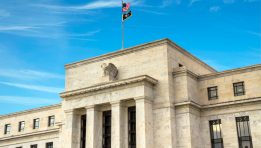
The Federal Reserve’s meeting calendar is one of the most closely watched components of the global financial system, shaping expectations


