


- omer bar
- •
- 7 Min Read
- •
- 42 minutes ago
Key Points
- The Bank of Korea kept interest rates unchanged, in line with market expectations, maintaining a cautious policy stance.
- The decision reflects ongoing balancing between inflation control and growth stability in South Korea’s economy.
- Investors are watching for future policy signals as global monetary easing cycles begin to diverge.

South Korea’s central bank opted to keep its benchmark interest rate unchanged, signaling a continued preference for policy stability amid mixed macroeconomic signals. The decision aligns with consensus expectations and comes as global central banks reassess the timing and pace of potential monetary easing. For investors in Israel and globally, the move highlights how Asian monetary policy is increasingly shaped by divergent inflation paths and uneven growth momentum across major economies.
Policy Stability Reflects Balanced Economic Pressures
The Bank of Korea’s decision to hold rates steady reflects a delicate balancing act between controlling inflation and supporting economic growth. While inflation has moderated from earlier peaks, price pressures in services and select consumer categories remain a consideration for policymakers.
At the same time, South Korea’s export-driven economy continues to face uneven external demand conditions, particularly in key sectors such as semiconductors, electronics, and industrial components. These industries are highly sensitive to global technology cycles and trade conditions, which remain uncertain despite broader stabilization in global growth indicators.
The central bank’s cautious stance suggests that policymakers are not yet prepared to commit to a clear easing cycle, preferring instead to maintain flexibility as incoming data evolves. This approach mirrors broader regional trends, where Asian central banks are moving at different speeds compared with Western counterparts.
Inflation Trends and Export Conditions Shape Policy Outlook
Inflation dynamics in South Korea have shown signs of easing, but underlying pressures remain uneven across different sectors of the economy. Energy costs and imported inflation have moderated, while domestic service inflation remains relatively sticky.
Export performance continues to play a central role in shaping economic momentum. South Korea’s dependence on global semiconductor demand makes its outlook closely tied to the technology investment cycle, particularly in artificial intelligence infrastructure and advanced electronics manufacturing.
Recent volatility in global trade and manufacturing indicators has reinforced the central bank’s preference for caution. Policymakers are closely monitoring external demand conditions, especially in China and the United States, which are key markets for Korean exports.
For global investors, including Israeli institutional portfolios with exposure to Asian equities and currency markets, South Korea’s policy stance provides important signals about regional monetary divergence and potential currency volatility.
Financial Markets React to Policy Continuity
Financial markets largely anticipated the decision, resulting in muted immediate reaction across domestic equities and bond markets. Korean government bond yields remained relatively stable, reflecting limited shifts in near-term interest rate expectations.
The Korean won also traded within a narrow range, with currency markets already pricing in a prolonged period of policy stability. Foreign exchange movements remain sensitive to shifts in US monetary policy expectations, which continue to dominate global currency dynamics.
Equity markets, particularly export-oriented technology and semiconductor stocks, remain more closely linked to global demand cycles than domestic interest rate decisions. As a result, the central bank’s announcement had limited direct impact on broader market direction.
Outlook and Key Factors to Watch
Looking ahead, the Bank of Korea’s policy trajectory will depend on the evolution of inflation trends, export performance, and global monetary conditions. Any sustained improvement in external demand could strengthen economic momentum, while renewed inflationary pressures could delay potential policy easing.
Key risks include weaker-than-expected global trade activity, continued volatility in semiconductor demand, and shifts in US Federal Reserve policy that could influence capital flows and currency stability. On the upside, a recovery in global technology investment cycles could provide stronger support for South Korea’s export sector and overall growth outlook.
For global markets, the decision reinforces a broader theme of diverging monetary policy paths across Asia, as central banks navigate uneven inflation pressures and externally driven growth cycles.
Comparison, examination, and analysis between investment houses
Leave your details, and an expert from our team will get back to you as soon as possible
* This article, in whole or in part, does not contain any promise of investment returns, nor does it constitute professional advice to make investments in any particular field.
To read more about the full disclaimer, click here
- orshu
- •
- 7 Min Read
- •
- ago 13 minutes
SKN | Global Markets Wrap: May 27, 2026 Performance Review and Outlook for May 28, 2026 as Equities Trade Mixed Amid Holiday-Thinned Liquidity Across Global Markets
Global financial markets ended May 27, 2026, with a mixed tone as investors navigated uneven regional performance and significantly reduced
- ago 13 minutes
- •
- 7 Min Read

Global financial markets ended May 27, 2026, with a mixed tone as investors navigated uneven regional performance and significantly reduced

- Lior mor
- •
- 7 Min Read
- •
- ago 52 minutes
SKN | Are Asian Equities Losing Momentum as Gulf Tensions Prolong Global Risk Aversion?
Asian equity markets paused their recent upward momentum as prolonged geopolitical tensions in the Gulf region weighed on investor sentiment
- ago 52 minutes
- •
- 7 Min Read
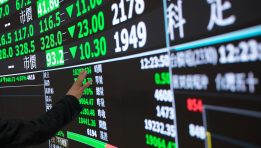
Asian equity markets paused their recent upward momentum as prolonged geopolitical tensions in the Gulf region weighed on investor sentiment

- sagi habasov
- •
- 11 Min Read
- •
- ago 2 hours
SKN | Asian Markets Trade Cautiously on May 28 as China and Australia Weaken While Korea Holds Modest Gains
Asian equity markets opened Thursday, May 28 with cautious and mixed performance across the region as investors balanced selective buying
- ago 2 hours
- •
- 11 Min Read

Asian equity markets opened Thursday, May 28 with cautious and mixed performance across the region as investors balanced selective buying

- article@skn.co.il
- •
- 6 Min Read
- •
- ago 8 hours
SKN | Sovereign Regulatory Probes Target FIFA World Cup Ticketing Process
Antitrust Investigations and Sovereign Compliance The formal launch of a coordinated antitrust investigation by New York and New Jersey authorities
- ago 8 hours
- •
- 6 Min Read

Antitrust Investigations and Sovereign Compliance The formal launch of a coordinated antitrust investigation by New York and New Jersey authorities


