


- Lior mor
- •
- 8 Min Read
- •
- 26 minutes ago
Key Points
- A US federal regulator has filed a lawsuit seeking to block Minnesota’s proposed ban on prediction markets
- The dispute highlights growing regulatory tension surrounding event-based trading platforms and financial innovation
- Investors and fintech firms are closely monitoring the case for its broader implications on digital trading and derivatives markets

A major legal dispute is unfolding in the United States after a federal regulator moved to challenge Minnesota’s attempt to implement what would become the country’s first statewide ban on prediction markets. The lawsuit reflects escalating debate over whether event-based trading platforms should be treated as financial instruments, gambling products, or a hybrid category requiring new regulatory frameworks. For investors, the case underscores the increasing intersection between fintech innovation, derivatives regulation, and state-level policymaking.
Regulatory Conflict Highlights Expanding Prediction Market Industry
Prediction markets have grown rapidly in recent years as investors and retail participants increasingly use event-based contracts to speculate on outcomes tied to politics, economics, sports, and macroeconomic indicators. These platforms allow users to trade contracts linked to real-world events, often functioning similarly to financial derivatives markets.
Minnesota’s proposed restrictions reportedly aim to limit or prohibit such activity within the state, citing consumer protection concerns and broader regulatory uncertainty surrounding event-driven contracts. Federal regulators, however, argue that prediction markets may fall under national commodities and derivatives oversight rather than fragmented state-level bans.
The lawsuit highlights broader tensions between state governments seeking tighter oversight of emerging digital trading models and federal agencies attempting to maintain centralized regulatory authority over financial market structures. The outcome could shape how prediction market operators expand across the United States in the coming years.
Financial Markets and Fintech Firms Monitor Legal Implications
The legal challenge is attracting attention from fintech companies, institutional investors, and derivatives market participants because prediction markets increasingly overlap with traditional financial products. Some platforms offer contracts tied to inflation, interest rates, elections, and geopolitical developments, creating parallels with futures and options markets.
Supporters of prediction markets argue that these platforms improve price discovery and aggregate public expectations efficiently. Critics, however, contend that event-based contracts can resemble speculative gambling and may expose retail participants to heightened financial risks without sufficient regulatory safeguards.
The case also arrives during a broader global debate regarding digital financial platforms and alternative trading ecosystems. Regulatory authorities worldwide are reassessing how existing financial laws apply to decentralized finance, online trading applications, and algorithm-driven speculative markets.
For Israeli fintech investors and technology-focused institutional funds, the dispute reflects a wider international trend in which regulatory uncertainty increasingly influences valuations and expansion opportunities across digital financial platforms.
Federal Versus State Oversight Could Reshape Market Structure
One of the central issues in the case is whether states possess the authority to independently restrict products that may already fall under federal commodities regulation. A ruling in favor of federal oversight could strengthen the position of national regulators while limiting the ability of individual states to impose separate restrictions on prediction market activity.
At the same time, the lawsuit may intensify pressure for clearer federal legislation governing event-based trading. Market participants have increasingly called for updated regulatory frameworks capable of distinguishing between financial hedging instruments, speculative trading products, and gambling-related activities.
The case may also influence investor confidence in companies operating in adjacent sectors such as online brokerage platforms, sports betting technology, and decentralized prediction networks. Greater regulatory clarity could encourage institutional participation, while prolonged legal uncertainty may slow capital allocation into the sector.
Outlook: Regulatory Clarity Likely to Determine Industry Expansion
Looking ahead, investors and fintech operators will closely monitor court proceedings and potential policy responses from both federal and state regulators. The legal outcome could establish an important precedent regarding how prediction markets are classified and supervised within the broader US financial system.
Key risks include prolonged legal disputes, fragmented compliance standards across states, and stricter federal oversight that could raise operating costs for market platforms. On the positive side, clearer regulatory boundaries could support long-term industry legitimacy and encourage broader institutional participation in event-based trading markets.
Overall, the Minnesota case reflects the growing challenge regulators face in balancing financial innovation, consumer protection, and market integrity as digital trading ecosystems continue evolving globally.
Comparison, examination, and analysis between investment houses
Leave your details, and an expert from our team will get back to you as soon as possible
* This article, in whole or in part, does not contain any promise of investment returns, nor does it constitute professional advice to make investments in any particular field.
To read more about the full disclaimer, click here
- Lior mor
- •
- 9 Min Read
- •
- ago 1 day
SKN | Trump Administration Launches $1.8 Billion Fund to Resolve IRS ‘Lawfare’ Claims
The Trump administration introduced a $1.8 billion fund intended to compensate individuals and entities claiming they were harmed by
- ago 1 day
- •
- 9 Min Read
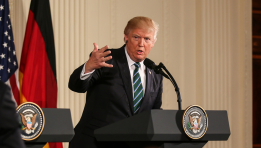
The Trump administration introduced a $1.8 billion fund intended to compensate individuals and entities claiming they were harmed by

- sagi habasov
- •
- 8 Min Read
- •
- ago 1 day
SKN | Elon Musk Loses High-Stakes Court Battle Against OpenAI as AI Industry Rivalry Intensifies
A federal jury in Oakland, California ruled against Elon Musk in his lawsuit against OpenAI, marking a significant legal
- ago 1 day
- •
- 8 Min Read

A federal jury in Oakland, California ruled against Elon Musk in his lawsuit against OpenAI, marking a significant legal

- omer bar
- •
- 7 Min Read
- •
- ago 6 days
SKN | New York Fed Wins Appeal in Venezuela-Linked Puerto Rico Banking Dispute
Appeals Court Sides With New York Fed The Federal Reserve Bank of New York secured a major legal victory on
- ago 6 days
- •
- 7 Min Read

Appeals Court Sides With New York Fed The Federal Reserve Bank of New York secured a major legal victory on
- sagi habasov
- •
- 8 Min Read
- •
- ago 2 weeks
SKN | DOJ Probes $2.6 Billion Oil Trades Placed Ahead of Iran War Announcements
The US Department of Justice (DOJ) has reportedly launched an investigation into approximately $2.6 billion worth of oil market
- ago 2 weeks
- •
- 8 Min Read

The US Department of Justice (DOJ) has reportedly launched an investigation into approximately $2.6 billion worth of oil market


