


- omer bar
- •
- 8 Min Read
- •
- 14 seconds ago
Key Points
- China committed to buying at least $17 billion annually in U.S. agricultural products through 2028.
- Washington and Beijing agreed to establish new trade and investment boards to manage economic relations.
- Investors are closely watching whether the new framework can survive ongoing tensions surrounding Taiwan and technology restrictions.

The United States and China appear to be entering a new phase of economic coordination after both governments unveiled details of a major trade framework following last week’s high-profile summit between President Donald Trump and Chinese President Xi Jinping in Beijing. At the center of the agreement is China’s commitment to purchase at least $17 billion annually in U.S. agricultural products through 2028, alongside the creation of new bilateral trade and investment boards aimed at stabilizing economic ties between the world’s two largest economies.
Trade Boards Signal a Shift Toward Structured Economic Cooperation
The newly announced trade and investment boards represent one of the most concrete institutional frameworks introduced between Washington and Beijing in recent years. According to the White House, the boards are intended to serve as the “cornerstone” of a broader effort to optimize trade flows while maintaining what both governments described as “constructive strategic stability.”
The agreement reflects a notable moderation in rhetoric compared with the sharp escalation in tensions that dominated much of the previous two years. While neither side disclosed specifics regarding tariffs, China’s Commerce Ministry confirmed that both governments are discussing mutual reductions on certain products as negotiations continue.
The language surrounding the summit suggests that both countries are attempting to avoid a direct economic decoupling, particularly as global markets remain fragile due to inflation pressures, energy disruptions, and slowing industrial demand.
For investors, the formation of formal trade mechanisms reduces some uncertainty around future negotiations. Markets have increasingly worried that unresolved disputes involving semiconductors, artificial intelligence, and export controls could spill over into broader economic instability.
Agricultural Purchases Offer Relief for U.S. Farmers
China’s pledge to purchase at least $17 billion in U.S. agricultural products annually is expected to provide a significant boost to American farming sectors that have faced mounting financial pressure from rising fertilizer costs, supply chain disruptions, and volatile commodity prices.
The agreement comes in addition to earlier soybean purchase commitments reached during previous negotiations. According to U.S. Department of Agriculture data, agricultural exports to China totaled roughly $24 billion in 2024, with soybeans representing approximately half of that amount.
While the latest commitment may help stabilize demand for American farmers, some analysts remain cautious given China’s past difficulties in meeting earlier purchasing targets established during Trump’s first term.
China has increasingly diversified its agricultural imports in recent years, relying more heavily on Brazilian soybean supplies and alternative global commodity sources. However, Beijing’s decision to restore market access for more than 400 U.S. beef facilities and potentially resume American poultry imports signals a broader effort to ease trade friction in key agricultural sectors.
The renewed agricultural cooperation may also carry political significance in the United States, particularly across farming states that remain highly sensitive to export demand and commodity pricing.
Taiwan and Technology Remain Critical Risks
Despite the positive economic headlines, major geopolitical tensions remain unresolved. Notably absent from both countries’ official statements was any detailed discussion regarding Taiwan, even though Xi reportedly warned Trump that mishandling the issue could create a “highly dangerous situation.”
The omission underscores how fragile the current stabilization effort may still be. Proposed U.S. arms sales to Taiwan, ongoing restrictions on advanced semiconductor exports, and competition over artificial intelligence infrastructure continue representing major fault lines between the two superpowers.
Still, the summit appears to have created a temporary foundation for lower-level negotiations to continue through the remainder of 2026, with additional meetings expected at APEC and G20 gatherings later this year.
Looking ahead, investors will closely monitor whether the newly established trade boards can deliver measurable progress beyond agricultural purchases and whether both governments can maintain economic cooperation while strategic rivalry continues intensifying in technology, security, and global influence.
Comparison, examination, and analysis between investment houses
Leave your details, and an expert from our team will get back to you as soon as possible
* This article, in whole or in part, does not contain any promise of investment returns, nor does it constitute professional advice to make investments in any particular field.
To read more about the full disclaimer, click here
- Arik Arkadi Sluzki
- •
- 8 Min Read
- •
- ago 3 days
SKN | Oil Prices Rebound as Xi-Trump Summit Fails to Deliver Major Trade Breakthrough
Global oil markets moved higher after the latest summit between Chinese President Xi Jinping and U.S. President Donald Trump
- ago 3 days
- •
- 8 Min Read
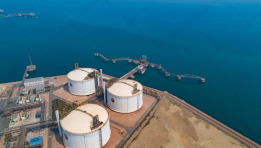
Global oil markets moved higher after the latest summit between Chinese President Xi Jinping and U.S. President Donald Trump

- omer bar
- •
- 8 Min Read
- •
- ago 3 days
SKN | Russia’s Wartime Economy Contracts for First Time Since 2023 as Sanctions and Inflation Press Growth
Russia’s wartime economy contracted for the first time since 2023, highlighting growing strains on an economic system that had
- ago 3 days
- •
- 8 Min Read

Russia’s wartime economy contracted for the first time since 2023, highlighting growing strains on an economic system that had

- Lior mor
- •
- 10 Min Read
- •
- ago 3 days
SKN | Xi Revives ‘Thucydides Trap’ Warning During High-Stakes Summit With Trump
During his meeting with President Donald Trump in Beijing, Chinese leader Xi Jinping revived one of the most closely watched
- ago 3 days
- •
- 10 Min Read
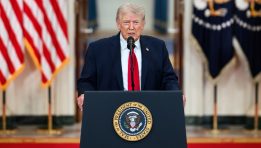
During his meeting with President Donald Trump in Beijing, Chinese leader Xi Jinping revived one of the most closely watched

- sagi habasov
- •
- 8 Min Read
- •
- ago 5 days
SKN | China’s $3 Billion Exit From U.S. Clean Tech Signals Rising Geopolitical Investment Risks
China’s reported retreat from approximately $3 billion in U.S. clean technology-related investments is emerging as a broader warning sign
- ago 5 days
- •
- 8 Min Read
China’s reported retreat from approximately $3 billion in U.S. clean technology-related investments is emerging as a broader warning sign

