


- Lior mor
- •
- 7 Min Read
- •
- 13 seconds ago
Key Points
- Brazilian President Luiz Inácio Lula da Silva signaled optimism on trade discussions following meetings with President Donald Trump
- Markets are closely monitoring whether renewed dialogue could improve bilateral trade flows and reduce policy uncertainty
- Stronger US–Brazil economic cooperation could influence commodities, agriculture, energy, and emerging-market investment sentiment
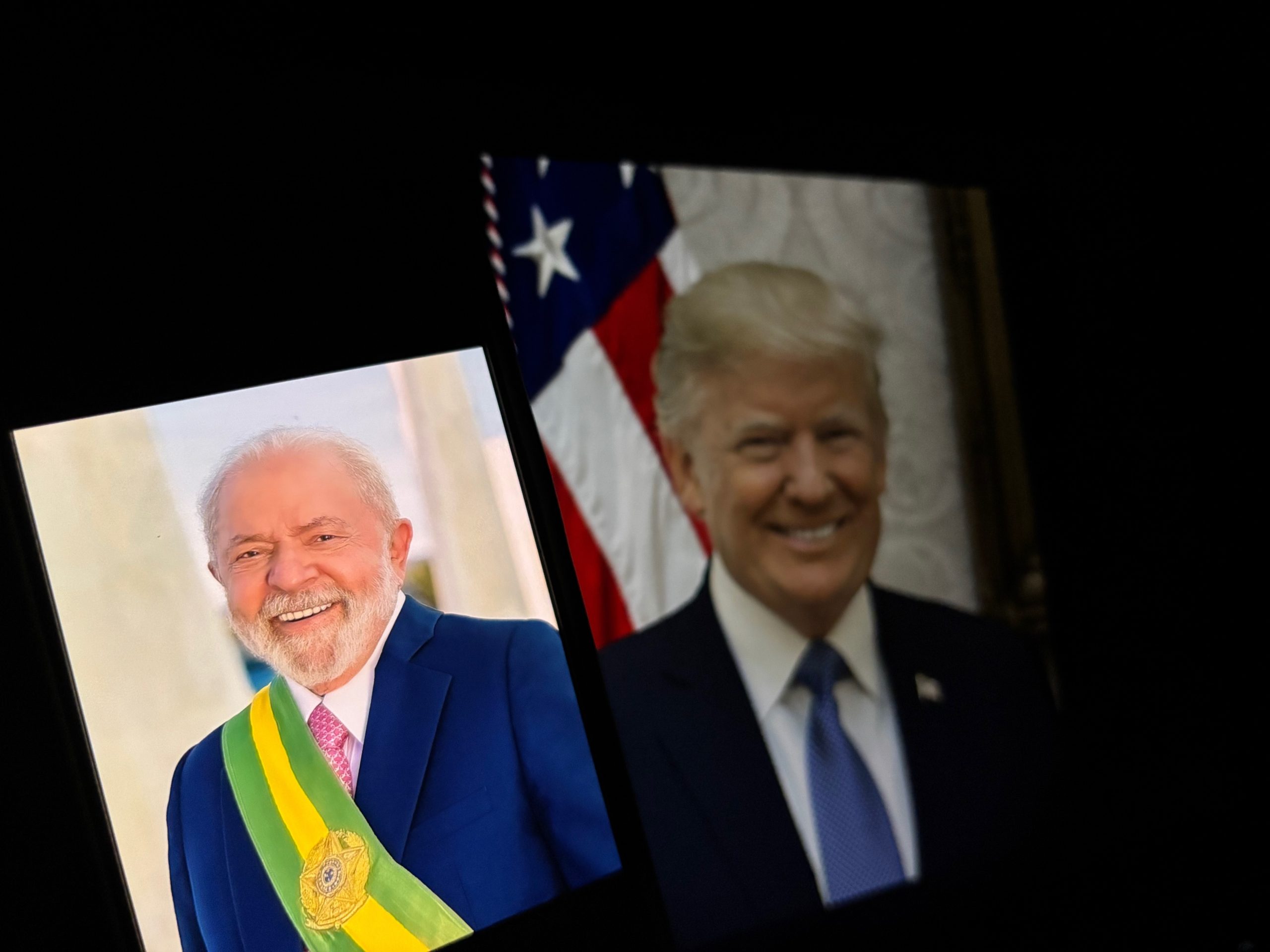
Brazilian President Luiz Inácio Lula da Silva emerged from discussions with President Donald Trump expressing optimism regarding future trade relations between the two countries. The meeting comes as global markets increasingly focus on supply-chain diversification, commodity security, and geopolitical realignment across major economies. Investors are assessing whether renewed cooperation between Washington and Brasília could strengthen trade flows and improve sentiment toward Latin American assets.
Trade Dialogue Gains Strategic Importance
The renewed engagement between the United States and Brazil reflects the growing strategic importance of bilateral trade ties at a time of shifting global economic alliances. Brazil remains one of the world’s largest exporters of agricultural products, metals, and energy resources, while the United States continues to be a critical destination for investment, technology, and industrial cooperation.
Lula’s optimistic tone suggests that both governments may be seeking to reduce friction in key sectors including agriculture, energy infrastructure, and industrial manufacturing. Although no major agreements were immediately announced, the signaling effect of constructive dialogue is significant for financial markets sensitive to geopolitical and trade policy developments.
For global investors, the discussions reinforce Brazil’s role as a key emerging-market economy positioned between Western trade systems and broader Global South partnerships. Any improvement in US–Brazil relations could support capital inflows and stabilize perceptions of political and regulatory risk.
Commodity Markets and Emerging-Market Sentiment in Focus
Brazil’s economic influence is closely tied to global commodity markets, making trade relations with the United States particularly relevant for investors tracking agricultural exports, mining activity, and energy flows. Improved cooperation could support Brazilian export competitiveness while also helping US companies secure more stable access to strategic raw materials and food supply chains.
Commodity-linked currencies and Latin American equities often respond positively to signs of reduced trade uncertainty. The Brazilian real and broader regional assets could benefit if investors interpret the talks as part of a longer-term normalization of bilateral economic relations.
At the same time, global commodity demand remains highly dependent on China’s economic trajectory and broader global growth conditions. This means that while political cooperation may improve sentiment, underlying macroeconomic drivers will continue to shape trade performance and capital allocation decisions.
Political Messaging and Economic Strategy
The meeting also carries broader geopolitical implications beyond trade alone. Lula has attempted to position Brazil as an independent diplomatic actor capable of maintaining relationships across competing global power centers, including the United States, China, and Europe.
For the Trump administration, strengthening ties with Brazil could form part of a wider strategy aimed at reinforcing economic influence across Latin America while securing supply-chain resilience in sectors considered strategically important. These include agriculture, critical minerals, energy production, and industrial manufacturing.
Markets are likely to focus not only on future trade agreements but also on whether both governments can maintain policy consistency. Investors typically favor stable diplomatic engagement over unpredictable tariff measures or politically driven trade disputes.
Outlook: Investors Watch for Policy Follow-Through and Trade Signals
Looking ahead, market participants will closely monitor whether the positive rhetoric from the Trump–Lula meeting translates into concrete policy measures, investment agreements, or expanded trade cooperation. Sectors tied to agriculture, energy, logistics, and infrastructure could see increased attention if negotiations advance further.
Key risks include political volatility, changes in tariff policy, and external macroeconomic pressures affecting commodity demand. On the opportunity side, stronger bilateral ties could improve investor confidence in Brazilian markets and support broader Latin American trade integration.
Overall, Lula’s optimistic assessment signals a potentially constructive phase in US–Brazil economic relations, with global investors watching closely for signs that diplomatic engagement may evolve into meaningful commercial and strategic cooperation.
Comparison, examination, and analysis between investment houses
Leave your details, and an expert from our team will get back to you as soon as possible
* This article, in whole or in part, does not contain any promise of investment returns, nor does it constitute professional advice to make investments in any particular field.
To read more about the full disclaimer, click here
- Ronny Mor
- •
- 7 Min Read
- •
- ago 1 hour
SKN | Will US Strikes on Iranian Targets Deepen Middle East Market Volatility?
The United States has launched strikes on Iranian-linked targets as President Donald Trump renewed demands for Tehran to accept a
- ago 1 hour
- •
- 7 Min Read
The United States has launched strikes on Iranian-linked targets as President Donald Trump renewed demands for Tehran to accept a

- Lior mor
- •
- 6 Min Read
- •
- ago 2 days
SKN | Could De-Escalation in Iran Unlock Trillions in Global Growth Potential?
The ongoing tensions surrounding Iran have long been a defining factor in global energy markets and geopolitical risk pricing.
- ago 2 days
- •
- 6 Min Read
The ongoing tensions surrounding Iran have long been a defining factor in global energy markets and geopolitical risk pricing.
- Lior mor
- •
- 6 Min Read
- •
- ago 3 days
SKN | US-Iran Ceasefire Under Pressure as Hormuz Tensions Escalate—What It Means for Global Markets
The fragile US-Iran ceasefire is facing renewed pressure as tensions escalate around the Strait of Hormuz, a critical artery
- ago 3 days
- •
- 6 Min Read
The fragile US-Iran ceasefire is facing renewed pressure as tensions escalate around the Strait of Hormuz, a critical artery
- Ronny Mor
- •
- 6 Min Read
- •
- ago 4 days
SKN | China Defies US Sanctions in Rare Move, Raising Stakes for Global Banking System
FChina has taken an unprecedented step by instructing companies not to comply with specific US sanctions, marking a significant shift
- ago 4 days
- •
- 6 Min Read

FChina has taken an unprecedented step by instructing companies not to comply with specific US sanctions, marking a significant shift

