


- Lior mor
- •
- 6 Min Read
- •
- 20 seconds ago
Key Points
- Japan has launched financing under its $550 billion U.S. investment pledge with a $2.2 billion loan package.
- Major Japanese banks and state-backed institutions are supporting large-scale U.S. infrastructure and energy projects.
- The deal reflects deepening economic alignment between the U.S. and Japan amid shifting global trade dynamics.

Japan has taken a significant step in executing its massive $550 billion U.S. investment commitment, initiating a $2.2 billion loan package tied to a broader trade agreement that reduced tariffs on Japanese imports. The move signals not only capital deployment but also a strategic deepening of economic ties between the two countries at a time of heightened geopolitical and trade realignment.
Structured Financing Reflects Public-Private Coordination
The financing structure combines state-backed and private-sector participation, with the Japan Bank for International Cooperation providing roughly one-third of the loan. The remainder is expected to come from leading financial institutions including Mitsubishi UFJ Financial Group, Sumitomo Mitsui Financial Group, and Mizuho Financial Group.
Risk mitigation is further supported by guarantees from Nippon Export and Investment Insurance, highlighting the coordinated approach between government and private capital. This model allows Japan to scale overseas investments while maintaining financial stability and risk control.
Targeted Investments in Strategic U.S. Sectors
The first wave of projects, valued at approximately $36 billion, focuses on key industrial and energy infrastructure across the United States. These include an oil export facility in Texas, an industrial diamond manufacturing plant in Georgia, and a natural gas-fired power plant in Ohio.
The selection of these sectors reflects a strategic emphasis on energy security, advanced manufacturing, and supply chain resilience. By investing in critical infrastructure, Japan is positioning itself to benefit from long-term demand while supporting U.S. domestic production capabilities.
Trade Agreement Incentives Drive Capital Flows
The financing initiative is closely linked to a bilateral trade agreement that reduced U.S. tariffs on Japanese imports to 15%. This creates a clear incentive structure: increased Japanese investment in U.S. assets in exchange for improved trade conditions.
Such arrangements illustrate how trade policy and capital flows are increasingly interconnected. Rather than relying solely on tariffs or quotas, governments are leveraging investment commitments to strengthen economic partnerships and align strategic interests.
Profit-Sharing Mechanism Aligns Long-Term Interests
A notable feature of the agreement is its profit-sharing structure. Free cash flows generated from the investments will initially be split evenly between Japan and the United States. Once a predefined allocation threshold is reached, the majority of future returns—up to 90%—will accrue to the U.S.
This mechanism reflects a hybrid model that balances mutual benefit with long-term U.S. economic gain. It also underscores Japan’s willingness to accept asymmetric returns in exchange for broader strategic and trade advantages.
Outlook: Strategic Capital Deployment in a Fragmented Global Economy
Japan’s initial $2.2 billion loan marks the beginning of a much larger capital deployment strategy that could reshape bilateral economic relations. As global supply chains fragment and geopolitical risks rise, such partnerships are likely to become more common.
The success of this initiative will depend on execution, project performance, and the durability of the underlying trade agreement. For now, it signals a shift toward investment-driven diplomacy, where capital allocation becomes a key tool of economic strategy.
Comparison, examination, and analysis between investment houses
Leave your details, and an expert from our team will get back to you as soon as possible
* This article, in whole or in part, does not contain any promise of investment returns, nor does it constitute professional advice to make investments in any particular field.
To read more about the full disclaimer, click here
- sagi habasov
- •
- 8 Min Read
- •
- ago 8 hours
SKN | Is Rising Central Bank Dissent Set to Increase Global Market Volatility?
Rising internal disagreement within major central banks is emerging as a potential source of heightened volatility in global financial markets,
- ago 8 hours
- •
- 8 Min Read

Rising internal disagreement within major central banks is emerging as a potential source of heightened volatility in global financial markets,

- Ronny Mor
- •
- 6 Min Read
- •
- ago 18 hours
SKN | The Fed’s Inflation Litmus Test: PCE Index Signals a “Harder Landing” Ahead of Rate Decision
The U.S. economy received a sharp reminder today (Thursday) of the complexities involved in the battle against rising costs, with
- ago 18 hours
- •
- 6 Min Read

The U.S. economy received a sharp reminder today (Thursday) of the complexities involved in the battle against rising costs, with

- omer bar
- •
- 6 Min Read
- •
- ago 21 hours
SKN | Fed’s Final Powell Meeting: How the “Higher for Longer” Stalemate Alters Global Carry Trade
Economic Framework: The Mechanics of FX and Interest Rate Equilibrium The global currency market has entered a period of relative
- ago 21 hours
- •
- 6 Min Read
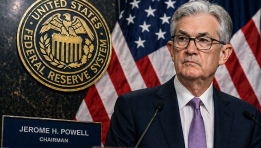
Economic Framework: The Mechanics of FX and Interest Rate Equilibrium The global currency market has entered a period of relative

- Lior mor
- •
- 9 Min Read
- •
- ago 1 day
SKN | Are Stagflation Fears Underpriced as the Iran War Disrupts Global Energy Markets?
The prolonged conflict involving Iran and the continued closure of the Strait of Hormuz are increasingly reshaping global economic expectations,
- ago 1 day
- •
- 9 Min Read
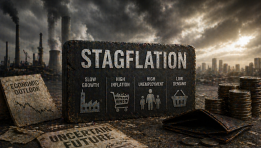
The prolonged conflict involving Iran and the continued closure of the Strait of Hormuz are increasingly reshaping global economic expectations,


