


- sagi habasov
- •
- 8 Min Read
- •
- 11 seconds ago
Key Points
- Growing policy disagreements within central banks are raising concerns about financial market stability
- Diverging views among policymakers may complicate interest rate guidance and communication strategies
- Investors are reassessing volatility risks as monetary policy uncertainty becomes more pronounced

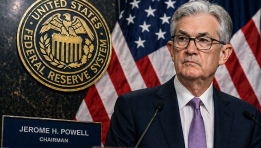
Rising internal disagreement within major central banks is emerging as a potential source of heightened volatility in global financial markets, according to commentary by McGeever. The concern comes at a time when investors are already navigating shifting interest rate expectations, uneven inflation trends, and slowing global growth momentum. For international investors, including those in Israel with exposure to global fixed income and equity markets, the development adds another layer of uncertainty to the monetary policy outlook.
Central Bank Dissent and Policy Uncertainty
Central banks have traditionally aimed to project a unified policy stance to reinforce market credibility and stabilize expectations. However, increasing divergence of views among policymakers is becoming more visible in recent policy cycles, particularly as economies transition from inflation-fighting tightening phases toward potential easing cycles.
This internal dissent can manifest through differing public statements, voting patterns, and forward guidance interpretations. While debate is a normal feature of monetary policy institutions, heightened disagreement can complicate the clarity of policy signaling, making it more difficult for markets to price future interest rate paths.
The result is often greater sensitivity in bond yields, currency markets, and equity valuations, as investors attempt to interpret which policy direction will ultimately dominate.
Market Implications: Volatility Across Asset Classes
Financial markets tend to respond quickly to perceived uncertainty in central bank communication. When policy cohesion weakens, even marginal shifts in tone can trigger disproportionate reactions in interest rate expectations.
Bond markets are particularly sensitive, as yields are directly tied to anticipated policy rates. Increased uncertainty around central bank consensus can lead to sharper fluctuations in sovereign debt markets, especially at the short to intermediate end of the curve.
Equity markets may also experience volatility as discount rate assumptions become less stable. Growth-oriented sectors, which are more sensitive to interest rate changes, can be particularly affected. Currency markets, including major pairs linked to the US dollar and euro, may likewise see increased short-term swings as traders reassess relative monetary policy trajectories.
For Israeli investors with global exposure, these dynamics can translate into increased variability in foreign portfolio returns, particularly in US and European assets that dominate international allocation benchmarks.
Communication Challenges for Monetary Authorities
One of the key challenges arising from rising central bank dissent is the potential erosion of forward guidance effectiveness. Central banks rely heavily on communication to shape market expectations and reduce uncertainty. However, when internal disagreement becomes more visible, the clarity of that guidance may weaken.
This can place additional pressure on central bank leadership to maintain credibility while balancing differing policy views within governing committees. It also increases the importance of data dependence, as markets may shift focus from policy statements to incoming economic indicators such as inflation, employment, and growth data.
In such an environment, even routine economic releases can trigger outsized market reactions, as investors attempt to recalibrate expectations in the absence of a clear policy consensus.
Outlook: Policy Fragmentation as a New Source of Market Risk
Looking ahead, the degree of central bank cohesion is likely to remain an important driver of global market stability. If policy disagreement continues to increase, volatility across fixed income, currency, and equity markets may remain elevated, particularly during key policy decision periods.
Key risks include miscommunication of policy intentions, abrupt repricing of interest rate expectations, and increased sensitivity to macroeconomic data surprises. On the other hand, if central banks manage to maintain effective communication despite internal debate, markets may gradually adjust without sustained disruption.
For global investors, including those in Israel, the evolving nature of central bank decision-making underscores the importance of monitoring not only macroeconomic data but also institutional dynamics within monetary authorities. Policy fragmentation, if sustained, could become a structural feature influencing market behavior in the period ahead.
Comparison, examination, and analysis between investment houses
Leave your details, and an expert from our team will get back to you as soon as possible
* This article, in whole or in part, does not contain any promise of investment returns, nor does it constitute professional advice to make investments in any particular field.
To read more about the full disclaimer, click here
- Ronny Mor
- •
- 6 Min Read
- •
- ago 10 hours
SKN | The Fed’s Inflation Litmus Test: PCE Index Signals a “Harder Landing” Ahead of Rate Decision
The U.S. economy received a sharp reminder today (Thursday) of the complexities involved in the battle against rising costs, with
- ago 10 hours
- •
- 6 Min Read

The U.S. economy received a sharp reminder today (Thursday) of the complexities involved in the battle against rising costs, with

- omer bar
- •
- 6 Min Read
- •
- ago 12 hours
SKN | Fed’s Final Powell Meeting: How the “Higher for Longer” Stalemate Alters Global Carry Trade
Economic Framework: The Mechanics of FX and Interest Rate Equilibrium The global currency market has entered a period of relative
- ago 12 hours
- •
- 6 Min Read
Economic Framework: The Mechanics of FX and Interest Rate Equilibrium The global currency market has entered a period of relative

- Lior mor
- •
- 9 Min Read
- •
- ago 16 hours
SKN | Are Stagflation Fears Underpriced as the Iran War Disrupts Global Energy Markets?
The prolonged conflict involving Iran and the continued closure of the Strait of Hormuz are increasingly reshaping global economic expectations,
- ago 16 hours
- •
- 9 Min Read

The prolonged conflict involving Iran and the continued closure of the Strait of Hormuz are increasingly reshaping global economic expectations,
- omer bar
- •
- 6 Min Read
- •
- ago 2 days
SKN | Why the Fed Is ‘Firmly Parked’ on Rates as Powell Faces His Final Meeting
The Federal Reserve is set to hold interest rates steady, reinforcing a “wait-and-see” approach as policymakers assess the economic impact
- ago 2 days
- •
- 6 Min Read

The Federal Reserve is set to hold interest rates steady, reinforcing a “wait-and-see” approach as policymakers assess the economic impact


