


- sagi habasov
- •
- 8 Min Read
- •
- 18 seconds ago
Key Points
- Jerome Powell has announced plans to remain on the Federal Reserve Board, citing a series of legal attacks targeting the central bank
- The statement comes at a sensitive time for US monetary policy credibility and institutional independence
- Markets are assessing potential implications for rate expectations, policy continuity, and financial stability

Jerome Powell’s decision to remain on the Federal Reserve Board, while citing what he described as a “series of legal attacks” against the central bank, has added a new layer of institutional uncertainty to the US monetary policy landscape. The development comes at a time when global markets are closely monitoring interest rate trajectories, inflation dynamics, and the independence of major central banks. For international investors, including those in Israel with exposure to US rates and dollar-denominated assets, the announcement carries implications for policy continuity and market stability.
Central Bank Independence Under Increased Scrutiny
Powell’s remarks highlight growing political and legal pressures surrounding the Federal Reserve, an institution traditionally viewed as a cornerstone of global financial stability. While details of the referenced legal challenges were not fully disclosed in initial reports, the framing suggests escalating institutional tension between monetary authorities and external legal or political actors.
The Federal Reserve’s independence has long been considered critical to its ability to manage inflation and employment objectives without short-term political influence. Any perception of heightened external pressure can affect market confidence, particularly in periods of monetary tightening or policy transition.
For investors, the key concern is not only the legal dimension but also whether such pressures could indirectly influence decision-making frameworks or communication strategies within the central bank.
Market Implications: Rates, Volatility, and Policy Expectations
Financial markets are likely to interpret Powell’s decision through the lens of policy continuity. The Federal Reserve remains central to global interest rate expectations, and any perceived instability at the leadership or governance level can influence Treasury yields, currency markets, and risk sentiment.
US interest rate expectations are particularly sensitive to signals of institutional friction. Even limited uncertainty around leadership stability can contribute to volatility in bond markets, as investors reassess the timing and magnitude of potential rate adjustments.
For global markets, including Israeli fixed income and foreign exchange exposures, US monetary policy remains a primary driver of capital flows. As a result, developments affecting Federal Reserve credibility can have indirect effects on local asset pricing, especially in emerging and export-oriented economies.
Institutional Stability and Long-Term Policy Continuity
Despite the political and legal undertones, Powell’s continued presence on the Federal Reserve Board may also be interpreted as an effort to reinforce institutional stability. Central banks globally are increasingly operating in environments where monetary policy intersects with legal scrutiny, fiscal pressures, and political debate.
The Federal Reserve’s leadership structure is designed to provide continuity across different administrations, reducing the risk of abrupt policy shifts. Powell’s decision to remain could therefore be viewed as a stabilizing factor at a time when markets are sensitive to policy signals.
At the same time, the broader environment underscores the growing complexity of central banking in a high-inflation, high-debt global economy, where policy decisions carry both economic and political weight.
Outlook: Policy Credibility and Market Sensitivity in Focus
Looking ahead, investor attention will remain focused on how the Federal Reserve communicates its policy path amid evolving institutional dynamics. Any further escalation in legal or political pressure could increase market sensitivity to Fed commentary and economic data releases.
Key risks include heightened volatility in bond and currency markets, shifts in inflation expectations, and potential challenges to the perceived independence of monetary policy. On the other hand, reaffirmed institutional stability could help anchor long-term rate expectations and reduce uncertainty premiums in financial markets.
For global investors, including those in Israel, the development reinforces the importance of monitoring not only macroeconomic indicators but also institutional and governance factors shaping central bank credibility. The balance between policy independence and external pressure is likely to remain a defining theme in global financial markets in the period ahead.
Comparison, examination, and analysis between investment houses
Leave your details, and an expert from our team will get back to you as soon as possible
* This article, in whole or in part, does not contain any promise of investment returns, nor does it constitute professional advice to make investments in any particular field.
To read more about the full disclaimer, click here
- Arik Arkadi Sluzki
- •
- 6 Min Read
- •
- ago 10 hours
SKN | UAE’s Potential OPEC Exit: What It Could Mean for Trade Ties with Saudi Arabia and Regional Markets
Speculation surrounding a potential UAE exit from OPEC is drawing increased attention from global investors, as it could signal
- ago 10 hours
- •
- 6 Min Read

Speculation surrounding a potential UAE exit from OPEC is drawing increased attention from global investors, as it could signal

- Ronny Mor
- •
- 7 Min Read
- •
- ago 1 day
SKN | Can Trump’s $1.5 Trillion Defense Plan Withstand Growing Republican Resistance?
The proposed $1.5 trillion defense spending plan associated with Donald Trump has triggered an uncommon wave of resistance within segments
- ago 1 day
- •
- 7 Min Read

The proposed $1.5 trillion defense spending plan associated with Donald Trump has triggered an uncommon wave of resistance within segments

- Lior mor
- •
- 7 Min Read
- •
- ago 2 days
SKN | Trump Reviews Iran Proposal With Advisers as Diplomatic Uncertainty Grips Markets
Former US President Donald Trump has discussed a proposal related to Iran with his advisers, according to a statement from
- ago 2 days
- •
- 7 Min Read
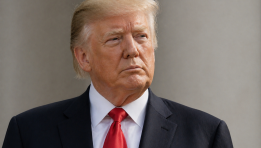
Former US President Donald Trump has discussed a proposal related to Iran with his advisers, according to a statement from

- orshu
- •
- 6 Min Read
- •
- ago 3 days
SKN | Stock Futures Slip as US-Iran Talks and Big Tech Earnings Weigh on Market Sentiment
US stock futures moved lower as investors assessed renewed geopolitical developments tied to US-Iran negotiations alongside a critical wave
- ago 3 days
- •
- 6 Min Read

US stock futures moved lower as investors assessed renewed geopolitical developments tied to US-Iran negotiations alongside a critical wave


