Key Points

  • LG Electronics and Nvidia are exploring collaboration across AI, robotics, and mobility.
  • The partnership could accelerate innovation in high-growth technology sectors.
  • Execution and strategic alignment will determine the long-term impact of the discussions.
hero

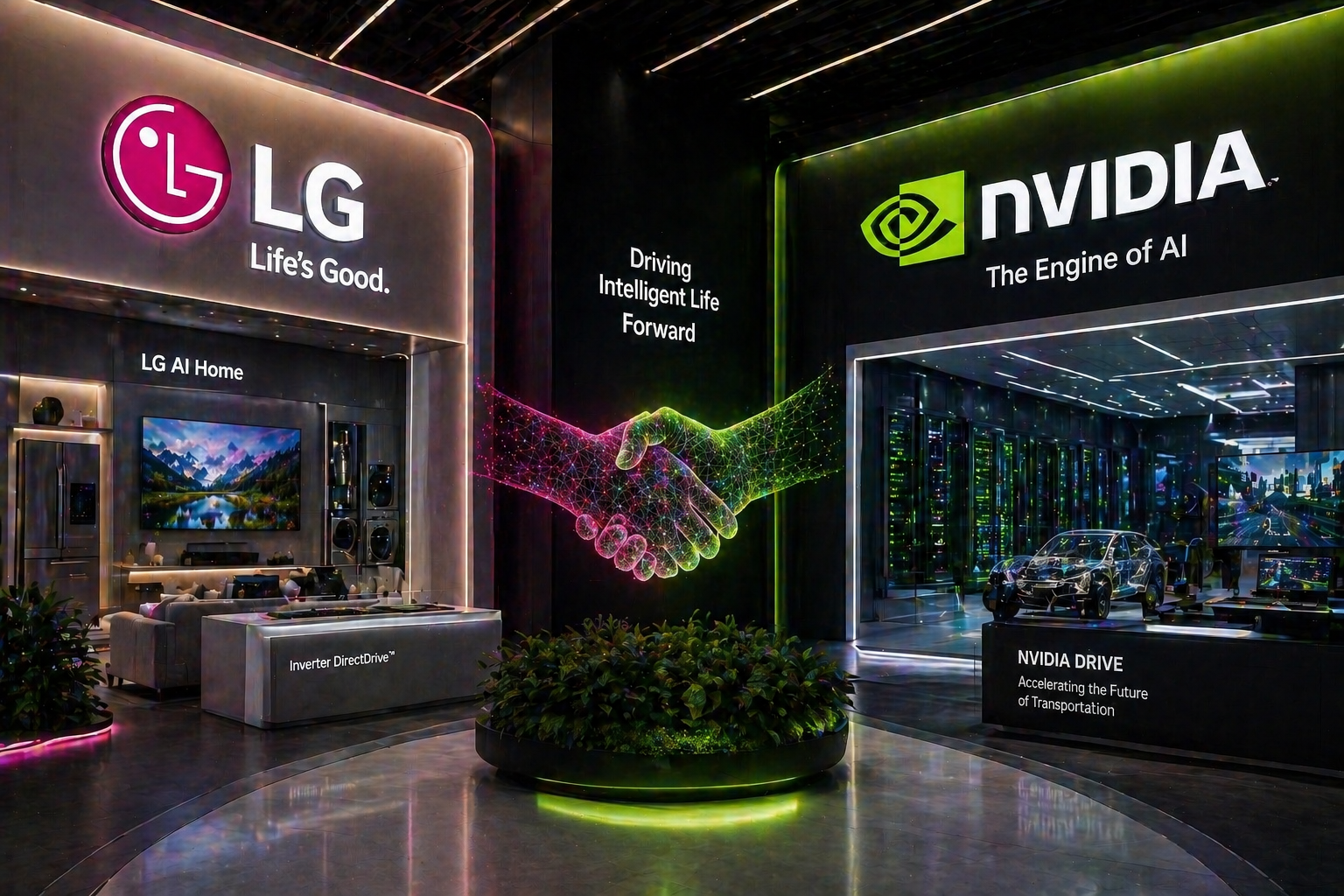
Electronics and Nvidia are reportedly in discussions to expand cooperation across robotics, artificial intelligence data centers, and next-generation mobility solutions. The potential partnership comes at a time when global competition in AI infrastructure is intensifying, and companies are seeking to combine hardware capabilities with advanced computing power to capture emerging opportunities.

Strategic Alignment in AI Infrastructure

The talks highlight a natural alignment between the two companies. Nvidia has established itself as a dominant force in AI computing, particularly in GPUs and data center solutions, while LG Electronics brings strong capabilities in consumer electronics, industrial systems, and smart mobility.

Collaboration in AI data centers could be particularly impactful. As demand for AI processing power continues to surge, driven by machine learning and generative AI applications, companies are racing to build scalable and energy-efficient infrastructure. LG’s expertise in hardware systems and energy management could complement Nvidia’s advanced chip technology, potentially resulting in more integrated and optimized data center solutions.

This type of partnership reflects a broader industry trend where value is increasingly created through ecosystem collaboration rather than standalone innovation.

Expanding Into Robotics and Physical AI

Robotics represents another key area of focus. Nvidia has been investing heavily in “physical AI,” which integrates artificial intelligence into real-world machines such as robots and autonomous systems. LG, with its experience in appliances, automation, and smart devices, is well-positioned to apply these technologies at scale.

The involvement of Madison Huang, a senior director for physical AI platforms at Nvidia, underscores the importance of this segment. Her visit to South Korea signals a proactive effort by Nvidia to deepen relationships with manufacturing and technology leaders in the region.

The convergence of AI and robotics is expected to unlock new applications across industries, from manufacturing and logistics to home automation and healthcare. Strategic partnerships will likely play a crucial role in accelerating commercialization.

Mobility and Future Transportation Systems

The discussions also extend to mobility, an area undergoing rapid transformation as electric vehicles, autonomous driving, and connected systems reshape transportation. Nvidia has already established a presence in automotive AI platforms, while LG has been expanding its footprint in vehicle components and smart mobility solutions.

By combining capabilities, the two companies could explore integrated platforms that enhance vehicle intelligence, safety, and user experience. This could position them competitively in a market where software-defined vehicles and AI-driven features are becoming key differentiators.

The mobility segment also offers long-term growth potential, as global demand for advanced transportation technologies continues to rise.

Competitive Landscape and Industry Implications

The potential collaboration reflects intensifying competition in the global AI race. As companies across the US, Asia, and Europe invest heavily in AI infrastructure and applications, partnerships like this could redefine competitive dynamics.

For LG, aligning with a leading AI chipmaker strengthens its technological positioning. For Nvidia, expanding partnerships with global manufacturers enhances its ability to scale AI solutions across industries.

This synergy could also create ripple effects, prompting other technology firms to pursue similar alliances to remain competitive.

Forward-Looking Perspective

While discussions remain at an early stage, the potential collaboration between LG Electronics and Nvidia highlights the strategic importance of cross-industry partnerships in shaping the future of AI, robotics, and mobility.

Investors and industry observers should monitor developments closely, particularly any formal agreements or pilot projects that emerge from these talks. The pace of execution and the scope of collaboration will be key indicators of long-term impact.

As AI continues to evolve from a digital concept to a physical and industrial reality, partnerships that bridge computing power and real-world applications are likely to define the next phase of technological innovation.


Comparison, examination, and analysis between investment houses

Leave your details, and an expert from our team will get back to you as soon as possible

    * This article, in whole or in part, does not contain any promise of investment returns, nor does it constitute professional advice to make investments in any particular field.

    To read more about the full disclaimer, click here
    SKN | Why Did China Halt Autonomous Vehicle Permits After Baidu Robotaxi Outage?
    • sagi habasov
    • 8 Min Read
    • ago 43 minutes

    SKN | Why Did China Halt Autonomous Vehicle Permits After Baidu Robotaxi Outage? SKN | Why Did China Halt Autonomous Vehicle Permits After Baidu Robotaxi Outage?

    China’s decision to suspend new permits for autonomous vehicles marks a significant regulatory shift in one of the world’s fastest-growing

    • ago 43 minutes
    • 8 Min Read

    China’s decision to suspend new permits for autonomous vehicles marks a significant regulatory shift in one of the world’s fastest-growing

    SKN | Is AI Governance Reshaping Wall Street Tech Policies as Goldman Sachs Restricts Anthropic AI Use in Hong Kong?
    • Ronny Mor
    • 7 Min Read
    • ago 7 hours

    SKN | Is AI Governance Reshaping Wall Street Tech Policies as Goldman Sachs Restricts Anthropic AI Use in Hong Kong? SKN | Is AI Governance Reshaping Wall Street Tech Policies as Goldman Sachs Restricts Anthropic AI Use in Hong Kong?

    Goldman Sachs has reportedly restricted its Hong Kong-based bankers from using artificial intelligence tools developed by Anthropic, according to a

    • ago 7 hours
    • 7 Min Read

    Goldman Sachs has reportedly restricted its Hong Kong-based bankers from using artificial intelligence tools developed by Anthropic, according to a

    SKN | Could Elon Musk’s Court Testimony Influence the Future Trajectory of Artificial Intelligence Regulation?
    • omer bar
    • 8 Min Read
    • ago 8 hours

    SKN | Could Elon Musk’s Court Testimony Influence the Future Trajectory of Artificial Intelligence Regulation? SKN | Could Elon Musk’s Court Testimony Influence the Future Trajectory of Artificial Intelligence Regulation?

    Elon Musk’s testimony in an ongoing legal proceeding has drawn global attention as the case touches on fundamental questions about

    • ago 8 hours
    • 8 Min Read

    Elon Musk’s testimony in an ongoing legal proceeding has drawn global attention as the case touches on fundamental questions about

    SKN | What Does King Charles’ Meeting With US Tech Leaders Signal for Startup Growth and Innovation Challenges?
    • Lior mor
    • 7 Min Read
    • ago 8 hours

    SKN | What Does King Charles’ Meeting With US Tech Leaders Signal for Startup Growth and Innovation Challenges? SKN | What Does King Charles’ Meeting With US Tech Leaders Signal for Startup Growth and Innovation Challenges?

    King Charles has met with senior US technology executives to discuss structural challenges facing startups, including access to capital, regulatory


    • ago 8 hours
    • 7 Min Read

    King Charles has met with senior US technology executives to discuss structural challenges facing startups, including access to capital, regulatory