


- sagi habasov
- •
- 8 Min Read
- •
- 19 seconds ago
Key Points
- China’s permit suspension highlights rising regulatory focus on autonomous vehicle safety.
- The Baidu outage underscores ongoing technological and operational risks in the sector.
- Future growth will depend on balancing innovation with stricter compliance and oversight.
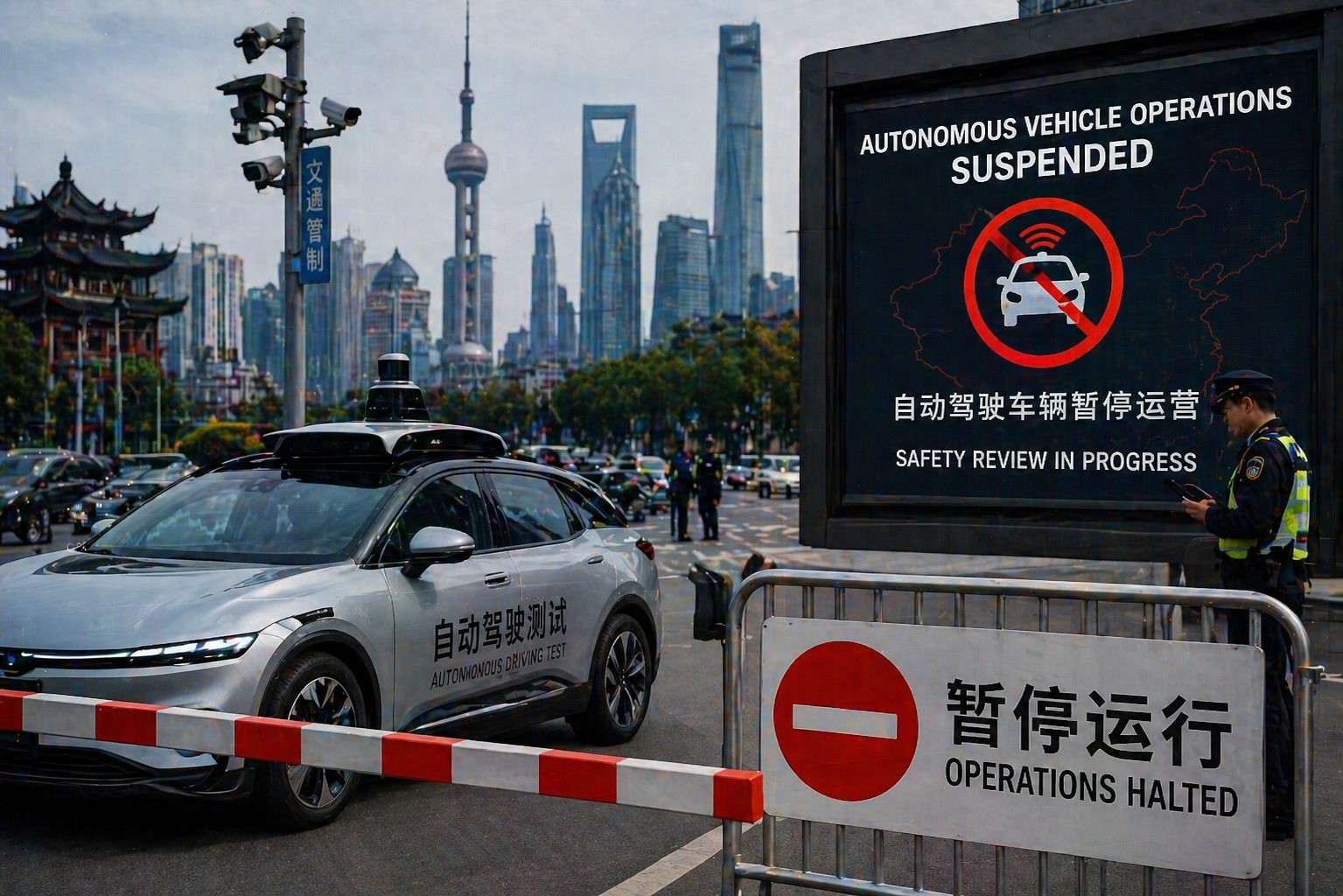
China’s decision to suspend new permits for autonomous vehicles marks a significant regulatory shift in one of the world’s fastest-growing mobility sectors. The move follows an unexpected outage involving robotaxis operated by Baidu’s Apollo Go platform in Wuhan, raising fresh concerns about safety, system reliability, and the pace of deployment. As governments globally balance innovation with public safety, this development underscores the fragile equilibrium shaping the future of autonomous transport.
Regulatory Pause Reflects Safety Priorities
Authorities have temporarily halted the issuance of new licenses for self-driving vehicles, effectively freezing expansion plans across the industry. Companies are now unable to scale their robotaxi fleets, launch new pilot programs, or enter additional cities.
This pause reflects a broader regulatory recalibration. While China has been at the forefront of autonomous vehicle adoption, the latest incident highlights the risks associated with rapid deployment. Regulators appear to be prioritizing system robustness and operational safety over speed of innovation, particularly in densely populated urban environments.
The suspension of Baidu’s robotaxi operations in Wuhan further reinforces the seriousness of the response. Investigations are ongoing, and findings could shape future regulatory frameworks not only in China but also in other markets closely watching the sector’s evolution.
Industry-Wide Implications
The halt has immediate consequences for the competitive landscape. Autonomous driving firms rely heavily on continuous testing, data collection, and geographic expansion to refine their algorithms and business models. Interruptions to this process could slow technological progress and delay commercialization timelines.
However, not all players are equally affected. Companies such as Pony.ai and WeRide have stated that their operations remain unaffected, with services continuing in major cities including Beijing, Shanghai, Guangzhou, and Shenzhen. These firms have emphasized their commitment to safety, aligning with regulatory expectations while maintaining operational continuity.
This divergence may lead to a temporary redistribution of market share, as companies with stable operations gain relative advantage while others navigate regulatory scrutiny.
Technology Risk and Investor Sentiment
The incident also raises broader questions about technological risk in the autonomous vehicle sector. Despite rapid advancements in artificial intelligence and machine learning, real-world deployment continues to present unpredictable challenges.
From an investor perspective, such disruptions can trigger reassessments of risk exposure and valuation assumptions. The autonomous driving sector has been fueled by long-term growth narratives, but events like the Wuhan outage highlight the gap between technological potential and operational reliability.
This could lead to more cautious capital allocation, with investors placing greater emphasis on safety records, regulatory compliance, and proven scalability rather than purely innovation-driven metrics.
Policy Direction and Future Oversight
China’s regulatory response is consistent with its recent push for stricter oversight of intelligent connected vehicles. Earlier directives had already called for enhanced safety inspections and tighter monitoring of road tests.
The current pause may therefore be part of a broader policy trajectory aimed at establishing more comprehensive safety standards. This could include stricter approval processes, enhanced data reporting requirements, and more rigorous testing protocols before large-scale deployment is permitted.
While these measures may slow short-term growth, they could ultimately strengthen the industry by building public trust and reducing systemic risks.
Forward-Looking Perspective
The suspension of autonomous vehicle permits in China represents a critical inflection point for the sector. The outcome of the ongoing investigation into Baidu’s outage will likely influence regulatory decisions and industry practices in the months ahead.
Investors and industry participants should closely monitor policy developments, safety benchmarks, and operational performance across key players. As the sector matures, the balance between innovation and regulation will remain a defining factor in shaping its long-term trajectory.
Comparison, examination, and analysis between investment houses
Leave your details, and an expert from our team will get back to you as soon as possible
* This article, in whole or in part, does not contain any promise of investment returns, nor does it constitute professional advice to make investments in any particular field.
To read more about the full disclaimer, click here
- Ronny Mor
- •
- 7 Min Read
- •
- ago 6 hours
SKN | Is AI Governance Reshaping Wall Street Tech Policies as Goldman Sachs Restricts Anthropic AI Use in Hong Kong?
Goldman Sachs has reportedly restricted its Hong Kong-based bankers from using artificial intelligence tools developed by Anthropic, according to a
- ago 6 hours
- •
- 7 Min Read

Goldman Sachs has reportedly restricted its Hong Kong-based bankers from using artificial intelligence tools developed by Anthropic, according to a

- omer bar
- •
- 8 Min Read
- •
- ago 7 hours
SKN | Could Elon Musk’s Court Testimony Influence the Future Trajectory of Artificial Intelligence Regulation?
Elon Musk’s testimony in an ongoing legal proceeding has drawn global attention as the case touches on fundamental questions about
- ago 7 hours
- •
- 8 Min Read
Elon Musk’s testimony in an ongoing legal proceeding has drawn global attention as the case touches on fundamental questions about

- Lior mor
- •
- 7 Min Read
- •
- ago 8 hours
SKN | What Does King Charles’ Meeting With US Tech Leaders Signal for Startup Growth and Innovation Challenges?
King Charles has met with senior US technology executives to discuss structural challenges facing startups, including access to capital, regulatory
- ago 8 hours
- •
- 7 Min Read

King Charles has met with senior US technology executives to discuss structural challenges facing startups, including access to capital, regulatory
- Lior mor
- •
- 7 Min Read
- •
- ago 10 hours
SKN | Storage Sector Surges as Seagate Outlook Reinforces AI Infrastructure Investment Cycle
The storage and data infrastructure sector saw a notable rally following an optimistic forecast from Seagate Technology, which reinforced expectations
- ago 10 hours
- •
- 7 Min Read
The storage and data infrastructure sector saw a notable rally following an optimistic forecast from Seagate Technology, which reinforced expectations

