


- Lior mor
- •
- 6 Min Read
- •
- 20 minutes ago
Key Points
- Gold climbed above $4,850 per ounce despite easing oil prices and improved geopolitical sentiment.
- Iran’s decision to keep the Strait of Hormuz open reduced inflation fears but did not eliminate uncertainty.
- Investors continue to favor gold as a hedge amid fragile ceasefire conditions and policy uncertainty.
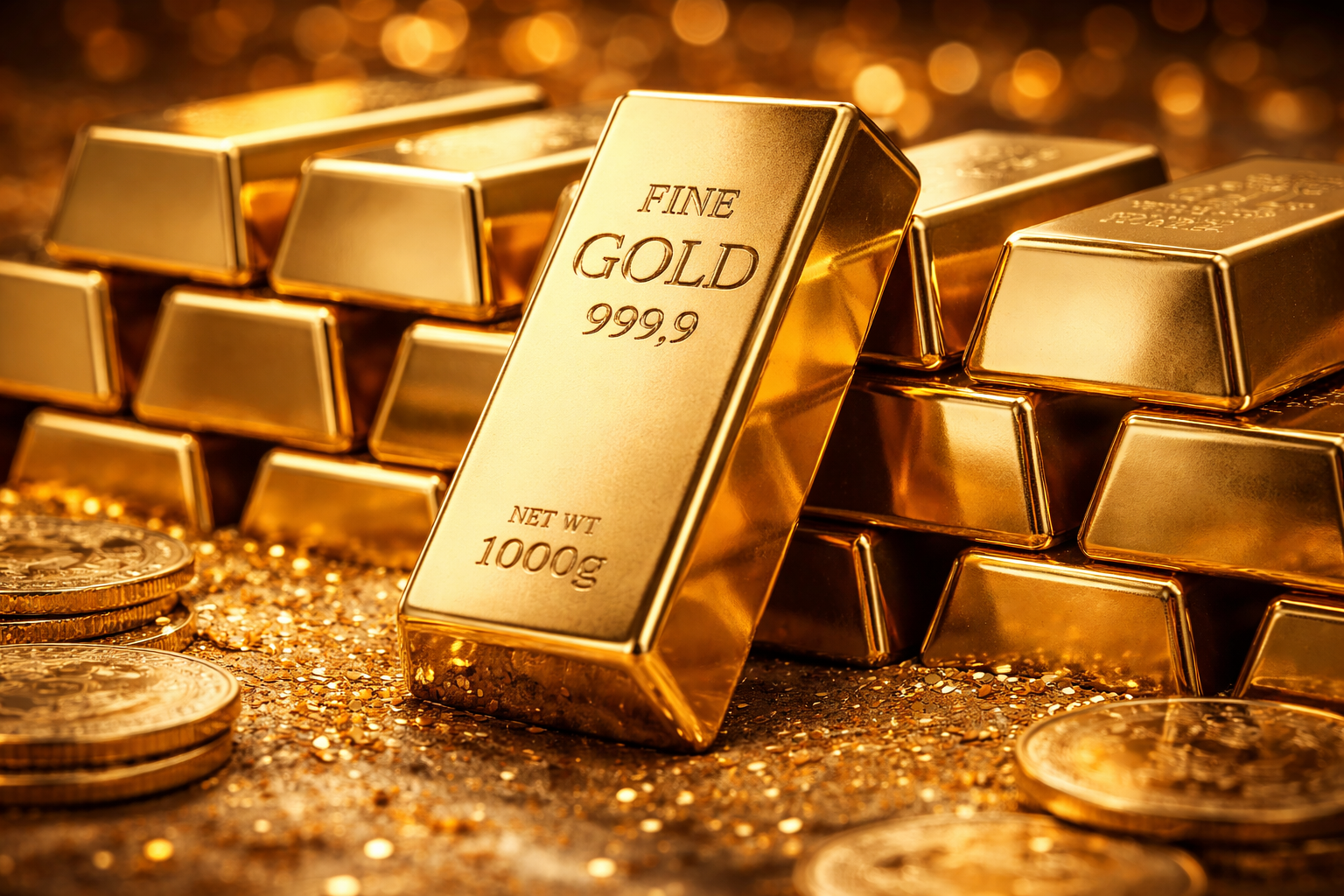
Gold prices moved higher on Friday, extending their gains even as oil markets experienced a sharp selloff following Iran’s announcement that the Strait of Hormuz would remain open during the ongoing ceasefire period. The divergence between falling oil prices and rising gold highlights a more nuanced market dynamic, where investors are balancing short-term optimism with longer-term uncertainty. While easing energy prices typically reduce inflation expectations and weigh on gold, the broader geopolitical backdrop continues to support demand for safe-haven assets.
Hormuz Reopening Eases Inflation Pressure but Not Risk
Gold rose above $4,850 per ounce, gaining more than 1% on the day and positioning for a fourth consecutive weekly advance. The move came after Iran confirmed that commercial shipping would be allowed through the Strait of Hormuz under coordinated routes, a development that triggered a sharp drop in oil prices and temporarily eased concerns about supply disruptions.
Lower oil prices typically reduce inflationary pressure, which in turn can limit the need for aggressive central bank tightening. In theory, this environment could be less supportive for gold. However, the current situation is more complex, as the reopening of the strait does not fully resolve underlying geopolitical tensions.
Conflicting Signals Sustain Safe-Haven Demand
Despite Iran’s announcement, Donald Trump stated that the U.S. naval blockade would remain in place until a comprehensive agreement is reached. This contradiction has reinforced uncertainty about the actual stability of the region and the reliability of shipping routes.
Markets are effectively navigating two competing narratives: one of de-escalation and improved supply conditions, and another of ongoing strategic tension with unresolved political objectives. This duality helps explain why gold continues to attract inflows even as traditional inflation drivers, such as oil prices, move lower.
Investor behavior in such environments often reflects a preference for hedging against tail risks rather than reacting solely to immediate developments. Gold, as a non-yielding but stable asset, benefits from this cautious positioning.
Momentum Supported by Broader Market Conditions
Beyond geopolitical factors, gold’s upward trajectory is also supported by broader macroeconomic conditions. Expectations that central banks may adopt a more measured approach to monetary policy—particularly if inflation pressures ease—are providing an additional tailwind.
At the same time, gold remains significantly higher on a year-over-year basis, reflecting sustained demand driven by global uncertainty, currency concerns, and portfolio diversification strategies. The metal’s resilience, even during periods of improving sentiment, suggests that its role in investor portfolios has expanded beyond traditional crisis hedging.
Outlook Depends on Stability and Policy Signals
Looking ahead, the path for gold will depend on whether geopolitical progress translates into lasting stability. A firm agreement between the U.S. and Iran, coupled with normalized shipping conditions, could reduce demand for safe-haven assets and limit further upside.
However, if uncertainty persists or if negotiations stall, gold could continue to benefit from its role as a hedge against both geopolitical and monetary risks. Investors will be closely watching developments in the Middle East, as well as signals from central banks, to assess whether the current rally has further room to extend.
Comparison, examination, and analysis between investment houses
Leave your details, and an expert from our team will get back to you as soon as possible
* This article, in whole or in part, does not contain any promise of investment returns, nor does it constitute professional advice to make investments in any particular field.
To read more about the full disclaimer, click here
- omer bar
- •
- 7 Min Read
- •
- ago 6 hours
SKN | Why Did Oil Prices Suddenly Plunge Despite Ongoing U.S.-Iran Tensions?
Oil markets experienced a dramatic reversal as crude prices plunged following signals that the Strait of Hormuz may be open
- ago 6 hours
- •
- 7 Min Read

Oil markets experienced a dramatic reversal as crude prices plunged following signals that the Strait of Hormuz may be open

- sagi habasov
- •
- 6 Min Read
- •
- ago 8 hours
SKN | Gold Extends Rally on US-Iran Truce Hopes—Safe Haven or Shifting Narrative?
Gold prices are on track for a fourth straight weekly advance, as investors respond to growing optimism surrounding a
- ago 8 hours
- •
- 6 Min Read
Gold prices are on track for a fourth straight weekly advance, as investors respond to growing optimism surrounding a

- Ronny Mor
- •
- 7 Min Read
- •
- ago 9 hours
SKN | Why Is Brent Oil Climbing Back Toward $100 as Hormuz Remains Blocked?
Oil markets are once again approaching a critical threshold, with Brent crude nearing $100 per barrel as geopolitical uncertainty continues
- ago 9 hours
- •
- 7 Min Read

Oil markets are once again approaching a critical threshold, with Brent crude nearing $100 per barrel as geopolitical uncertainty continues

- Lior mor
- •
- 7 Min Read
- •
- ago 10 hours
SKN | Can Gold Reach $8,000? The ‘Debasement Trade’ Driving Prices to New Extremes
Gold’s powerful rally is entering a new phase, one increasingly defined not just by short-term geopolitical shocks but by a
- ago 10 hours
- •
- 7 Min Read
Gold’s powerful rally is entering a new phase, one increasingly defined not just by short-term geopolitical shocks but by a

