





- orshu
- •
- 7 Min Read
- •
- 2 hours ago
Key Points
- The Nasdaq led declines among major U.S. indices, reflecting renewed pressure on growth and technology stocks.
- The VIX volatility index climbed sharply, signaling rising investor caution and increased demand for portfolio protection.
- The Russell 2000 outperformed large-cap benchmarks, suggesting selective risk appetite despite broader market weakness.
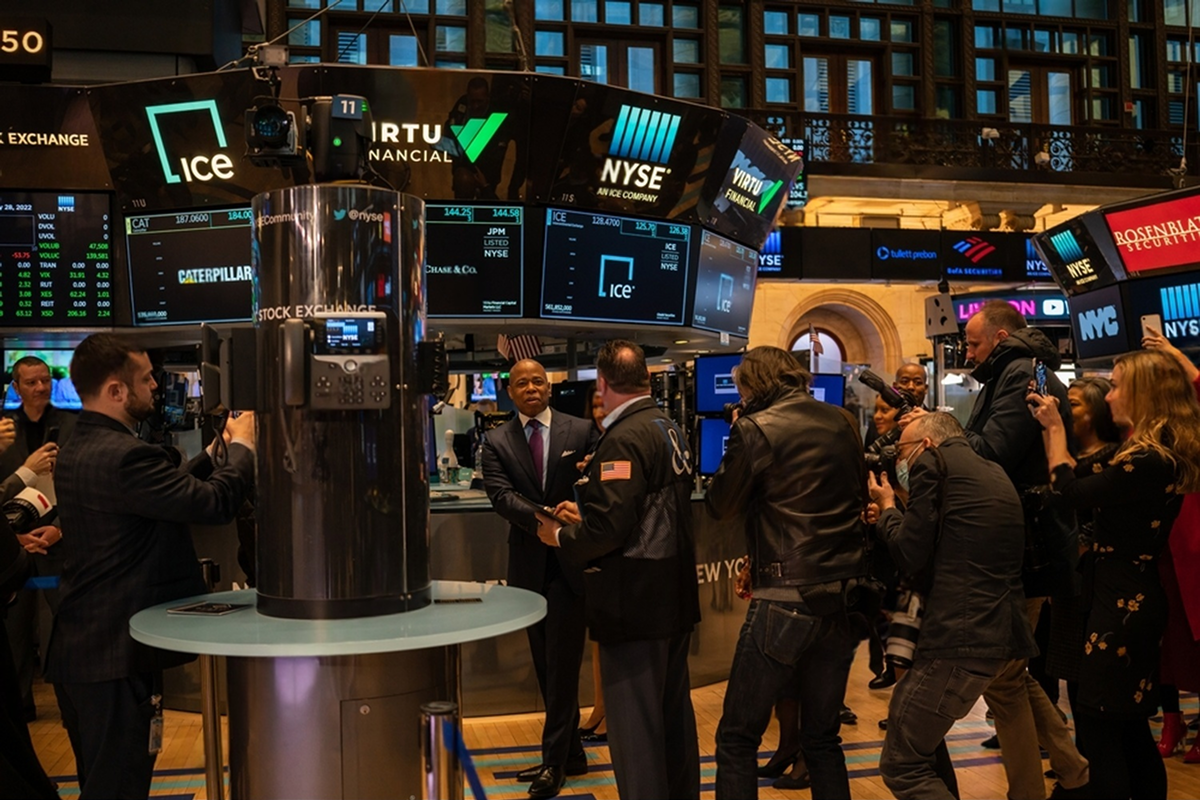
U.S. equity markets traded lower on June 23 as investors reassessed risk exposure amid rising volatility and renewed pressure on growth-oriented sectors. The market’s weakness was most evident in technology shares, with the Nasdaq falling 2.15%, while the broader S&P 500 declined 1.52% and the Dow Jones Industrial Average lost 0.66%.
The session highlighted a shift in market sentiment as investors balanced concerns over valuations, interest rates, geopolitical developments, and economic growth prospects. At the same time, a sharp increase in market volatility suggested that traders are preparing for potentially larger price swings in the weeks ahead.
Technology Stocks Drive Broad Market Weakness
The most significant development during the trading session was the decline in major technology and growth-oriented stocks, reflected in the Nasdaq’s fall of 2.15%. Technology companies have been among the strongest-performing sectors over the past year, benefiting from enthusiasm surrounding artificial intelligence, cloud computing, and digital infrastructure investments.
When market uncertainty rises, these high-growth segments often experience greater selling pressure due to their elevated valuations and sensitivity to future earnings expectations. The weakness in the Nasdaq also weighed heavily on the S&P 500, where technology remains the largest sector by market capitalization.
Despite the broader decline, investors should note that pullbacks within strong-performing sectors are not uncommon, particularly after extended rallies. Market participants appear to be reassessing risk rather than abandoning growth-related themes altogether.
Volatility Spike Signals Defensive Positioning
One of the session’s most notable indicators was the surge in the CBOE Volatility Index (VIX), which rose 16.96% to 20.21. Often referred to as Wall Street’s “fear gauge,” the VIX measures expected market volatility and tends to rise when investors become more cautious.
The move above the psychologically important 20 level suggests that traders are increasingly purchasing hedges against potential downside risks. Rising volatility often reflects uncertainty regarding monetary policy, economic data, corporate earnings, or geopolitical developments.
At the same time, the U.S. Dollar Index advanced 0.26%, indicating demand for defensive assets. Historically, periods of market stress frequently benefit the U.S. dollar as global investors seek liquidity and relative safety.
Small-Caps Show Relative Strength Amid Market Rotation
While large-cap indices moved lower, the Russell 2000 gained 0.83%, making it one of the few bright spots in the U.S. market. The divergence between small-cap and large-cap performance may indicate an ongoing sector rotation as investors search for opportunities outside the technology-heavy segments that have dominated market gains.
Meanwhile, international markets also reflected a more cautious tone. Brazil’s IBOVESPA fell 0.86%, while Canada’s S&P/TSX Composite Index declined 0.72%. These moves suggest that investor caution is extending beyond U.S. equities and affecting broader regional markets.
For energy markets, investors continue monitoring crude oil prices closely. Rising energy prices can influence inflation expectations, transportation costs, and corporate margins. Energy producers often benefit from stronger oil prices, while transportation and airline stocks may face increased operating expenses. Israeli energy-related companies and global producers remain sensitive to these developments as geopolitical events continue influencing commodity markets.
Looking ahead, investors will closely monitor upcoming economic data, corporate earnings updates, Federal Reserve commentary, and geopolitical developments that could influence market sentiment. The sharp rise in volatility suggests markets may remain sensitive to new information in the near term. Key indicators to watch include inflation trends, Treasury yields, technology sector performance, and whether small-cap strength can continue despite broader market weakness. If volatility remains elevated, investors may see continued sector rotation and increased focus on defensive positioning across global equity markets.
Comparison, examination, and analysis between investment houses
Leave your details, and an expert from our team will get back to you as soon as possible
* This article, in whole or in part, does not contain any promise of investment returns, nor does it constitute professional advice to make investments in any particular field.
To read more about the full disclaimer, click here
- orshu
- •
- 7 Min Read
- •
- ago 33 minutes
SKN | U.S. Dollar Strengthens as Investors Seek Stability Amid Global Market Uncertainty
The U.S. Dollar Index (DXY) moved higher on June 23, rising to 101.30 as investors increased exposure to the world's
- ago 33 minutes
- •
- 7 Min Read

The U.S. Dollar Index (DXY) moved higher on June 23, rising to 101.30 as investors increased exposure to the world's
- orshu
- •
- 6 Min Read
- •
- ago 5 hours
SKN | Asia Markets Sink on June 23, 2026 as South Korea Plunges Nearly 10% and Japan Slides 3.55%
Asian markets closed sharply lower on June 23, 2026, as a widespread selloff swept across the region. Investors moved aggressively
- ago 5 hours
- •
- 6 Min Read

Asian markets closed sharply lower on June 23, 2026, as a widespread selloff swept across the region. Investors moved aggressively
- orshu
- •
- 6 Min Read
- •
- ago 7 hours
SKN | European Markets Retreat Sharply as Broad-Based Selling Hits Regional Equities
European markets moved decisively lower on June 23, 2026, as investors reduced exposure to equities across the region. Nearly every
- ago 7 hours
- •
- 6 Min Read

European markets moved decisively lower on June 23, 2026, as investors reduced exposure to equities across the region. Nearly every

- omer bar
- •
- 7 Min Read
- •
- ago 10 hours
Why Are GoDaddy, Bandwidth, and GitLab Stocks Falling? What Investors Should Know
Shares of GoDaddy, Bandwidth, and GitLab are under pressure as investors react to a broader recalibration in high-growth technology equities.
- ago 10 hours
- •
- 7 Min Read

Shares of GoDaddy, Bandwidth, and GitLab are under pressure as investors react to a broader recalibration in high-growth technology equities.


