




- orshu
- •
- 7 Min Read
- •
- 55 seconds ago


Key Points
- U.S. Senate negotiators are considering AI safety legislation that would require developers to address major risks associated with advanced artificial intelligence systems.
- The proposed framework could create a duty of care requiring companies to design AI products with safeguards against potentially catastrophic outcomes.
- The legislation reflects growing global pressure to balance AI innovation with regulatory oversight, legal accountability and public safety concerns.
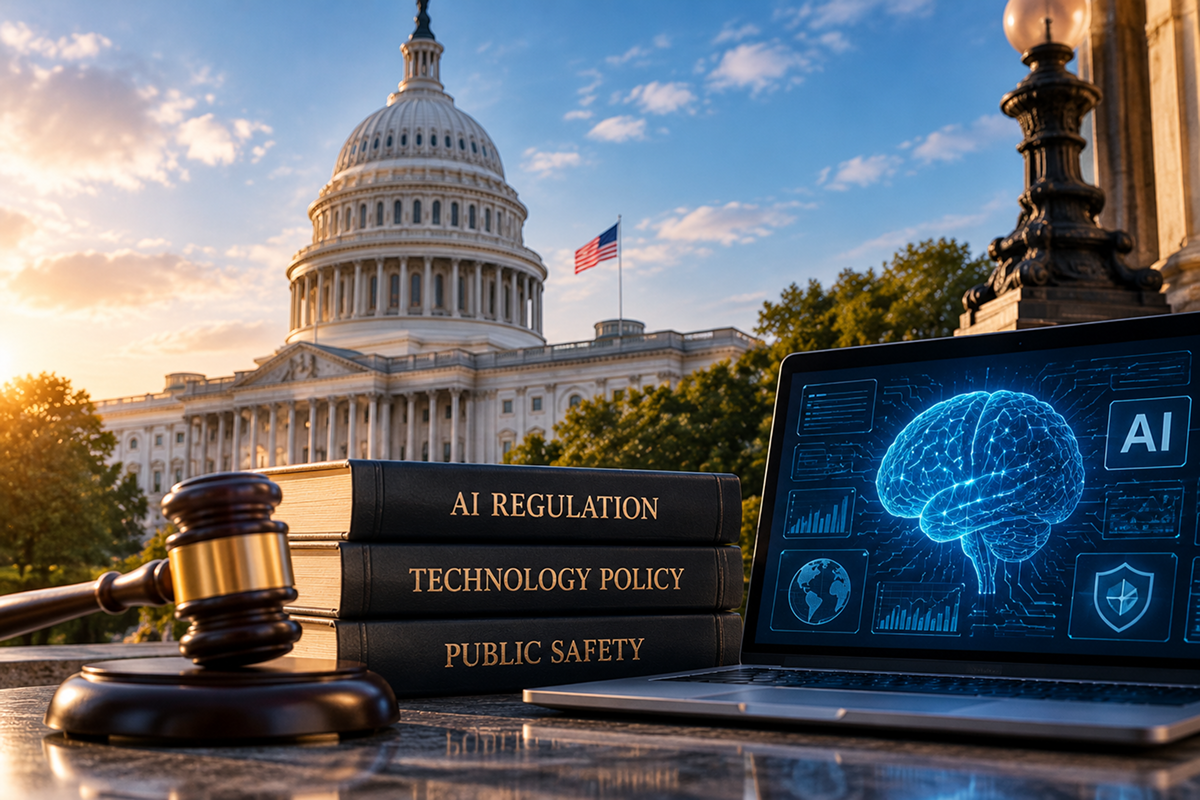
The rapid expansion of artificial intelligence has moved regulation to the center of technology policy discussions, with U.S. lawmakers debating new requirements for companies developing advanced AI systems. Senate negotiators are considering legislation that would place greater responsibility on technology firms to manage significant risks before releasing powerful AI products.
The proposal comes as governments worldwide attempt to establish frameworks for artificial intelligence governance while preserving innovation. For investors, the debate highlights a growing regulatory factor that could influence technology companies’ product strategies, compliance costs and long-term competitive positioning.
Senate Proposal Introduces New Responsibilities for AI Developers
According to Senate aides, lawmakers are discussing a measure that would establish a “duty of care” for AI developers. Under the proposed framework, companies would be expected to design AI products with the objective of preventing “catastrophic risks,” creating a higher standard of responsibility for firms building advanced models.
The legislation would represent a shift from a largely voluntary approach toward a more structured regulatory environment. AI companies have traditionally operated under internal safety guidelines and industry standards, but lawmakers are increasingly examining whether additional legal obligations are necessary as AI capabilities expand.
The discussion reflects concerns surrounding the potential misuse of powerful AI systems, including issues related to security, misinformation, autonomous decision-making and other large-scale risks. At the same time, policymakers face pressure to avoid regulations that could slow technological development or weaken the competitiveness of U.S. technology companies.
Potential Legal Framework Could Change AI Industry Dynamics
Another element under discussion involves the role of federal courts if government agencies attempt to prevent the release of certain AI models. According to a Senate aide and a lobbyist involved in negotiations, companies could have the ability to challenge government decisions through federal legal channels.
This approach could create a balance between regulatory oversight and corporate legal protections. Technology companies would face increased obligations but could also receive clearer procedures for disputing government actions affecting their products.
For major AI developers and cloud infrastructure providers, regulatory clarity could become an important business consideration. Companies investing billions of dollars into artificial intelligence research, computing infrastructure and data centers are closely monitoring how future rules may affect development timelines and operational requirements.
AI Regulation Becomes a Global Investment Consideration
The U.S. Senate debate is part of a broader international effort to establish standards for artificial intelligence. Governments in Europe, Asia and North America are evaluating approaches that address safety concerns while supporting economic growth driven by AI adoption.
For investors, regulation represents an emerging factor alongside traditional technology risks such as competition, capital spending and market demand. Companies that successfully integrate compliance frameworks into their AI strategies may have advantages as governments introduce more formal oversight.
However, uncertainty remains regarding the final structure of the legislation. The Senate has only three voting weeks remaining before midterm elections, which could affect the timeline and scope of any agreement.
Future developments will depend on negotiations among lawmakers, technology companies and policy groups. Investors and industry participants will continue monitoring whether the proposed AI safety requirements become law, how enforcement mechanisms are defined and whether the new framework influences the pace of artificial intelligence innovation in the United States and globally.
Comparison, examination, and analysis between investment houses
Leave your details, and an expert from our team will get back to you as soon as possible
* This article, in whole or in part, does not contain any promise of investment returns, nor does it constitute professional advice to make investments in any particular field.
To read more about the full disclaimer, click here
- sagi habasov
- •
- 6 Min Read
- •
- ago 46 seconds
SKN | US Solar Tariffs Escalate as Washington Targets Asian Imports and Reshapes Clean Energy Supply Chains
The United States has intensified its efforts to protect domestic solar manufacturing by imposing significant new trade barriers on
- ago 46 seconds
- •
- 6 Min Read

The United States has intensified its efforts to protect domestic solar manufacturing by imposing significant new trade barriers on

- Arik Arkadi Sluzki
- •
- 7 Min Read
- •
- ago 1 minute
SKN | HDFC Bank Moves Toward CEO Transition as India’s Largest Private Lender Submits Candidates
India’s largest private-sector lender, HDFC Bank, has taken a key step in its leadership transition by submitting the names
- ago 1 minute
- •
- 7 Min Read

India’s largest private-sector lender, HDFC Bank, has taken a key step in its leadership transition by submitting the names

- omer bar
- •
- 6 Min Read
- •
- ago 3 minutes
SKN | Euro Currency Index (^XDE) Contracts 0.26% Weekly to 115.98: Is Euro Weakness Persisting Amid Divergent Transatlantic Central Bank Trajectories?
The Euro Currency Index (^XDE) experienced a multi-session downtrend over the second half of the trading week, ultimately settling at
- ago 3 minutes
- •
- 6 Min Read

The Euro Currency Index (^XDE) experienced a multi-session downtrend over the second half of the trading week, ultimately settling at

- Lior mor
- •
- 7 Min Read
- •
- ago 46 minutes
SKN | British Pound Currency Index (^XDB) Consolidates Flat at 135.28: Is Sterling Stability Anchored Above Core Support Ahead of BOE Decision?
The British Pound Currency Index (^XDB) exhibited range-bound price action over the trading week, ultimately settling at 135.28 to
- ago 46 minutes
- •
- 7 Min Read

The British Pound Currency Index (^XDB) exhibited range-bound price action over the trading week, ultimately settling at 135.28 to
