


- orshu
- •
- 6 Min Read
- •
- 1 hour ago
Key Points
- Major U.S. indices declined, with the Nasdaq falling 1.08%, the S&P 500 dropping 0.80%, and the Dow Jones decreasing 0.72%.
- The VIX rose 7.73%, signaling a sharp increase in market volatility and investor uncertainty.
- Broader markets across the Americas weakened, while the U.S. Dollar Index edged lower by 0.04%.
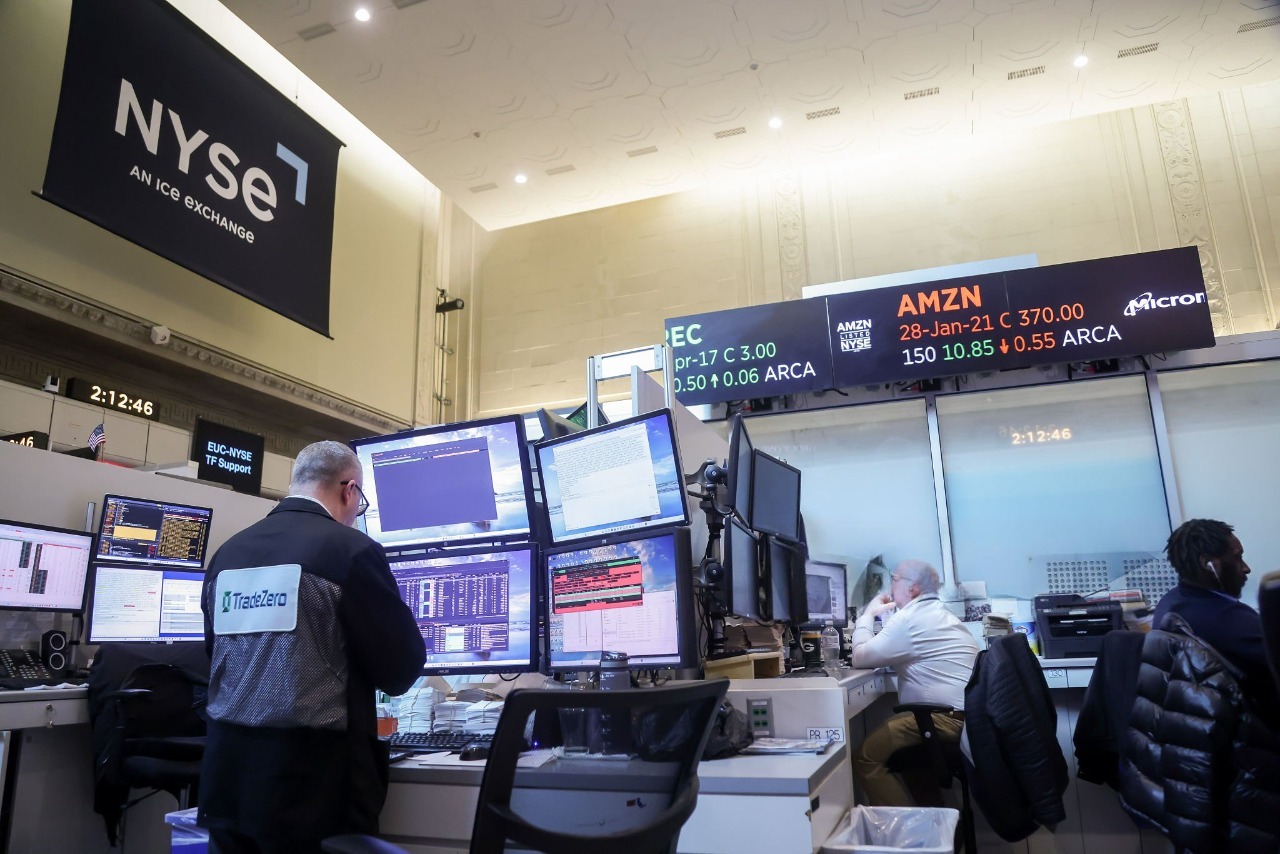
U.S. equity markets moved lower during the March 19 session as investor sentiment shifted toward caution. Major indices declined across the board, while volatility surged, reflecting heightened uncertainty in financial markets. The combination of falling equities and rising volatility suggests a shift away from risk assets as investors reassess market conditions.
Broad-Based Equity Declines Signal Risk-Off Shift
U.S. equities traded lower across all major benchmarks, indicating widespread selling pressure. The Nasdaq fell 1.08% to 21,912.54, reflecting weakness in technology and growth-oriented stocks. Meanwhile, the S&P 500 declined 0.80% to 6,572.01, highlighting broad market participation in the downturn.
The Dow Jones Industrial Average decreased 0.72% to 45,890.07, suggesting that even traditionally defensive blue-chip stocks were not immune to selling pressure. Smaller-cap equities experienced sharper declines, with the Russell 2000 falling 1.64% to 2,478.64, often viewed as a signal of reduced confidence in economic growth.
Across the Americas, markets followed a similar pattern. Brazil’s IBOVESPA dropped 1.55%, while Canada’s S&P/TSX Composite Index fell 2.08%, reflecting broad regional weakness and declining risk appetite among global investors.
Volatility Surge Reflects Heightened Market Uncertainty
The CBOE Volatility Index (VIX) rose 7.73% to 27.03, marking a significant increase in expected market turbulence. A rising VIX is often associated with increased hedging activity and investor concern over potential market swings.
The move higher in volatility coincided with declining equity prices, reinforcing a risk-off environment. Institutional investors typically increase protective positioning during periods of uncertainty, which can amplify short-term market fluctuations.
Elevated volatility levels may also influence trading strategies, as systematic funds and algorithmic models adjust exposure based on market conditions. This dynamic can contribute to increased market sensitivity and sharper price movements.
Currency Markets and Broader Implications
In contrast to the sharp moves in equities and volatility, the U.S. Dollar Index edged lower by 0.04% to 100.05. The modest decline suggests that currency markets remained relatively stable despite broader financial market turbulence.
A weaker dollar can provide some support to global assets, but its limited movement during the session indicates that investors are primarily focused on equity and volatility dynamics. The divergence between currency stability and equity weakness highlights the complexity of current market conditions.
From a macro perspective, declining equities combined with rising volatility may reflect concerns related to economic growth, interest rate expectations, or geopolitical developments. These factors continue to shape investor sentiment and capital allocation decisions across global markets.
Looking ahead, investors will closely monitor key catalysts that could influence market direction, including upcoming economic data releases, central bank policy signals, and corporate earnings updates. The persistence of elevated volatility may indicate continued uncertainty in the near term, while any stabilization in equity markets could signal a return of risk appetite. Market participants will also watch for shifts in interest rate expectations and global economic indicators, as these factors are likely to play a central role in determining the next phase of market activity.
Comparison, examination, and analysis between investment houses
Leave your details, and an expert from our team will get back to you as soon as possible
* This article, in whole or in part, does not contain any promise of investment returns, nor does it constitute professional advice to make investments in any particular field.
To read more about the full disclaimer, click here
- orshu
- •
- 6 Min Read
- •
- ago 4 hours
SKN | Asia Markets Slide Sharply on March 19, 2026 as Regional Sell-Off Deepens; Multiple Global Exchanges Shut for Eid al-Fitr
Asian markets closed March 19, 2026, under heavy selling pressure as investor sentiment reversed sharply following the previous session’s rally.
- ago 4 hours
- •
- 6 Min Read

Asian markets closed March 19, 2026, under heavy selling pressure as investor sentiment reversed sharply following the previous session’s rally.
- orshu
- •
- 6 Min Read
- •
- ago 7 hours
SKN | Israeli Markets Open Mixed with Teva and Financial Sectors Under Pressure
The Tel Aviv stock market opened slightly lower as investors navigated a mix of domestic and global economic signals. Leading
- ago 7 hours
- •
- 6 Min Read

The Tel Aviv stock market opened slightly lower as investors navigated a mix of domestic and global economic signals. Leading
- orshu
- •
- 5 Min Read
- •
- ago 7 hours
SKN | European Markets Slip Again as Regional Benchmark Drops and Currencies Weaken
European markets returned to a negative trajectory on Thursday, March 19, 2026, as regional equities faced renewed selling pressure. While
- ago 7 hours
- •
- 5 Min Read
European markets returned to a negative trajectory on Thursday, March 19, 2026, as regional equities faced renewed selling pressure. While

- Ronny Mor
- •
- 4 Min Read
- •
- ago 7 hours
SKN | Gold Market Trends Signal Resilience Amid Global Volatility
Amid recent market turbulence, SPDR Gold Shares (GLD) has demonstrated relative stability, highlighting investor demand for safe-haven assets. With concerns
- ago 7 hours
- •
- 4 Min Read

Amid recent market turbulence, SPDR Gold Shares (GLD) has demonstrated relative stability, highlighting investor demand for safe-haven assets. With concerns

