


- orshu
- •
- 6 Min Read
- •
- 6 hours ago
Key Points
- Major U.S. indices declined during the session, reflecting broad-based risk-off sentiment.
- The VIX climbed nearly 4%, signaling rising market uncertainty and investor caution.
- A stronger U.S. dollar added pressure on equities, particularly growth and global-facing sectors.
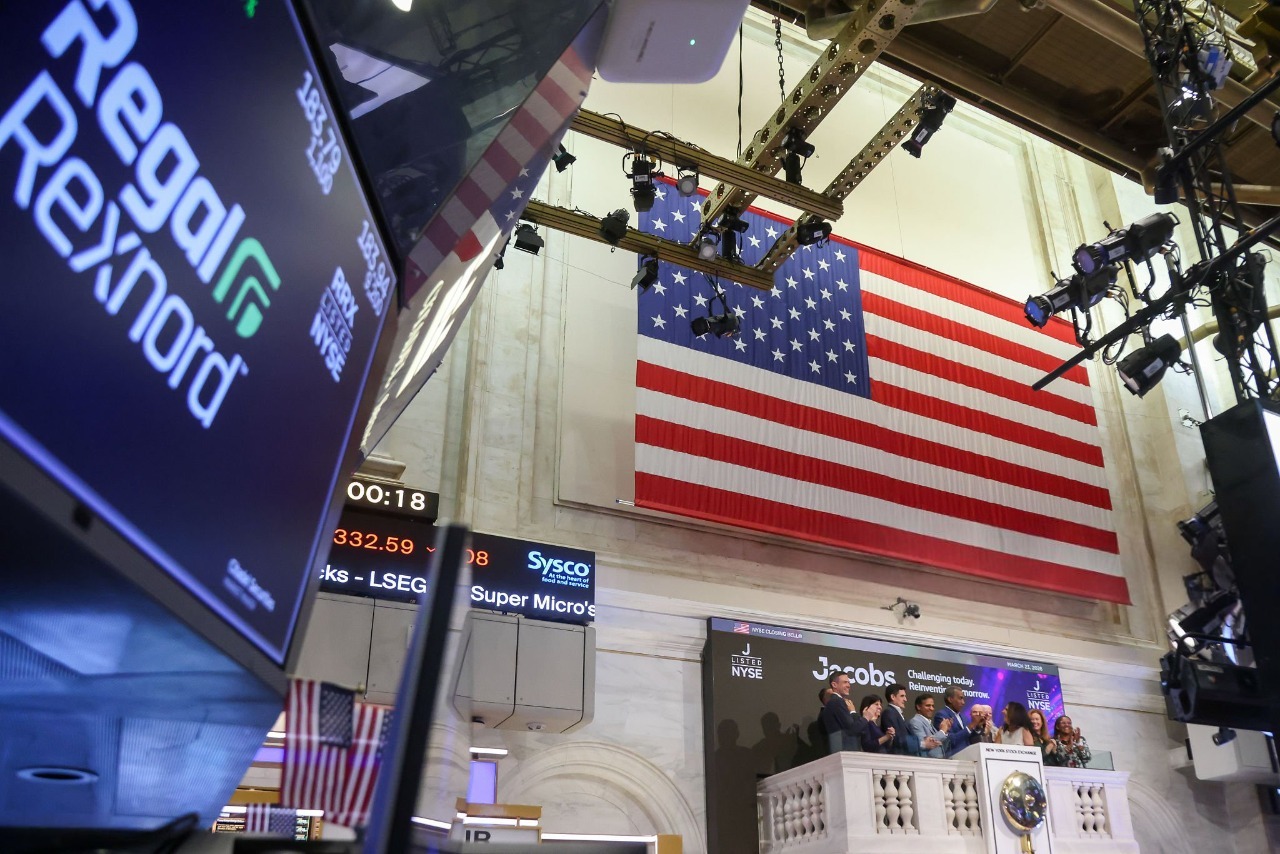
U.S. equities traded lower on March 24, as investors navigated a combination of rising market volatility and strengthening currency dynamics. The decline across major indices reflects a shift toward risk aversion, with investors reassessing positioning amid evolving macroeconomic signals.
Broad-Based Equity Weakness Signals Risk-Off Shift
All major U.S. indices moved lower during the session, highlighting a coordinated pullback in risk assets. The S&P 500 fell by 0.83%, while the Dow Jones Industrial Average declined by 0.84%, reflecting pressure across both industrial and large-cap sectors. The Nasdaq Composite dropped by 0.91%, indicating continued weakness in technology and growth-oriented stocks.
Meanwhile, the Russell 2000, which tracks small-cap companies, slipped by 0.52%, suggesting that domestic growth-sensitive stocks are also facing headwinds. The synchronized nature of these declines points to a broader de-risking trend, rather than sector-specific weakness.
Outside the U.S., the S&P/TSX Composite in Canada fell by 0.79%, while Brazil’s IBOVESPA dropped by 0.90%, reinforcing the global nature of the current risk-off environment.
Volatility and Dollar Strength Drive Market Sentiment
The CBOE Volatility Index (VIX), often referred to as Wall Street’s fear gauge, rose by nearly 3.94%, underscoring heightened uncertainty among investors. Rising volatility typically coincides with declining equity prices, as market participants hedge against potential downside risks.
At the same time, the U.S. Dollar Index strengthened by 0.53%, adding another layer of pressure on equities. A stronger dollar tends to weigh on multinational companies by reducing the value of overseas earnings and tightening global financial conditions.
This combination of higher volatility and a stronger dollar suggests that investors are positioning defensively, potentially in response to concerns around interest rates, geopolitical developments, or upcoming economic data releases.
Sector Rotation and Cross-Asset Implications
The current market environment reflects a shift in sector rotation, with investors moving away from high-growth and risk-sensitive assets toward more defensive positioning. Technology stocks, which are particularly sensitive to interest rate expectations, have come under pressure alongside broader equity indices.
Additionally, the interplay between equities, currencies, and volatility highlights the importance of cross-asset signals in shaping market direction. Rising volatility and a stronger dollar often indicate tightening financial conditions, which can have ripple effects across global markets.
For international investors, including those in Israel, these dynamics are particularly relevant, as U.S. market movements often set the tone for global asset allocation and capital flows. Currency strength can also influence emerging markets and export-driven economies, adding complexity to the global investment landscape.
Looking ahead, market participants will closely monitor volatility trends, movements in the U.S. dollar, and upcoming macroeconomic data that could shape interest rate expectations. Key risks include further tightening in financial conditions and potential geopolitical developments, while opportunities may arise if volatility stabilizes and investor confidence improves. The coming sessions are likely to be driven by how these cross-asset signals evolve, offering critical insight into the durability of the current risk-off sentiment.
Comparison, examination, and analysis between investment houses
Leave your details, and an expert from our team will get back to you as soon as possible
* This article, in whole or in part, does not contain any promise of investment returns, nor does it constitute professional advice to make investments in any particular field.
To read more about the full disclaimer, click here
- orshu
- •
- 7 Min Read
- •
- ago 3 hours
SKN | Israel Market Close – March 24, 2026: Broad Selloff Deepens as Tel Aviv Indices Slide on Weak Breadth and Rising Caution
Israeli markets closed on March 24, 2026 with notable losses, extending the weakness seen in the previous session. Selling pressure
- ago 3 hours
- •
- 7 Min Read

Israeli markets closed on March 24, 2026 with notable losses, extending the weakness seen in the previous session. Selling pressure
- orshu
- •
- 6 Min Read
- •
- ago 4 hours
SKN | European Markets Close Mixed as Broad Weakness Offsets UK Gains
European markets closed with a mixed performance on March 24, as declines across key continental indices offset modest gains
- ago 4 hours
- •
- 6 Min Read

European markets closed with a mixed performance on March 24, as declines across key continental indices offset modest gains
- orshu
- •
- 5 Min Read
- •
- ago 10 hours
SKN | Asia Markets Rebound on March 24, 2026 as Regional Equities Rally Led by Hong Kong and South Korea
Asian markets closed March 24, 2026, with a strong rebound as investors returned to equities following the previous session’s heavy
- ago 10 hours
- •
- 5 Min Read

Asian markets closed March 24, 2026, with a strong rebound as investors returned to equities following the previous session’s heavy
- orshu
- •
- 5 Min Read
- •
- ago 12 hours
SKN | European Markets Rebound as Broad Gains Signal Stabilization After Sell-Off
European markets rebounded on Tuesday, March 24, 2026, as investors stepped back into equities following the sharp sell-off seen in
- ago 12 hours
- •
- 5 Min Read

European markets rebounded on Tuesday, March 24, 2026, as investors stepped back into equities following the sharp sell-off seen in

