


- Lior mor
- •
- 6 Min Read
- •
- 24 seconds ago
Key Points
- Political pressure on monetary policy intensifies, as Trump signals expectations for faster rate cuts.
- Interest rate outlook remains uncertain, with markets closely watching central bank independence.
- Global implications emerge, affecting currencies, equities, and investor sentiment worldwide.

Former US President Donald Trump has indicated he would be disappointed if Kevin Warsh does not move quickly to cut interest rates, highlighting renewed political attention on monetary policy. The comments come at a time when global markets are highly sensitive to interest rate expectations, making central bank decisions a key driver of asset prices.
Political Influence and Central Bank Independence
Trump’s remarks underscore the ongoing tension between political leadership and central bank independence. Historically, central banks such as the Federal Reserve have operated with a degree of autonomy to ensure that monetary policy decisions are based on economic data rather than political considerations.
Public pressure for rate cuts can complicate this dynamic, raising concerns among investors about policy credibility and long-term inflation control. While rate reductions can support economic growth in the short term, they also carry risks if implemented prematurely, particularly in an environment where inflation remains a consideration.
The reference to Kevin Warsh, a former Federal Reserve official, highlights speculation حول potential leadership or advisory roles influencing future policy direction.
Market Reactions and Interest Rate Expectations
Financial markets are highly responsive to signals حول interest rate policy, as changes in borrowing costs affect valuations across asset classes. Expectations of rate cuts typically support equity markets, particularly growth-oriented sectors, by lowering discount rates and improving financing conditions.
However, uncertainty surrounding the timing and magnitude of such cuts can lead to increased market volatility. Bond markets, in particular, may react to shifting expectations, with yields adjusting to reflect anticipated policy changes.
The US dollar could also be impacted, as lower interest rates tend to reduce currency strength relative to global peers. This dynamic has implications for international trade and capital flows, influencing markets far beyond the United States.
Global Implications and Investor Strategy
The potential for faster rate cuts carries significant global implications, particularly for investors managing diversified portfolios. In markets such as Israel, where capital flows are influenced by US monetary policy, changes in interest rates can affect currency dynamics, equity valuations, and investment strategies.
Lower US rates may encourage capital to flow into emerging markets and riskier assets, while also impacting sectors sensitive to borrowing costs, including real estate and technology. At the same time, the perception of political influence on monetary policy could introduce additional risk premiums across global markets.
Investors will need to balance the potential benefits of accommodative policy with the risks associated with reduced policy independence and inflation uncertainty.
Looking ahead, market participants will closely monitor Federal Reserve communications, economic data trends, and political developments that may influence the rate trajectory. The timing and pace of any policy adjustments will be critical in shaping market direction. Key risks include inflation persistence and policy misalignment, while opportunities may emerge from lower borrowing costs, improved liquidity conditions, and shifts in global capital allocation.
Comparison, examination, and analysis between investment houses
Leave your details, and an expert from our team will get back to you as soon as possible
* This article, in whole or in part, does not contain any promise of investment returns, nor does it constitute professional advice to make investments in any particular field.
To read more about the full disclaimer, click here
- Ronny Mor
- •
- 9 Min Read
- •
- ago 2 hours
SKN | Can the Fed Shrink Its Balance Sheet Without Disrupting Markets? A New Framework Emerges
As scrutiny intensifies ahead of a key confirmation hearing, debate is accelerating around how the Federal Reserve might reduce its
- ago 2 hours
- •
- 9 Min Read

As scrutiny intensifies ahead of a key confirmation hearing, debate is accelerating around how the Federal Reserve might reduce its

- omer bar
- •
- 7 Min Read
- •
- ago 2 days
SKN | Does the U.S. Seizure of an Iranian Vessel Signal Escalation and Threaten Fragile Peace Talks?
The reported seizure of an Iranian-linked vessel by the United States during an enforcement operation has added a new layer
- ago 2 days
- •
- 7 Min Read

The reported seizure of an Iranian-linked vessel by the United States during an enforcement operation has added a new layer
- Ronny Mor
- •
- 6 Min Read
- •
- ago 3 days
SKN | Psychedelics Policy Shift: Trump Order Signals New Direction for FDA Regulation and Biotech Markets
A new executive order signed by Donald Trump aimed at easing restrictions on psychedelic substances has introduced a significant
- ago 3 days
- •
- 6 Min Read
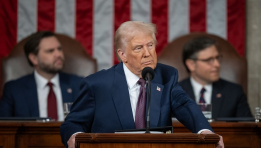
A new executive order signed by Donald Trump aimed at easing restrictions on psychedelic substances has introduced a significant

- sagi habasov
- •
- 7 Min Read
- •
- ago 3 days
SKN | Geopolitical Shift: Iran Conflict Tests US Alliances as China Expands Strategic Influence
The ongoing tensions linked to the Iran conflict are reverberating across global markets and diplomatic networks, creating uncertainty among
- ago 3 days
- •
- 7 Min Read

The ongoing tensions linked to the Iran conflict are reverberating across global markets and diplomatic networks, creating uncertainty among


