





- sagi habasov
- •
- 7 Min Read
- •
- 8 months ago


Key Points
- Donald Trump said he would hold off on imposing new tariffs on critical minerals while a trade probe continues, easing immediate market concerns.
- The decision underscores the strategic sensitivity of critical supply chains tied to energy transition, defense, and advanced technologies.
- Markets are now assessing the implications for commodities pricing, industrial policy, and geopolitical positioning.

U.S. President Donald Trump has signaled that he will delay imposing new tariffs on critical minerals while a formal trade investigation remains underway, offering temporary relief to markets that had begun to price in heightened protectionism. The move comes at a time when global competition for strategic resources is intensifying, placing supply chains for advanced technologies, clean energy, and defense systems firmly in the spotlight.
Why Critical Minerals Have Become a Geopolitical Flashpoint
Critical minerals such as lithium, rare earth elements, cobalt, and nickel are no longer treated as ordinary commodities. They are increasingly viewed as strategic assets essential to national security and economic competitiveness. The United States, Europe, and China have all sought to reduce dependency on concentrated supply chains, particularly where production or processing is dominated by a small number of countries. Trump’s decision to hold off on immediate tariffs reflects an acknowledgment that aggressive trade measures could disrupt already fragile supply chains and raise costs for U.S. manufacturers. While the trade probe continues, the pause allows policymakers to assess the balance between economic protectionism and the practical need for secure, diversified access to raw materials.
Market Reaction Highlights Sensitivity to Policy Risk
The absence of immediate tariff escalation has helped stabilize sentiment across segments linked to critical minerals. Companies involved in battery production, semiconductor manufacturing, and advanced materials tend to react sharply to changes in trade policy, given their reliance on complex global sourcing. Commodity markets have also shown heightened sensitivity, with prices for several strategic metals reflecting not only physical supply and demand but also shifting political narratives. The episode reinforces how pricing in modern commodity markets is increasingly shaped by policy expectations rather than purely by industrial consumption. For institutional investors, this creates an environment where political risk analysis is becoming as essential as traditional supply-demand modeling.
Implications for Global Strategy and Israel’s Positioning
The decision carries broader strategic implications beyond the United States. Countries with innovation-driven economies, including Israel, are closely connected to global ecosystems that depend on stable access to advanced materials. Israel’s strength in semiconductors, defense technologies, clean energy, and deep-tech manufacturing means that disruptions in critical mineral supply chains can have downstream effects on costs, competitiveness, and investment flows. At the same time, the global push to diversify supply sources has created opportunities for countries and companies developing alternatives in recycling technologies, material efficiency, and next-generation resource extraction. The current pause in tariff action may therefore be interpreted not as a retreat, but as a recalibration of strategy within a longer-term realignment of industrial policy.
Looking ahead, markets will be watching the outcome of the trade investigation, as well as any accompanying policy frameworks related to domestic production incentives, strategic stockpiling, and bilateral supply agreements. A renewed move toward tariffs could reintroduce volatility across commodities, equities, and currency markets, while a more coordinated industrial strategy could support longer-term stability. What remains clear is that critical minerals are no longer a niche issue; they are now central to how governments, corporations, and investors are positioning for the next phase of the global economic order.
Comparison, examination, and analysis between investment houses
Leave your details, and an expert from our team will get back to you as soon as possible
* This article, in whole or in part, does not contain any promise of investment returns, nor does it constitute professional advice to make investments in any particular field.
To read more about the full disclaimer, click here
- Ronny Mor
- •
- 6 Min Read
- •
- ago 38 minutes
SKN | U.S. Sanctions on Iranian Airlines Intensify Economic Pressure as Middle East War Drives Oil Higher
The United States expanded its economic campaign against Iran this week, imposing sweeping sanctions on the country's aviation sector as
- ago 38 minutes
- •
- 6 Min Read

The United States expanded its economic campaign against Iran this week, imposing sweeping sanctions on the country's aviation sector as

- Lior mor
- •
- 7 Min Read
- •
- ago 2 hours
SKN | Wall Street Analyst Calls Highlight Diverging Views Across AI, Technology, Defense and Consumer Stocks
Wall Street research desks placed several of the market's most closely watched companies under renewed scrutiny Tuesday, with analyst
- ago 2 hours
- •
- 7 Min Read
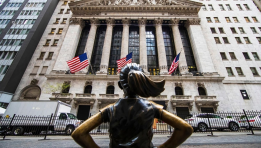
Wall Street research desks placed several of the market's most closely watched companies under renewed scrutiny Tuesday, with analyst

- sagi habasov
- •
- 6 Min Read
- •
- ago 5 hours
SKN | Oil Nears $100 as Middle East Tensions Intensify — Could Brent Reach $120?
Oil markets entered the week under renewed pressure as escalating Middle East tensions pushed Brent crude close to $100
- ago 5 hours
- •
- 6 Min Read

Oil markets entered the week under renewed pressure as escalating Middle East tensions pushed Brent crude close to $100

- orshu
- •
- 6 Min Read
- •
- ago 7 hours
SKN | Why Novo Nordisk’s CEO Is Wary of the Peptide Craze Despite Wegovy’s Success
Novo Nordisk is at the center of the global boom in peptide-based medicines, with its Wegovy weight-loss treatment helping transform
- ago 7 hours
- •
- 6 Min Read

Novo Nordisk is at the center of the global boom in peptide-based medicines, with its Wegovy weight-loss treatment helping transform

