




- Lior mor
- •
- 7 Min Read
- •
- 31 minutes ago


Key Points
- The 10-year U.S. Treasury yield moved above 5%, reaching its highest level since October 2023 as markets reassessed inflation, fiscal risks, and Federal Reserve policy.
- President Donald Trump dismissed growing concerns over the risks associated with advanced AI development, while major technology executives have called for greater caution and regulatory oversight.
- Bank of America CEO Brian Moynihan warned that investment-banking fees could decline by at least 10% in the third quarter, adding another signal for investors assessing corporate activity.

U.S. financial markets entered the week facing a combination of rising bond yields, renewed inflation concerns and uncertainty surrounding the sustainability of the artificial-intelligence investment cycle. The benchmark 10-year Treasury yield surpassed 5% for the first time since October 2023, while weakness in semiconductor shares highlighted the sensitivity of high-growth equities to higher discount rates.
Treasury Yields Put Pressure on Risk Assets
The move above 5% represented an important threshold for global investors. Higher oil prices, partly linked to disruptions affecting energy infrastructure in the Middle East, have increased concerns that inflation could remain elevated and limit the Federal Reserve’s ability to ease monetary conditions. At the same time, heavy government and corporate borrowing, including financing associated with large-scale AI investment, has added to Treasury supply and contributed to upward pressure on yields.
For equity markets, the implications are significant because higher long-term yields increase the discount rate applied to future corporate earnings. Technology and other growth-oriented companies can therefore face greater valuation pressure even when underlying earnings remain strong. The recent decline in semiconductor shares illustrates how quickly investors can reassess highly valued areas when financing conditions tighten.
AI Optimism Meets a New Risk Debate
The AI investment theme also came under renewed scrutiny after executives from major AI companies raised concerns about the potential consequences of rapid technological development. Trump rejected calls for additional restrictions, arguing that the United States already has sufficient safeguards and that excessive regulation could weaken its competitive position against China.
For investors, the debate extends beyond regulation. AI spending has become an important component of corporate capital expenditure and expectations for future productivity and earnings growth. A slowdown in investment, whether caused by regulatory intervention, financing costs or concerns about returns on AI infrastructure, could therefore have broader implications for technology valuations and the wider U.S. equity market.
Corporate Signals Add to the Market’s Caution
The outlook for corporate activity also became more mixed after Bank of America CEO Brian Moynihan said investment-banking fees could fall by at least 10% in the third quarter. The warning adds another layer to an environment in which companies and investors are weighing higher financing costs against continued economic resilience.
For Israeli investors and global asset allocators, the combination of elevated U.S. yields, AI-related valuation risks, fiscal pressures and currency volatility remains particularly important. Higher Treasury yields can influence global borrowing costs and the relative attractiveness of dollar-denominated assets, while geopolitical developments and energy prices may continue to affect inflation expectations across markets.
Outlook: The next phase of trading is likely to depend heavily on the Federal Reserve’s policy decision and updated economic projections, alongside developments in oil markets and the trajectory of Treasury yields. A sustained move above 5% could place additional pressure on equity valuations and borrowing costs, while evidence that inflation remains contained could reduce some of that pressure. Investors will also be watching whether AI-related earnings and capital spending continue to justify elevated valuations. The balance between strong corporate earnings and rising discount rates is likely to remain a central market theme, with fiscal sustainability, geopolitical premiums and currency volatility adding downside risks to an otherwise resilient U.S. economic backdrop.
Comparison, examination, and analysis between investment houses
Leave your details, and an expert from our team will get back to you as soon as possible
* This article, in whole or in part, does not contain any promise of investment returns, nor does it constitute professional advice to make investments in any particular field.
To read more about the full disclaimer, click here
- Arik Arkadi Sluzki
- •
- 6 Min Read
- •
- ago 2 hours
SKN | Wells Fargo Warns of Potential Market Pullback as Elevated Valuations Meet Rising Macro Risks
The warning from Wells Fargo highlights a growing tension in global equity markets: strong corporate fundamentals and enthusiasm around
- ago 2 hours
- •
- 6 Min Read

The warning from Wells Fargo highlights a growing tension in global equity markets: strong corporate fundamentals and enthusiasm around

- orshu
- •
- 6 Min Read
- •
- ago 2 hours
SKN | US Stocks Edge Lower as Dollar Gains and Investors Assess Market Risks
US equity markets are trading lower on September 15 as investors adopt a more cautious stance across major benchmarks.
- ago 2 hours
- •
- 6 Min Read

US equity markets are trading lower on September 15 as investors adopt a more cautious stance across major benchmarks.
- orshu
- •
- 6 Min Read
- •
- ago 6 hours
SKN | Asian Markets Extend Losses on September 15, 2026 as Hong Kong and Australia Lead Declines
Asian markets extended their broadly defensive tone on September 15, 2026, with every reported market indicator closing lower. Hong Kong,
- ago 6 hours
- •
- 6 Min Read
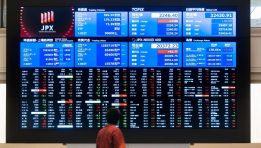
Asian markets extended their broadly defensive tone on September 15, 2026, with every reported market indicator closing lower. Hong Kong,
- orshu
- •
- 4 Min Read
- •
- ago 7 hours
SKN | European Markets Extend Declines as Major Benchmarks Fall Nearly 1%
European markets moved sharply lower on September 15, 2026, extending the weakness recorded in the previous session. All major equity
- ago 7 hours
- •
- 4 Min Read

European markets moved sharply lower on September 15, 2026, extending the weakness recorded in the previous session. All major equity
