




- Lior mor
- •
- 6 Min Read
- •
- 28 seconds ago


Key Points
- Tesla and Waymo are emerging as the leading contenders in the U.S. autonomous vehicle market, according to TD Cowen’s analysis of the sector.
- Waymo currently holds an advantage in autonomous vehicle safety and deployment, while Tesla’s consumer scale could become a major competitive factor.
- The next phase of the autonomous vehicle industry may depend less on achieving perfect autonomy and more on reaching acceptable safety levels at commercial scale.
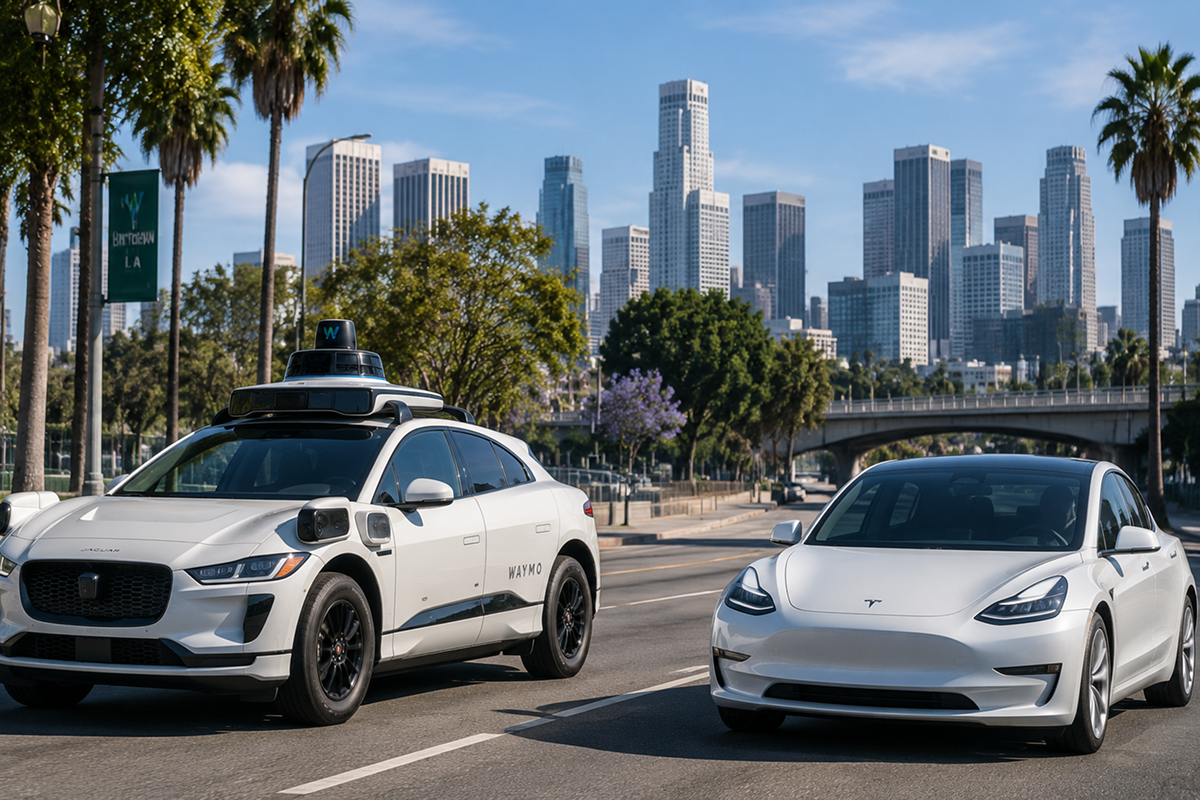
The autonomous vehicle industry is entering a critical phase as companies move from technological development toward broader commercial deployment. According to TD Cowen’s latest autonomous vehicle analysis, Tesla and Waymo remain at the center of the U.S. robotaxi race, with different strategies shaping their paths toward market adoption.
The discussion highlights a key industry shift: the competitive advantage may no longer come only from developing the most advanced technology, but from deploying reliable autonomous systems efficiently and at meaningful scale.
Waymo Leads Current Deployment While Tesla Holds Scale Advantage
Waymo, Alphabet’s autonomous driving subsidiary, currently leads the market in terms of safety performance and operational deployment. The company has expanded its robotaxi services in several U.S. cities and has focused on building confidence in autonomous transportation through controlled commercial operations.
Tesla, meanwhile, remains a significant potential competitor due to its massive vehicle fleet, consumer presence and extensive real-world driving data. While Tesla’s autonomous driving strategy differs from Waymo’s approach, its ability to leverage millions of vehicles on the road could become an important factor if consumers accept its safety standards as sufficient for widespread adoption.
The comparison between the two companies reflects a broader debate within the autonomous vehicle industry: whether the winning model will be based on highly controlled autonomous systems or a scalable technology platform integrated into consumer vehicles.
The Autonomous Vehicle Market Moves Toward Commercial Scale
Industry analysts increasingly view commercial scalability as the defining challenge for autonomous vehicles. Achieving perfect safety remains a long-term objective, but companies must first demonstrate that autonomous systems can operate reliably, economically and consistently across large geographic areas.
This creates a different competitive environment compared with earlier stages of autonomous vehicle development. Companies that can reduce operating costs, expand service availability and build public trust may gain an advantage even without achieving full technological perfection.
Beyond Tesla and Waymo, other companies are also positioning themselves in the autonomous mobility market. Amazon’s Zoox, Uber’s partnership with Lucid and Nuro, Mobileye and Wayve were identified as additional players that could achieve meaningful scale over the next five years.
AI, Data and Infrastructure Shape the Future of Mobility
The autonomous vehicle race is increasingly connected to broader advances in artificial intelligence, computing infrastructure and sensor technology. Companies are investing heavily in machine learning models, advanced hardware and data-processing capabilities required to operate vehicles without human intervention.
For technology investors, the autonomous vehicle sector represents a convergence between automotive manufacturing and artificial intelligence. The companies that succeed will likely need to combine software innovation, operational efficiency and large-scale deployment capabilities.
The next stage of the autonomous vehicle market will depend on regulatory developments, consumer acceptance and each company’s ability to transform technical achievements into sustainable commercial operations. Investors and industry participants will continue monitoring whether Tesla can convert its vehicle ecosystem into a competitive advantage and whether Waymo can maintain its leadership in safety and deployment.
Comparison, examination, and analysis between investment houses
Leave your details, and an expert from our team will get back to you as soon as possible
* This article, in whole or in part, does not contain any promise of investment returns, nor does it constitute professional advice to make investments in any particular field.
To read more about the full disclaimer, click here
- omer bar
- •
- 7 Min Read
- •
- ago 1 hour
SKN | Anthropic IPO Could Redefine the AI Market With Potential $100 Billion Fundraising
Anthropic, one of the leading companies in the artificial intelligence sector, is reportedly exploring plans for a potential initial
- ago 1 hour
- •
- 7 Min Read
Anthropic, one of the leading companies in the artificial intelligence sector, is reportedly exploring plans for a potential initial

- Ronny Mor
- •
- 7 Min Read
- •
- ago 21 hours
SKN | OpenAI Cuts GPT-5.6 Sol Pricing as AI Competition Intensifies
OpenAI is cutting the price of its flagship GPT-5.6 Sol model by more than 20% for the next three
- ago 21 hours
- •
- 7 Min Read

OpenAI is cutting the price of its flagship GPT-5.6 Sol model by more than 20% for the next three

- orshu
- •
- 6 Min Read
- •
- ago 21 hours
SKN | Apple Cuts More Than 200 Roles as Siri and Vision Pro Strategy Shifts Toward AI and Next-Generation Devices
Apple is restructuring parts of its technology organization, eliminating more than 200 positions across teams responsible for Siri, Vision
- ago 21 hours
- •
- 6 Min Read

Apple is restructuring parts of its technology organization, eliminating more than 200 positions across teams responsible for Siri, Vision

- sagi habasov
- •
- 7 Min Read
- •
- ago 21 hours
SKN | Robinhood Shares Surge as Prediction Markets and Tokenization Strengthen the Growth Story
Robinhood Markets emerged as one of the strongest performers in U.S. equities on August 21, with shares rising 13.7%
- ago 21 hours
- •
- 7 Min Read
Robinhood Markets emerged as one of the strongest performers in U.S. equities on August 21, with shares rising 13.7%
