





- Arik Arkadi Sluzki
- •
- 7 Min Read
- •
- 5 hours ago
Key Points
- The TA 125 Index declined approximately 2.26% over the trading week, closing at 4,007.14.
- Israeli equities experienced steady downward pressure throughout the week, ending flat with a negligible 0.00% daily change on the final session.
- Investors continue to balance robust long-term domestic performance against a persistent geopolitical risk premium and evolving macroeconomic headwinds.

Israeli equities ended the trading week with a net decline, as the TA 125 Index fell 2.26% to settle at 4,007.14. The weekly loss materialized following a steady multi-day slide from earlier highs near the 4,150 level, as institutional investors navigated shifting expectations surrounding domestic monetary policy, regional stability, and global financial conditions. The downward trajectory highlights a cautious approach among capital allocators toward domestic assets, although the index’s longer-term performance continues to reflect underlying structural resilience.
Broad Market Pressures and Sector Rotations
The TA 125 Index experienced consistently bearish price action throughout the week. After opening the period near the 4,150 range, the benchmark staged a steady slide, breaking below the 4,050 threshold before consolidating to finish practically flat on the final session at 4,007.14. This downward trajectory was largely underpinned by institutional repositioning across the broader Israeli market, as market participants reacted to persistent domestic uncertainties.
Despite the near-term macroeconomic headwinds, capital allocators are differentiating between highly leveraged firms and those possessing resilient corporate fundamentals. Companies with robust balance sheets and diversified revenue streams are better positioned to navigate the restrictive credit environment, prompting some institutional funds to view the recent market pullback as an opportunity for strategic asset entries at discounted valuations within the index’s wider 52-week range of 2,934.35 to 4,588.51.
Nevertheless, market participants remain highly disciplined, recognizing that valuation expansions remain sensitive to future macroeconomic clarity and concrete evidence of a sustainable recovery in domestic consumption.
Geopolitical Headwinds and Macro Vigilance
Beyond localized monetary policy, the domestic equity market is currently navigating profound operational challenges linked to the broader macroeconomic environment. The ongoing regional conflict continues to exacerbate supply chain disruptions and labor market tightness. These logistical hurdles inherently inflate operational costs across multiple sectors, persistently injecting a distinct geopolitical premium into domestic asset pricing.
Foreign exchange dynamics also remain a critical variable for international stakeholders. Shifting yield spreads and localized currency volatility across the Shekel continue to influence foreign institutional capital flows. For cross-border investors, these external dependencies and shifting government priorities introduce tangible downside risks that necessitate rigorous, probability-based risk management frameworks.
Policy Signals and Earnings Will Be the Next Major Test
Attention is increasingly shifting toward upcoming inflation data, consumer sentiment metrics, and central bank forward guidance, which serve as primary structural drivers for the TA 125. Market participants will be watching closely for evidence that state-backed stimulus and domestic demand can offset the friction of elevated borrowing costs.
While the index maintains a strong 28.40% return over the trailing 1-year period, the recent weekly contraction of 2.26% demonstrates that investor sentiment has shifted toward a more defensive posture in the short term. Analysts emphasize that a sustained market recovery will likely require stronger fundamental confirmation of macroeconomic stabilization.
Outlook: Looking ahead, the TA 125’s medium-term direction will likely depend on a combination of domestic inflation trends, Bank of Israel monetary policy developments, and broader geopolitical stabilization. Continued resilience in underlying corporate earnings could provide foundational support for the index, while prolonged operational disruptions or strained national fiscal outlooks may limit upside potential. For global and Israeli institutional investors, the broad market index remains a critical macroeconomic barometer, but maintaining a highly balanced approach toward both opportunities and systemic risks remains essential as macroeconomic conditions continue to evolve.
Comparison, examination, and analysis between investment houses
Leave your details, and an expert from our team will get back to you as soon as possible
* This article, in whole or in part, does not contain any promise of investment returns, nor does it constitute professional advice to make investments in any particular field.
To read more about the full disclaimer, click here
- Lior mor
- •
- 7 Min Read
- •
- ago 4 hours
SKN | TA 35 Declines 1.66% for the Week as Macro Risks Outweigh Marginal Late-Session Gains
Israeli equities ended the trading week with a net decline, as the TA 35 Index fell 1.66% to settle at
- ago 4 hours
- •
- 7 Min Read

Israeli equities ended the trading week with a net decline, as the TA 35 Index fell 1.66% to settle at

- sagi habasov
- •
- 6 Min Read
- •
- ago 5 hours
SKN | TA-RealEstate Index Drops 4.04% for the Week as Elevated Rates and Macro Risks Pressure Israeli Developers
Israeli real estate equities ended the trading week with a pronounced net decline, as the TA-RealEstate Index fell 4.04%
- ago 5 hours
- •
- 6 Min Read
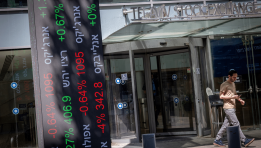
Israeli real estate equities ended the trading week with a pronounced net decline, as the TA-RealEstate Index fell 4.04%

- orshu
- •
- 8 Min Read
- •
- ago 6 hours
SKN | TA Banks 5 Index Advances 2.73% for the Week as Domestic Financials Demonstrate Resilience
Israeli financial markets ended the trading week with a pronounced net advance, as the TA Banks 5 Index climbed approximately
- ago 6 hours
- •
- 8 Min Read

Israeli financial markets ended the trading week with a pronounced net advance, as the TA Banks 5 Index climbed approximately

- Ronny Mor
- •
- 6 Min Read
- •
- ago 6 hours
SKN | TA-SME60 Extends Weekly Decline as Israeli Small-Cap Stocks Face Renewed Pressure
The TA-SME60 Index, which tracks Israel's small- and medium-sized publicly traded companies, finished the week with a 3.16% decline,
- ago 6 hours
- •
- 6 Min Read

The TA-SME60 Index, which tracks Israel's small- and medium-sized publicly traded companies, finished the week with a 3.16% decline,


