Key Points

  • The Red Sea mission highlights the difficulty of securing shipping routes—even against less capable forces.
  • Iran’s military strength and geographic positioning make the Strait of Hormuz far more complex to defend.
  • Prolonged disruption could drive sustained inflation and volatility across global markets.
hero

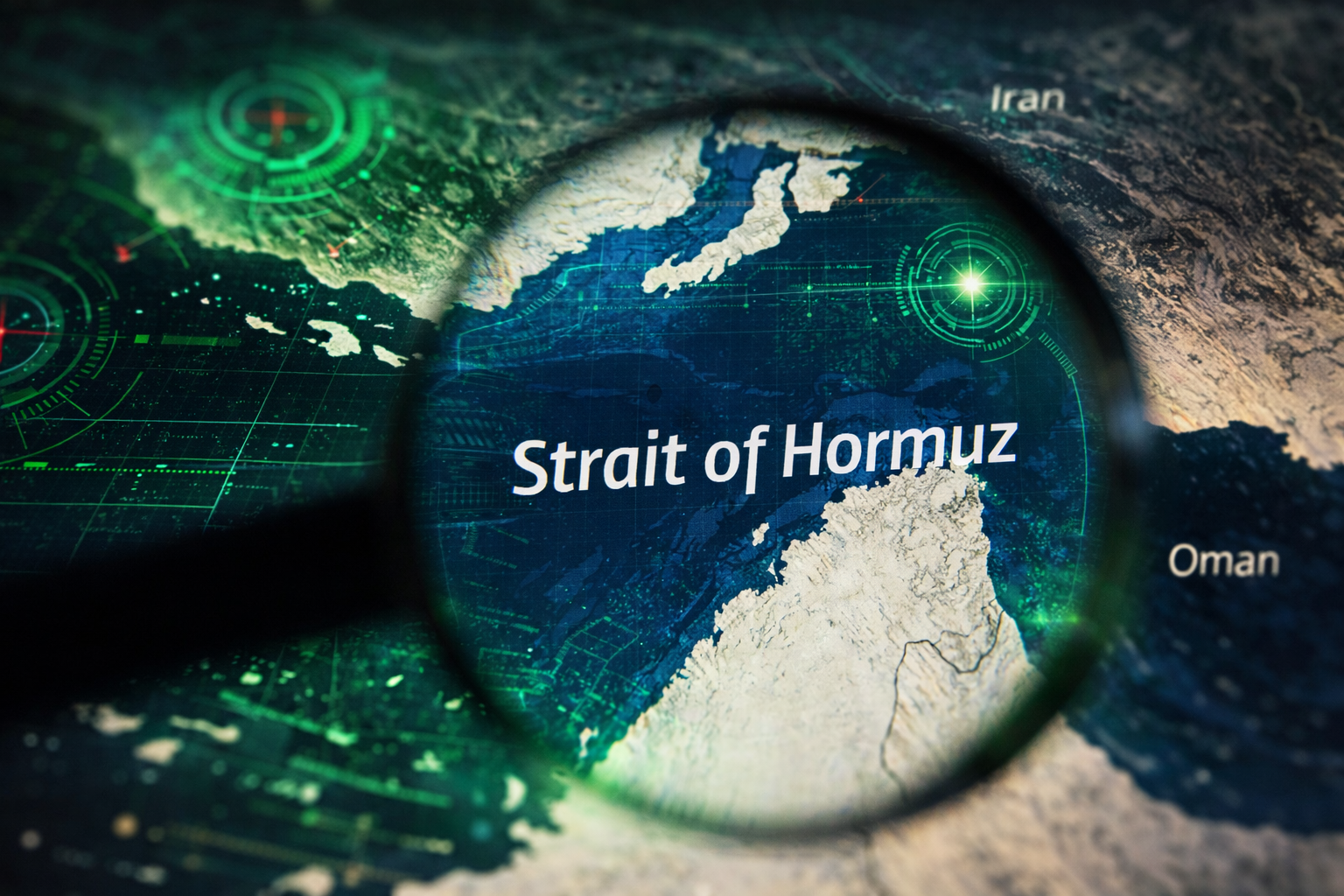
The escalating crisis around the Strait of Hormuz is rapidly becoming one of the most consequential geopolitical risks for global markets. Accounting for roughly a fifth of global oil and liquefied natural gas flows, the strait is not just a regional flashpoint—it is a systemic artery for the world economy. As Western powers weigh intervention, the sobering experience in the Red Sea underscores a critical reality: even a less capable adversary proved difficult to contain.

Lessons from the Red Sea: Tactical Success, Strategic Failure

The multinational effort to secure shipping lanes against Yemen’s Houthi forces delivered mixed outcomes at best. Despite billions spent and hundreds of intercepted drones and missiles, commercial shipping never fully returned to normal. The loss of vessels and persistent risk forced rerouting, significantly increasing costs and transit times.

This precedent is crucial. If Western navies struggled to neutralize an irregular force, the challenge posed by a state-backed military like Iran’s Islamic Revolutionary Guard Corps is exponentially greater. The Red Sea operation revealed a fundamental asymmetry: defending commercial shipping is far more complex and resource-intensive than disrupting it.

Hormuz: Geography and Firepower Favor the Defender

The Strait of Hormuz presents a uniquely difficult operational environment. Its narrow passage, combined with Iran’s mountainous coastline, provides an ideal launchpad for asymmetric warfare. Unlike the Houthis, Iran possesses a layered arsenal that includes ballistic missiles, naval mines, drones, and fast-attack vessels.

Experts warn that even advanced naval assets—such as destroyers—face limitations in such a constrained environment. Simultaneously countering drone swarms, missile threats, and underwater mines stretches defensive capabilities to their limits. The proximity of Iranian positions to shipping lanes further compresses response times, leaving little margin for error.

This operational complexity means that any sustained escort mission would require not only naval assets but also continuous air support, surveillance, and mine-clearing operations—potentially over many months.

Energy Markets on Edge

The economic implications are already evident. Oil prices have surged amid fears of prolonged disruption, with ripple effects across global supply chains. Rising energy costs are feeding into broader inflation, impacting everything from transportation to food prices.

Statements from regional leaders, including Kuwait’s energy officials, emphasize the lack of viable alternatives. Unlike other chokepoints, rerouting around Hormuz is not feasible at scale. This creates a binary outcome for markets: either the strait reopens, or supply shortages intensify.

For policymakers, this presents a difficult balancing act. Military escalation risks further destabilization, while inaction prolongs economic strain.

Political Calculus and Strategic Uncertainty

The crisis also carries significant political ramifications, particularly in the United States. Donald Trump faces mounting pressure as rising gasoline prices weigh on voters. Yet, direct military involvement carries its own risks, both strategically and politically.

International coordination remains uncertain. While discussions at the United Nations Security Council signal urgency, consensus on the use of force is far from guaranteed.

Meanwhile, Iran’s potential move to impose transit fees introduces a new dimension—blurring the line between economic leverage and outright blockade.

A Prolonged Standoff Ahead?

The path forward is unlikely to be swift. Even optimistic assessments suggest that restoring secure passage could take months of sustained military operations. During that time, markets will remain highly sensitive to developments, with volatility likely across energy, shipping, and broader risk assets.

The Hormuz crisis ultimately reflects a deeper structural vulnerability in the global economy: the concentration of critical supply routes in geopolitically fragile regions. Whether this episode leads to lasting changes in energy logistics or remains a cyclical disruption will depend on how quickly stability can be restored—and at what cost.


Comparison, examination, and analysis between investment houses

Leave your details, and an expert from our team will get back to you as soon as possible

    * This article, in whole or in part, does not contain any promise of investment returns, nor does it constitute professional advice to make investments in any particular field.

    To read more about the full disclaimer, click here
    SKN | Is Oil’s Sudden Drop Signaling a Shift From War Premium to Diplomacy Risk?
    • Lior mor
    • 9 Min Read
    • ago 42 seconds

    SKN | Is Oil’s Sudden Drop Signaling a Shift From War Premium to Diplomacy Risk? SKN | Is Oil’s Sudden Drop Signaling a Shift From War Premium to Diplomacy Risk?

    Brent crude prices fell sharply below $100 per barrel, dropping roughly 5% and reversing the previous session’s gains as markets

    • ago 42 seconds
    • 9 Min Read

    Brent crude prices fell sharply below $100 per barrel, dropping roughly 5% and reversing the previous session’s gains as markets

    SKN | Oil Prices Tumble as Trump Signals Possible De-Escalation With Iran
    • Ronny Mor
    • 7 Min Read
    • ago 2 days

    SKN | Oil Prices Tumble as Trump Signals Possible De-Escalation With Iran SKN | Oil Prices Tumble as Trump Signals Possible De-Escalation With Iran

    Oil markets reversed sharply as easing geopolitical tensions triggered a wave of selling, with crude prices falling after signals of

    • ago 2 days
    • 7 Min Read

    Oil markets reversed sharply as easing geopolitical tensions triggered a wave of selling, with crude prices falling after signals of

    SKN | Will Oil Prices Surge Further as Trump’s Hormuz Ultimatum Raises Global Supply Risks?
    • Ronny Mor
    • 6 Min Read
    • ago 2 days

    SKN | Will Oil Prices Surge Further as Trump’s Hormuz Ultimatum Raises Global Supply Risks? SKN | Will Oil Prices Surge Further as Trump’s Hormuz Ultimatum Raises Global Supply Risks?

    Oil markets are entering a critical phase as geopolitical tensions escalate sharply, with prices hovering near multi-year highs. Brent crude

    • ago 2 days
    • 6 Min Read

    Oil markets are entering a critical phase as geopolitical tensions escalate sharply, with prices hovering near multi-year highs. Brent crude

    SKN | How Oil’s Surge Is Reshaping Global Industries and Threatening Economic Growth
    • omer bar
    • 9 Min Read
    • ago 3 days

    SKN | How Oil’s Surge Is Reshaping Global Industries and Threatening Economic Growth SKN | How Oil’s Surge Is Reshaping Global Industries and Threatening Economic Growth

    Energy Shock Ripples Across the Global Economy The sharp rise in oil prices over the past three weeks is no


    • ago 3 days
    • 9 Min Read

    Energy Shock Ripples Across the Global Economy The sharp rise in oil prices over the past three weeks is no