


- Ronny Mor
- •
- 7 Min Read
- •
- 2 hours ago
Key Points
- Nvidia projects up to $1 trillion in AI chip revenue by 2027, signaling massive infrastructure demand.
- Arm benefits indirectly through licensing its architecture used in Nvidia’s CPUs.
- Investors face a trade-off between Nvidia’s dominance and Arm’s leveraged, high-growth exposure.
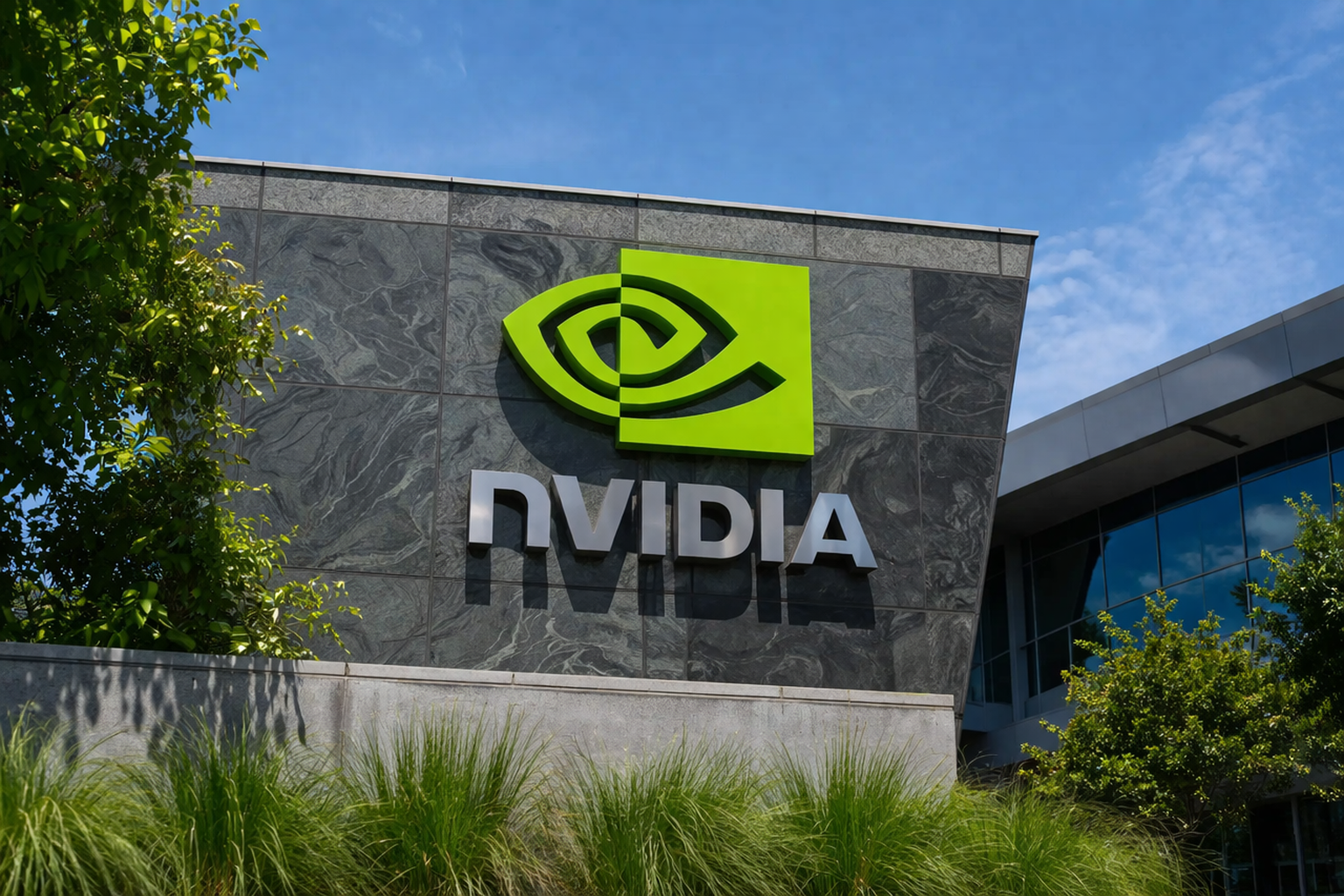
Nvidia has set an ambitious tone for the artificial intelligence era, projecting up to $1 trillion in AI chip revenue through 2027. The forecast signals not only sustained demand for AI infrastructure but also a broader ecosystem opportunity—one that may extend beyond Nvidia itself. As investors chase the next phase of the AI trade, attention is increasingly shifting toward companies positioned upstream in the value chain, particularly Arm Holdings.
Nvidia’s $1 Trillion Vision Signals Structural Demand
Nvidia’s projection effectively doubles its prior expectations, underscoring how rapidly AI infrastructure spending is accelerating. Demand for its current-generation Blackwell chips remains robust, while upcoming Vera Rubin processors are expected to further expand performance capabilities and adoption across hyperscalers.
This level of projected revenue implies not just cyclical strength, but a structural transformation in computing. AI workloads are becoming foundational to industries ranging from cloud computing to autonomous systems, requiring increasingly powerful and specialized hardware.
However, as Nvidia continues to dominate the GPU market, the law of large numbers begins to apply. Sustaining exponential growth at such scale becomes more challenging, and valuation sensitivity increases. This dynamic is prompting investors to explore adjacent opportunities that can benefit from Nvidia’s expansion without carrying the same level of expectations.
Arm’s Strategic Position in the AI Ecosystem
Arm occupies a unique position within the semiconductor landscape. Rather than manufacturing chips, it licenses its architecture to partners, generating revenue through both upfront licensing fees and ongoing royalties.
This model becomes particularly powerful in an AI-driven environment. Nvidia’s Grace and upcoming Vera CPUs are built on Arm’s architecture, specifically the newer Armv9 design, which commands higher royalty rates. As Nvidia scales production and expands into stand-alone CPU offerings, Arm stands to benefit from increased chip volumes and improved monetization per unit.
The shift toward integrating CPUs and GPUs in AI systems further strengthens Arm’s relevance. Its architecture is increasingly being adopted in data centers, a segment historically dominated by alternative designs. This transition reflects a broader industry trend toward energy-efficient, high-performance computing—an area where Arm has a competitive edge.
Valuation vs. Growth: The Key Trade-Off
Arm’s growth trajectory appears compelling, particularly as AI data center demand accelerates. Royalty revenues tied to Armv9 have already shown significant expansion, with some estimates suggesting higher-margin contributions compared to previous generations.
Yet, this opportunity comes with valuation considerations. Trading at a premium multiple, Arm requires continued execution and sustained demand growth to justify its pricing. In contrast, Nvidia, while also richly valued, benefits from its dominant market position and direct exposure to AI hardware spending.
For investors, the distinction lies in positioning. Nvidia represents the core of the AI infrastructure buildout, while Arm offers leveraged exposure to that growth through its licensing model. The latter may provide a more diversified way to participate in the AI expansion, albeit with its own set of risks tied to adoption rates and competitive dynamics.
Looking ahead
The interplay between Nvidia’s scale and Arm’s ecosystem role will be critical. If AI infrastructure spending continues on its current trajectory, both companies are likely to benefit. However, shifts in technology standards, pricing power, or competitive pressures could influence how that value is distributed across the supply chain.
Comparison, examination, and analysis between investment houses
Leave your details, and an expert from our team will get back to you as soon as possible
* This article, in whole or in part, does not contain any promise of investment returns, nor does it constitute professional advice to make investments in any particular field.
To read more about the full disclaimer, click here
- orshu
- •
- 6 Min Read
- •
- ago 29 minutes
SKN | HPE Surges on Earnings Strength: Is This the Start of a Sustained Growth Re-Rating?
Hewlett Packard Enterprise (HPE) delivered a strong market performance on March 25, with shares climbing to 26.16, reflecting a
- ago 29 minutes
- •
- 6 Min Read
Hewlett Packard Enterprise (HPE) delivered a strong market performance on March 25, with shares climbing to 26.16, reflecting a

- omer bar
- •
- 6 Min Read
- •
- ago 4 hours
SKN | Has Micron Hit Its Peak—or Is This Just a Pause in the AI-Driven Rally?
Micron Technology delivered standout quarterly results, yet its stock pulled back sharply—falling more than 14% from its all-time high of
- ago 4 hours
- •
- 6 Min Read

Micron Technology delivered standout quarterly results, yet its stock pulled back sharply—falling more than 14% from its all-time high of

- sagi habasov
- •
- 6 Min Read
- •
- ago 5 hours
SKN | Morgan Stanley’s Wilson Signals Earnings Resilience: Can S&P 500 Profits Withstand Geopolitical Tensions?
Morgan Stanley strategist Michael Wilson has projected a stronger-than-expected rebound in S&P 500 earnings, even as geopolitical tensions tied
- ago 5 hours
- •
- 6 Min Read

Morgan Stanley strategist Michael Wilson has projected a stronger-than-expected rebound in S&P 500 earnings, even as geopolitical tensions tied

- Ronny Mor
- •
- 8 Min Read
- •
- ago 12 hours
SKN | Micron’s 300% Surge Looks Cheap—But Is This a Classic Semiconductor Trap?
Micron Technology’s extraordinary rally over the past year has captured the attention of global investors, but its recent pullback highlights
- ago 12 hours
- •
- 8 Min Read
Micron Technology’s extraordinary rally over the past year has captured the attention of global investors, but its recent pullback highlights

