





- Ronny Mor
- •
- 6 Min Read
- •
- 16 minutes ago


Key Points
- The KOSPI Composite Index (^KS11) recorded a daily session advance of 0.46% (32.39 points) to close at 7,003.74, while securing a 5-day weekly net gain of 1.65%.
- A dynamic trading session on the Korea Exchange saw the South Korean flagship benchmark open at 6,938.27 and navigate an intraday channel between 6,927.88 and 7,011.04 from a previous close of 6,971.35.
- Trading volume reached 239,009 shares against a 3-month average daily volume of 340,803, as the index trades in the upper-middle spectrum of its 52-week corridor of 3,522.54 to 9,385.59.

The KOSPI Composite Index (^KS11) finished the trading session on October 2, 2026, higher, advancing 0.46% (32.39 points) to settle near 7,003.74. The positive single-day price action extended a 5-day weekly net gain of 1.65%, as South Korean equity market participants evaluated semiconductor export cycles, global technology hardware capital expenditure, Bank of Korea monetary policy interest rate guidance, and cross-border trade flows across Asia. For global investors, including institutional asset managers in Israel tracking Asian technology supply chain exposure, memory chip manufacturing overlays, and multi-currency portfolio management, the KOSPI Composite serves as a premier international benchmark for South Korean enterprise leadership and regional technology sector vitality.
Intraday Channel Navigation and 52-Week Range Metrics
During the October 2 session, the benchmark index opened at 6,938.27 and traversed an intraday trading channel bounded between a floor of 6,927.88 and a session peak of 7,011.04 before settling at 7,003.74. Late intra-session chart indicators stabilized near 6,983.47. This represents a daily gain of 32.39 points (or 0.46%) relative to its previous close of 6,971.35. Trading volume was logged at 239,009 shares against a 3-month average daily volume of 340,803. The closing quote leaves the South Korean flagship benchmark positioned in the upper-middle tier of its broader 52-week trading corridor of 3,522.54 to 9,385.59, confirming technical consolidation well above annual support baselines.
South Korean Tech Leaders, Semiconductor Cycle, and Export Drivers
A primary structural factor influencing recent KOSPI performance is constituent execution across major semiconductor producers, consumer electronics conglomerates, automotive manufacturers, battery technology leaders, and industrial shipbuilders. Given South Korea’s pivotal role in global AI hardware supply chains, memory chip pricing cycles and international technology demand heavily calibrate enterprise profit expectations. Global asset managers continue integrating South Korean technology overlays within broader strategic asset allocation models to capture Asian growth trends across resilient capital markets.
Bank of Korea Monetary Trajectory, Won FX Dynamics, and Macro Risks
While near-term technical support above 6,927.88 has held firmly, market participants continue closely tracking potential macroeconomic friction points. Key variables include Bank of Korea monetary policy interest rate decisions, sovereign Korean Treasury bond yield curve shifts, domestic inflation moderation, and persistent currency volatility across foreign exchange channels—particularly USD/KRW, KRW/ILS, and EUR/KRW currency pairs. Furthermore, international trade policy developments and raw material input costs introduce ongoing variables for cross-border corporate revenue translation into institutional portfolios. Israeli institutional allocators managing multi-currency portfolios remain focused on tracking these macroeconomic variables to evaluate risk-adjusted return profiles accurately.
Outlook: The outlook for the KOSPI Composite Index remains neutrally balanced with a bullish long-term bias, with technical momentum favoring a period of cautious consolidation near core support baselines to foster broader economic stabilization. Sustainable upside expansion back toward 8,000.00 and its 52-week peak past 9,385.59 will likely depend on verified semiconductor earnings acceleration, predictable central bank monetary execution, and steady global tech demand. However, professional asset allocators should remain highly attentive to prominent downside risks, including potential foreign exchange rate shifts, borrowing cost pressures, or broader Asian equity market pullbacks. Ultimately, future index performance will depend on the delicate balance between South Korean enterprise execution and evolving global macroeconomic conditions.
Comparison, examination, and analysis between investment houses
Leave your details, and an expert from our team will get back to you as soon as possible
* This article, in whole or in part, does not contain any promise of investment returns, nor does it constitute professional advice to make investments in any particular field.
To read more about the full disclaimer, click here
- orshu
- •
- 7 Min Read
- •
- ago 5 minutes
SKN | Australian Dollar Currency Index (^XDA) Edges Up 0.36% Daily to 69.56 as 1.00% Weekly Pullback Holds Above 64.22 Floor
The Australian Dollar Currency Index (^XDA) finished the trading session on October 2, 2026, slightly higher, advancing 0.36% (0.25
- ago 5 minutes
- •
- 7 Min Read

The Australian Dollar Currency Index (^XDA) finished the trading session on October 2, 2026, slightly higher, advancing 0.36% (0.25

- omer bar
- •
- 6 Min Read
- •
- ago 36 minutes
SKN | Euro Currency Index (^XDE) Edges Up 0.06% Daily to 112.53 as 1.21% Weekly Pullback Holds Above 112.15 Floor
The Euro Currency Index (^XDE) finished the trading session on October 2, 2026, slightly higher, advancing 0.06% (0.07 points)
- ago 36 minutes
- •
- 6 Min Read

The Euro Currency Index (^XDE) finished the trading session on October 2, 2026, slightly higher, advancing 0.06% (0.07 points)
- omer bar
- •
- 7 Min Read
- •
- ago 41 minutes
SKN | Fed’s Hammack Signals More Time to Weigh the Next Interest Rate Move
Federal Reserve Bank of Cleveland President Beth Hammack said the U.S. central bank still has time to evaluate incoming
- ago 41 minutes
- •
- 7 Min Read
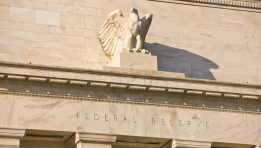
Federal Reserve Bank of Cleveland President Beth Hammack said the U.S. central bank still has time to evaluate incoming
- omer bar
- •
- 7 Min Read
- •
- ago 42 minutes
SKN | Apple Tightens Mac AI Data Access Rules After Meta Muse Privacy Complaints
Apple is preparing to make AI-driven access to Mac data more visible, highlighting a broader technology-sector challenge as artificial
- ago 42 minutes
- •
- 7 Min Read

Apple is preparing to make AI-driven access to Mac data more visible, highlighting a broader technology-sector challenge as artificial

